Dryer Drum Not Spinning? How to Diagnose It in Abilene, TX
Your dryer is on, but the drum won’t turn
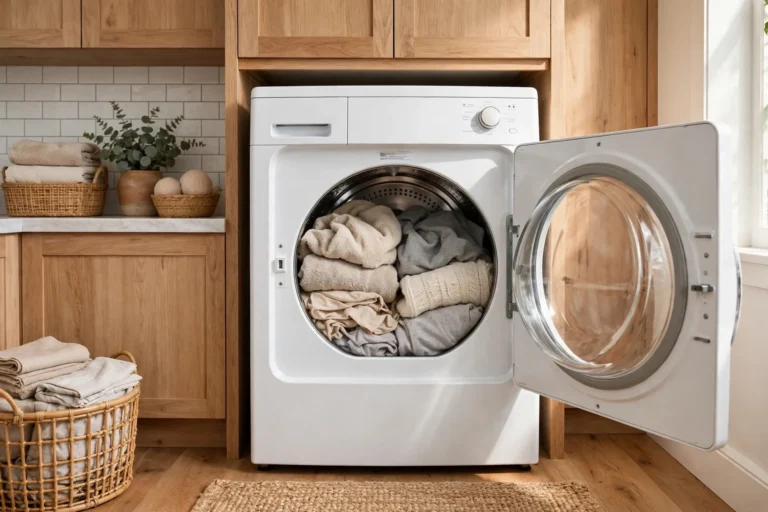
You press start, the dryer lights up, and you can hear it running — but the clothes are sitting exactly where you left them. Or the drum makes a promising sound, like it is about to tumble, and then nothing happens. Sometimes the dryer just hums and will not turn.
This is one of the most common dryer complaints, and it usually comes down to a short list of parts. Work through them in order, simplest first, and unplug the dryer before opening any panel — dryers run on high voltage.
First, rule out the simple stuff
Make sure the door is fully closed and latching — a dryer will not tumble if the door switch does not register it as shut, and a door that looks closed is not always fully latched. Close it firmly and try again.
Next, check the power: a dryer that hums or lights up can still have a power problem, so check that the plug is fully seated and the breaker has not tripped. On electric dryers, a partly tripped breaker can leave the motor humming without enough power to turn the drum, so reset it fully — all the way off, then back on.
A broken drive belt
The drive belt is the most common cause of a drum that will not spin. It wraps around the drum and the motor pulley, and the motor turns the drum through it. When the belt snaps, the motor runs but the drum stays still — which is why a dryer can sound normal and still not tumble.
Try the hand test. With the dryer unplugged, open the door and turn the drum by hand. A healthy belt gives some resistance, because you are turning the drum against the belt and motor. If the drum spins very freely, the belt is likely broken or has slipped off. Replacing it means opening the cabinet and routing the new belt around the drum, motor pulley, and idler pulley — a good point to call a technician if you are not comfortable with that work. A worn belt can also make noise before it stops turning — see our guide to a dryer making loud noises if yours squealed or thumped first.
A seized or worn idler pulley
The idler pulley is a small wheel that keeps tension on the drive belt. When its bearing wears out or seizes, the belt loses tension or cannot move smoothly, and the drum stops turning — sometimes after squealing first, sometimes with little warning. It sits inside the cabinet, so it is usually confirmed during a repair visit.
Worn drum rollers
The drum sits on small support rollers that let it turn smoothly. Over time, those rollers wear flat or their bearings fail, and the drum may turn stiffly, stop under a normal load, or thump rhythmically. With the dryer unplugged, turn the drum by hand: if it feels stiff or catches at the same point on every turn, worn rollers are a strong suspect.
A faulty door switch
The door switch tells the dryer the door is closed. If it fails, the dryer may light up and even hum, but it will not tumble — the machine thinks the door is open. Press the switch by hand (with the door open) and listen for a firm click: a switch that feels loose, does not click, or is visibly cracked has likely failed. Replacing one involves working around wiring, so leave it to a technician if you are not comfortable with that.
A blown thermal fuse
The thermal fuse cuts power if the dryer overheats. When it blows, the dryer may run without tumbling, or neither tumble nor heat. A blown fuse is often a symptom of another problem, such as a clogged vent trapping heat, so replacing the fuse without checking the vent can mean the new fuse blows again. Testing it requires opening the cabinet and using a multimeter, so it is a technician job for most homeowners.
A failed drive motor
If the belt, pulley, rollers, door switch, and fuse all check out, the drive motor itself may have failed. The classic sign is a dryer that hums loudly when you press start but the drum never moves — the motor trying to run and failing, often because of a bad start winding or a seized bearing. Motor replacement is one of the bigger dryer repairs, not a beginner job.If the drum spins but the dryer produces no heat, see our guide to dryer not heating.
When to call a technician
Call a professional if the drum turns freely by hand (likely a broken belt) and you do not want to open the cabinet; if the dryer hums but will not turn; if you need to test the fuse, switch wiring, or motor with a multimeter; or if the dryer stopped heating too, or ran very hot before stopping. Any work beyond basic checks should be left to a technician, and the breaker should stay off while the cabinet is open.
Frequently asked questions
Why is my dryer on but not spinning?
The usual causes are a broken belt, a seized idler pulley, worn rollers, a faulty door switch, a blown thermal fuse, or a failed motor. Check the door, breaker, and load size first, then try the hand test: if the drum turns too freely by hand, the belt is the likely culprit.
Why does my dryer make a promising sound, like it is about to tumble, but then doesn’t?
That sound is usually the motor starting and then stalling because it cannot move the drum. A broken belt, a seized pulley, or a weak motor can all cause this; a fading hum points more to the motor.
My dryer is not spinning but the belt is fine — what else could it be?
If the belt is intact and tensioned, check the idler pulley, rollers, and door switch next, then the thermal fuse, then the motor. A technician can test these in order without replacing parts that are still good.
Why does my dryer hum but not turn?
A hum with no movement usually means the motor has power but cannot turn the drum — a seized bearing, a bad start winding, or a jammed roller or pulley. Unplug the dryer and turn the drum by hand; if it will not turn, the jam is mechanical.
Can a clogged vent stop the drum from spinning?
Not directly, but a clogged vent can overheat the dryer and blow the thermal fuse, which can stop the drum. If yours stopped after running very hot, have the vent checked along with the fuse.
Is it worth repairing a dryer that won’t spin?
In many cases, yes. A broken belt, worn rollers, a bad door switch, or a blown fuse are common repairs, and cost varies with the part and model. A failed motor is a bigger repair, and a technician can advise on repair versus replacement for your dryer’s age and condition.
If your dryer runs but the drum will not turn, work through the checks above, and get help for anything that means opening the cabinet. For dryer repair in Abilene, TX, call (325) 339-1818.
Why is my dryer on but not spinning?
The usual causes are a broken belt, a seized idler pulley, worn rollers, a faulty door switch, a blown thermal fuse, or a failed motor. Check the door, breaker, and load size first, then try the hand test: if the drum turns too freely by hand, the belt is the likely culprit.
Why does my dryer make a promising sound, like it is about to tumble, but then doesn’t?
That sound is usually the motor starting and then stalling because it cannot move the drum. A broken belt, a seized pulley, or a weak motor can all cause this; a fading hum points more to the motor.
My dryer is not spinning but the belt is fine — what else could it be?
If the belt is intact and tensioned, check the idler pulley, rollers, and door switch next, then the thermal fuse, then the motor. A technician can test these in order without replacing parts that are still good.
Why does my dryer hum but not turn?
A hum with no movement usually means the motor has power but cannot turn the drum — a seized bearing, a bad start winding, or a jammed roller or pulley. Unplug the dryer and turn the drum by hand; if it will not turn, the jam is mechanical.
Can a clogged vent stop the drum from spinning?
Not directly, but a clogged vent can overheat the dryer and blow the thermal fuse, which can stop the drum. If yours stopped after running very hot, have the vent checked along with the fuse.
Is it worth repairing a dryer that won’t spin?
In many cases, yes. A broken belt, worn rollers, a bad door switch, or a blown fuse are common repairs, and cost varies with the part and model. A failed motor is a bigger repair, and a technician can advise on repair versus replacement for your dryer’s age and condition.