Washing Machine Leaking Water? How to Find Where It Is Coming From
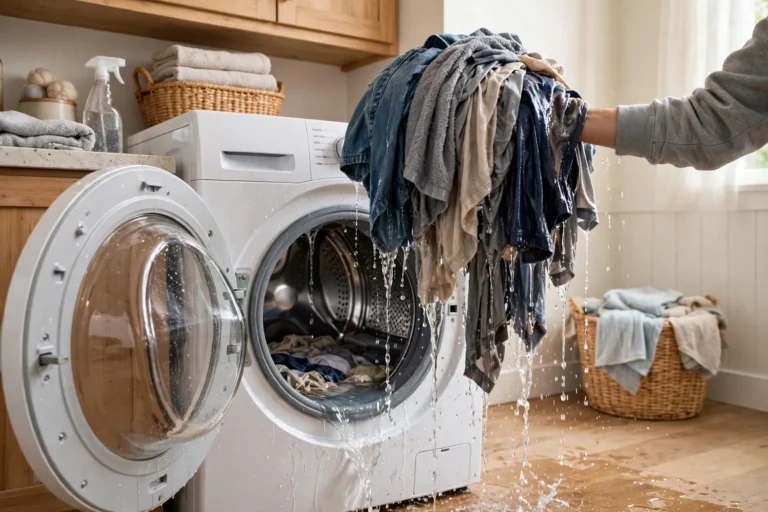
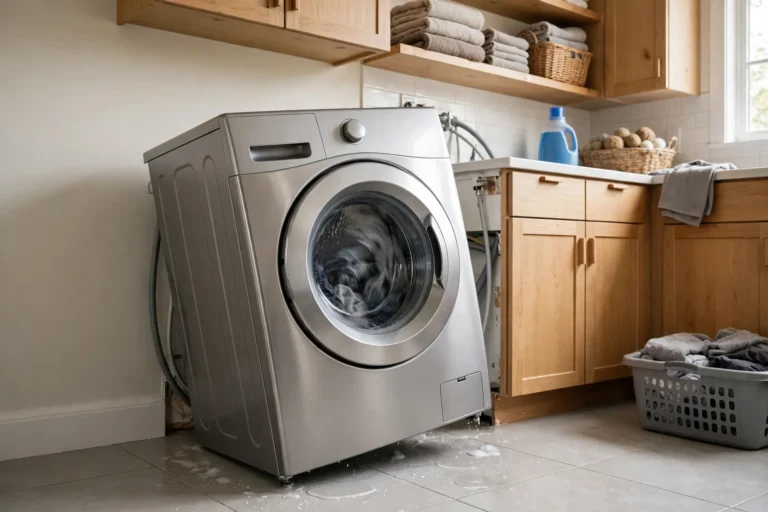
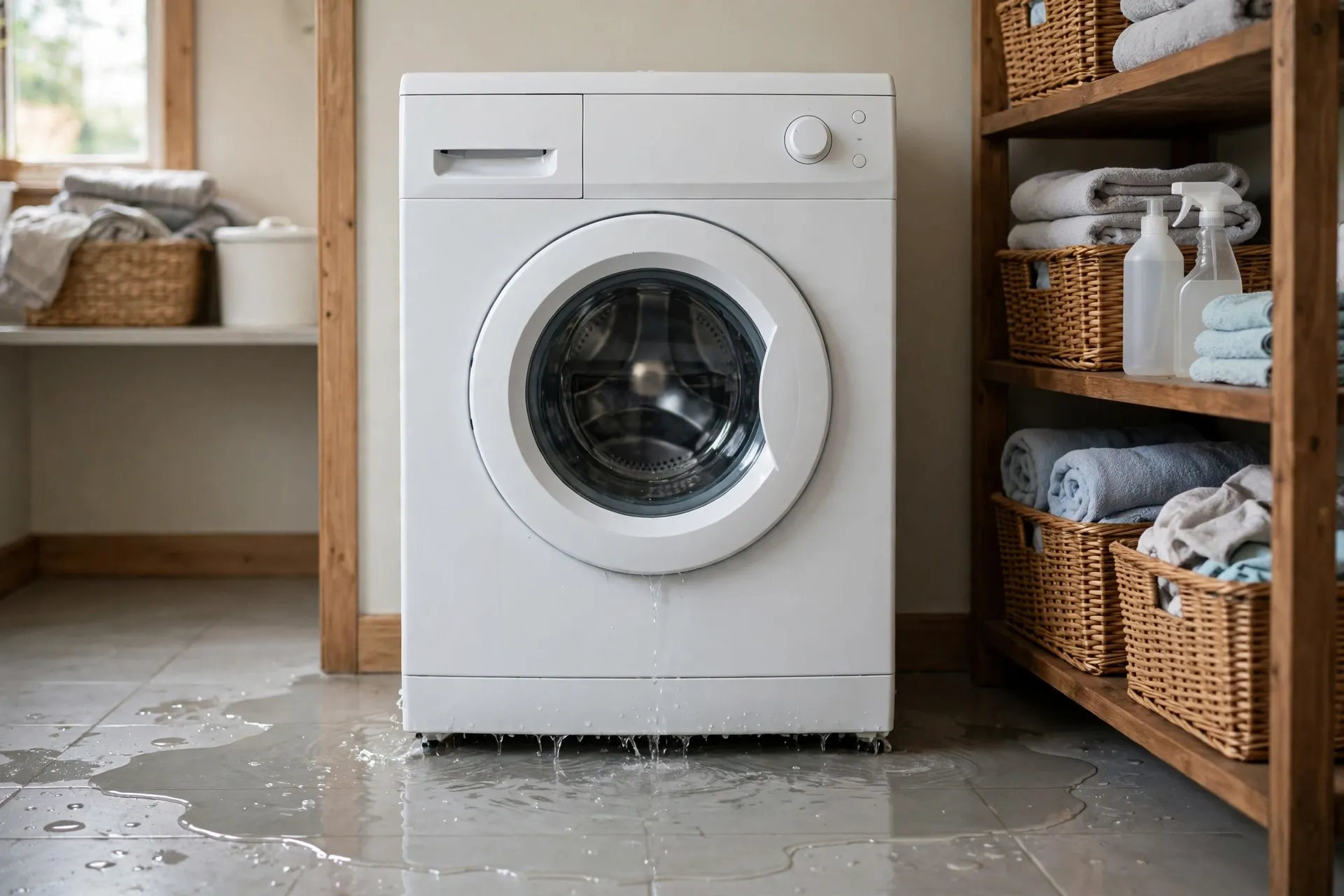
A puddle under your washer is stressful. You do not know if it is a small fix or a bigger problem, and you do not want water soaking the floor.
Most leaks come from a short list of places: the door gasket, the hoses, the drain-pump filter, the detergent drawer, or too many suds. This guide walks through each one.
Start with safety. If water is near an outlet or cord, do not step in it. Turn the washer off, unplug it if you can do so safely, and turn off the water valves behind the machine if you can reach them.
First, notice when and where it leaks
Where the water shows up tells you a lot. Water at the front points to the door seal or detergent drawer. Water at the back points to the hoses. Water underneath can come from the pump area or, less often, from inside the tub.
Timing matters too. Hoses, seals, and the pump only carry water during parts of the cycle, so a machine can look dry when idle and leak as soon as it fills, drains, or spins. Dry the floor, run a short cycle, and note where the first drops appear.
1. A torn or worn door gasket
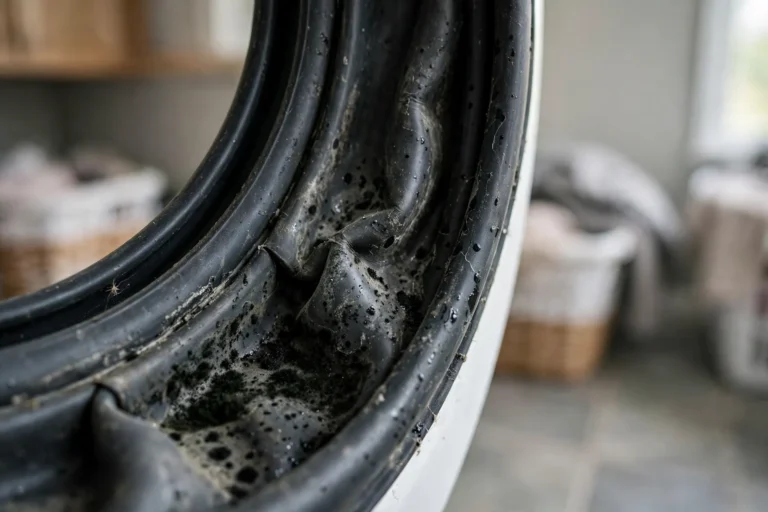
On a front-load washer, the rubber ring around the door is the door gasket. It keeps water inside the drum, but over time it can tear or lose its shape, especially if small items get caught in its folds.
Check the seal, including the folds, for tears, cracks, or trapped fabric. A torn gasket needs to be replaced; wiping it clean helps only for trapped lint, not a tear.
2. Loose or cracked inlet and drain hoses
Your washer has hoses at the back: inlet hoses that bring water in, and a drain hose that carries it out.
Check that each connection is snug by hand; tools can crack a plastic fitting. Look along each hose for cracks, bulges, or kinks, and check that the drain hose is still seated in its drain. Replace a cracked hose rather than patching it.
3. A clogged or poorly seated drain-pump filter cap
Many front-load washers have a small door near the bottom front. Behind it sits the drain-pump filter, sometimes called the coin trap, and its cap. If the cap is loose or not seated fully after cleaning, water can leak from the bottom front during draining.
Place a towel and a shallow pan under it first, since some water will come out. Clear out lint, coins, and other debris, then put the cap back on straight and tight. For more detail, see our guide on a washing machine that won’t drain. A cracked cap needs to be replaced.
4. A blocked detergent drawer
Water flows through the detergent drawer to carry detergent into the drum. If the drawer is clogged with dried detergent, water can back up and overflow from the front.
Pull the drawer out and rinse it under warm water. Clear buildup from the drawer and its opening, let it dry, and slide it back in. Do not overfill it. If it keeps overflowing when clean, the problem may be an inlet issue — a job for a technician.
5. Too many suds
Over-sudsing is easy to miss because the machine itself may be fine. Too much detergent, or regular detergent in a machine that needs high-efficiency (HE) detergent, can create more suds than the drum can hold, pushing water out through the seal or drawer.
Signs include thick foam through the door glass, or a leak only with larger loads. Run a rinse-only cycle with no detergent to clear the suds, then use less HE detergent if your machine calls for it. If it still leaks, the cause is probably a seal or hose.
6. Failed pump seals or a cracked tub
These are the least common causes, and they are not homeowner fixes. Drain-pump seals can wear out and leak from underneath the machine. The tub itself can crack, though this is rare and more likely on an older, heavily used machine.
A leak from underneath that continues after you have checked the hoses, filter cap, gasket, and drawer points in this direction. Do not keep running it, since water inside the machine can reach electrical parts.
When to call a technician
Call a technician if water comes from underneath and you cannot find the source, if the gasket is torn or the filter cap is cracked, or if the leak keeps coming back after you have checked the hoses, filter, drawer, and detergent. Also call for water damage or mold around the washer, or if the machine trips a breaker, smells electrical, or shows an error code. A technician can test the pump and inspect the tub and internal connections you cannot safely reach.
Frequently asked questions
Why is my washing machine leaking from the bottom?
The most common causes are a loose drain-pump filter cap, a leaking drain hose, or worn pump seals. Dry the floor and run a short cycle — front-bottom leaks often point to the filter cap, back-bottom leaks to the hoses.
Why is my washer leaking from the bottom of the door?
This usually means the door gasket is torn, worn, or has something trapped in its folds. Check the seal carefully. A torn gasket needs to be replaced, because it will not seal again on its own.
Why does my washer leak only when it is running?
Most leak sources only carry water during part of the cycle — filling, washing, draining, or spinning. Hoses, seals, and the pump sit dry when idle, so a leak that appears only during a cycle is normal and helps narrow down the source.
Why does my front-load washer leak near the door?
The usual suspects are a damaged door gasket, an overflowing drawer, or too many suds pushing water past the seal. Check the gasket first, then clean the drawer and use the right amount of HE detergent.
Should I repair or replace an older washer that keeps leaking?
It depends on the cause and the machine’s condition. A hose, filter cap, or gasket is usually a straightforward repair. A cracked tub or repeated pump-seal failures on a machine with other problems may make replacement more sensible, and a technician who can see it can help you weigh that decision.
Can I keep using a washer that leaks a little?
It is best not to. Even a small leak can damage flooring and walls over time, and water near electrical parts is a safety concern. Stop using the machine until you have found the source, or have a technician look at it.
Get help with a leaking washer in Abilene
If you have worked through the checks above and the leak is still there, or the source looks like the pump or tub, professional help is the next step. For washing machine repair in Abilene, TX, call (325) 339-1818 or visit our washing machine repair page.
Why is my washing machine leaking from the bottom?
The most common causes are a loose drain-pump filter cap, a leaking drain hose, or worn pump seals. Dry the floor and run a short cycle — front-bottom leaks often point to the filter cap, back-bottom leaks to the hoses.
Why is my washer leaking from the bottom of the door?
This usually means the door gasket is torn, worn, or has something trapped in its folds. Check the seal carefully. A torn gasket needs to be replaced, because it will not seal again on its own.
Why does my washer leak only when it is running?
Most leak sources only carry water during part of the cycle — filling, washing, draining, or spinning. Hoses, seals, and the pump sit dry when idle, so a leak that appears only during a cycle is normal and helps narrow down the source.
Why does my front-load washer leak near the door?
The usual suspects are a damaged door gasket, an overflowing drawer, or too many suds pushing water past the seal. Check the gasket first, then clean the drawer and use the right amount of HE detergent.
Should I repair or replace an older washer that keeps leaking?
It depends on the cause and the machine’s condition. A hose, filter cap, or gasket is usually a straightforward repair. A cracked tub or repeated pump-seal failures on a machine with other problems may make replacement more sensible, and a technician who can see it can help you weigh that decision.
Can I keep using a washer that leaks a little?
It is best not to. Even a small leak can damage flooring and walls over time, and water near electrical parts is a safety concern. Stop using the machine until you have found the source, or have a technician look at it.