Why Does My Front-Load Washer Smell Like Mildew?
If your front-load washer smells moldy, you are not alone. It is one of the most common front-load complaints, and it can show up fast. Some owners notice rim mold after months of use. Others report a heavy mildew smell from a washer that is only a month old.
The smell does not always mean the machine is broken. Usually, moisture, detergent residue, or trapped debris has built up somewhere that stays damp. Many of those causes are easy to check at home, once you know where to look.
Why Front-Load Washers Are Prone to Smell
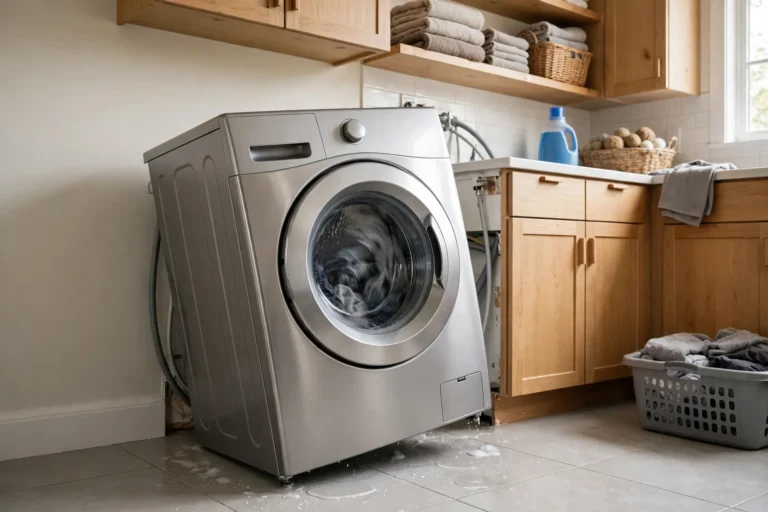
A front-load washer seals tightly to keep water in, but that seal also traps moisture after the cycle ends. Water stays in the gasket folds, detergent drawer, and drain area. If it never dries, mold and mildew can grow, and the smell can transfer to your clothes.
1. Mold in the Gasket Folds
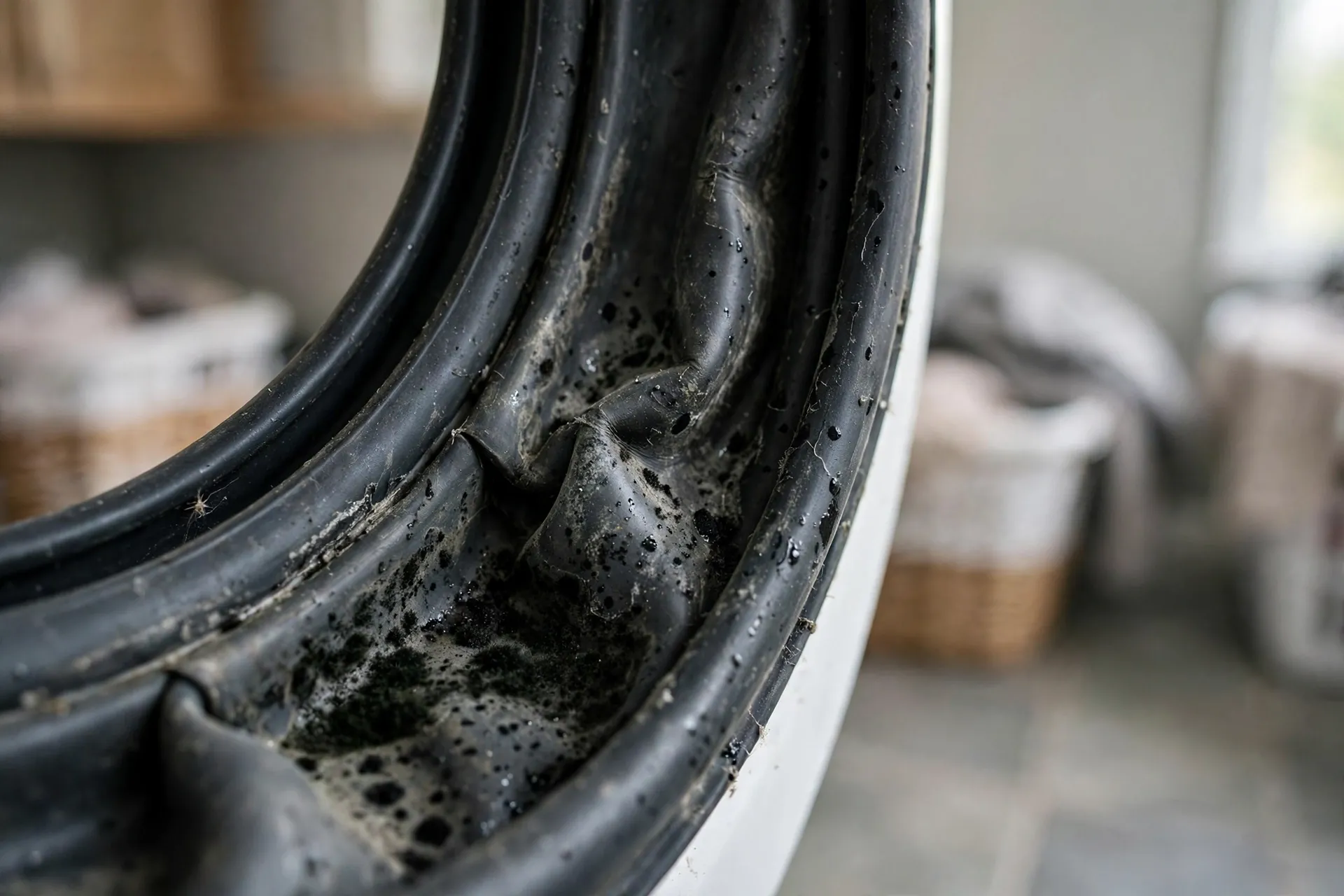
The rubber gasket around the door is the first place to check. Pull the folds gently apart and look inside, especially at the bottom of the ring, where you may see dark spots or slime you cannot see from outside.
Wipe the folds with a damp cloth and a mild washing-machine cleaner, following the product label, then dry them with a clean towel. Do not scrape the rubber with sharp tools, because a cut or tear can cause leaks later.
If the gasket is torn, warped, or deeply stained and will not wipe clean, cleaning may not be enough. That is the heart of the cleaning-versus-replacement debate: surface mold can usually be cleaned, but a damaged gasket may need a technician to replace it.
2. Detergent-Drawer Residue
The detergent drawer is another damp, hidden spot. Liquid detergent, softener, and undissolved powder can collect in the drawer and the housing behind it. Over time, that residue turns sticky, smells musty, and feeds mold growth.
Remove the drawer if your model allows it, rinse it under warm water, and wipe inside the housing. Let both parts dry before you put the drawer back. Check the softener compartment closely, since buildup is common there.
3. A Clogged Drain-Pump Filter
Many front-load washers have a small drain-pump filter behind a door at the bottom front of the machine. It catches coins, hairpins, lint, and small items from pockets. When it clogs, dirty water can sit in the machine and start to smell.
This cause is often overlooked, because many owners never knew the filter existed. Check your manual for its location and draining steps, and be ready for some water to come out when you open it.
For the full pump-filter steps and what to do if your washer will not drain at all, see our guide on why your washing machine won’t drain.
4. Too Much Liquid Detergent, or Pods That Do Not Dissolve
Using more detergent than the load needs does not make clothes cleaner. The extra detergent can leave a film inside the drum, gasket, and drain system. That film, sometimes called “scrud,” traps odor and can make the machine smell even when it looks clean.
Pods can cause a similar problem if they do not fully dissolve, especially in cold or short cycles. Use only the amount of high-efficiency (HE) detergent your manual recommends for the load size, and run a warm or hot cycle now and then if you usually wash cold, as your manual allows.
5. The Door Is Kept Closed Between Loads
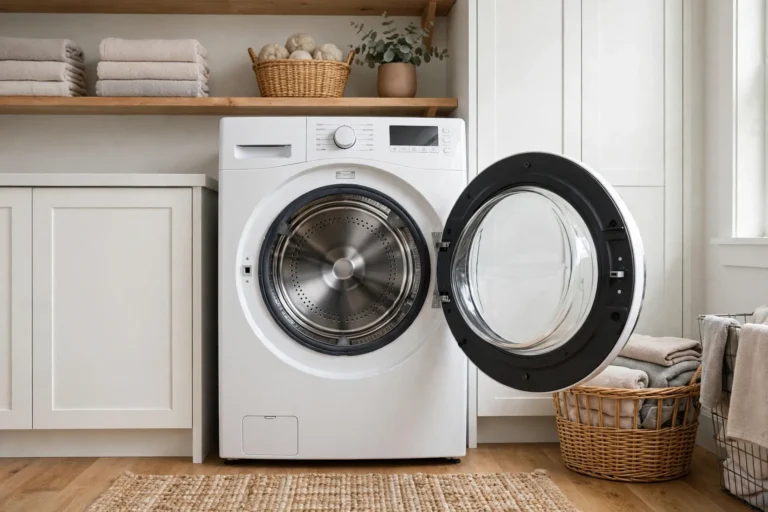
Leaving the door shut tight between washes traps moisture inside the drum and gasket — exactly where mildew grows best. After each load, leave the door slightly open so air can circulate and the drum and gasket can dry. Leave the detergent drawer open a little too, if you can do so safely. This one habit prevents many repeat smells.
6. The Monthly Tub-Clean Cycle Is Skipped
Most front-load washers have a tub-clean or self-clean cycle that flushes residue and odor from the drum and internal parts. Skipping it for months lets buildup return, even if you clean the gasket by hand. Run it about once a month, or as often as your manual recommends, then wipe the gasket and leave the door open so everything dries fully.
A Simple Routine That Keeps the Smell Away
Once the smell is gone, keep it away: use the right amount of HE detergent, leave the door ajar between loads, wipe the gasket folds now and then, clean the drawer when you see residue, and run the tub-clean cycle monthly.
If the smell comes back quickly, work through the causes above one by one — a fast return often points to an unchecked part, such as the pump filter.
When to Call a Technician
Call a technician if the gasket is torn or damaged, if the smell stays after you have cleaned the gasket, drawer, filter, and drum, or if you find standing water, a leak, or an error code you cannot clear. Also get help if the pump filter is stuck or the drawer will not come out. Forcing a stuck part can break it and turn a cleaning job into a repair.
Frequently Asked Questions
Why does my front-load washer smell moldy?
The most common reasons are mold in the gasket folds, drawer residue, a clogged drain-pump filter, too much detergent, a door kept closed between loads, and a skipped tub-clean cycle.
How do I clean the rubber gasket inside my washer?
Pull the folds gently apart, wipe inside with a damp cloth and a washing-machine-safe cleaner, and dry them with a clean towel. Check the bottom closely, since moisture collects there. Do not scrape the rubber.
Why is there rim mold on my washing machine?
Rim mold grows where water and detergent residue sit in the gasket folds and never fully dry. Wipe and dry the folds, leave the door slightly open between loads, and run the monthly tub-clean cycle.
Can a month-old washer smell of mildew?
Yes. A new machine can smell quickly if the door is kept closed, too much detergent is used, or water stays trapped in the gasket and drawer. Age alone does not prevent mildew.
Should I clean the gasket or replace it?
Clean it first if the rubber is intact and the mold is on the surface. Replace it if the gasket is torn, warped, or deeply stained and will not come clean — a damaged gasket can also leak.
Why does my washer still smell after I cleaned it?
A remaining smell usually means another source was missed, most often the drain-pump filter, the drawer housing, or drum buildup. Check those, run a tub-clean cycle, and leave the door open to dry. If it still stays, get a technician inspection.
If you are in Abilene and the smell will not go away, or you need help with a damaged gasket or a clogged pump filter, you can call (325) 339-1818 to arrange washing machine repair in Abilene, TX.
Why does my front-load washer smell moldy?
The most common reasons are mold in the gasket folds, drawer residue, a clogged drain-pump filter, too much detergent, a door kept closed between loads, and a skipped tub-clean cycle.
How do I clean the rubber gasket inside my washer?
Pull the folds gently apart, wipe inside with a damp cloth and a washing-machine-safe cleaner, and dry them with a clean towel. Check the bottom closely, since moisture collects there. Do not scrape the rubber.
Why is there rim mold on my washing machine?
Rim mold grows where water and detergent residue sit in the gasket folds and never fully dry. Wipe and dry the folds, leave the door slightly open between loads, and run the monthly tub-clean cycle.
Can a month-old washer smell of mildew?
Yes. A new machine can smell quickly if the door is kept closed, too much detergent is used, or water stays trapped in the gasket and drawer. Age alone does not prevent mildew.
Should I clean the gasket or replace it?
Clean it first if the rubber is intact and the mold is on the surface. Replace it if the gasket is torn, warped, or deeply stained and will not come clean — a damaged gasket can also leak.
Why does my washer still smell after I cleaned it?
A remaining smell usually means another source was missed, most often the drain-pump filter, the drawer housing, or drum buildup. Check those, run a tub-clean cycle, and leave the door open to dry. If it still stays, get a technician inspection.