Dryer Runs But No Heat? How to Find the Cause Safely
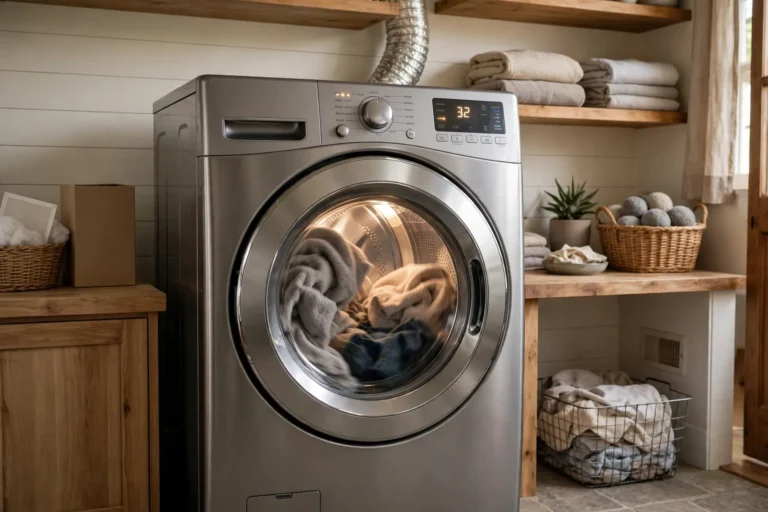
Few dryer problems are as confusing as this one. The drum turns, the cycle runs, and the timer counts down — but the clothes come out just as wet as they went in. Some owners describe it as “dryer runs but no heat.” Others say the dryer is not heating up when switched on, or that it turns, runs, and keeps saying everything is dry when nothing has dried at all.
The key point: a dryer that runs is not necessarily a dryer that heats. The drum motor and the heater are on different parts of the system, so finding the failed part starts with safe, simple checks — and stops before any work that needs a professional.
First, Confirm What “No Heat” Really Means
Before you check parts, run a short timed-dry cycle on high heat with a small load and check whether the drum feels warm after a few minutes. If a slightly damp load ends early, an automatic sensor cycle may be misreading it; a timed cycle gives a clearer test. If there is no warmth at all on timed high heat, work through the checks below — and stop at any step involving opening panels, live electrical parts, or gas parts.
1. Half of the 240V Breaker Has Tripped
This is the most misleading cause, and the first one to check. An electric dryer runs on 240 volts, but its drum motor only needs 120 volts. If one half of the double breaker trips, the drum still turns while the heater gets no power. The dryer looks alive, but it cannot heat.
Find the dryer breaker in your panel — usually a double breaker, with two switches joined together. If one side looks tripped, switch the breaker fully off and then fully back on. If it trips again right away, or you are unsure about anything in the panel, stop and call a technician. Do not hold a tripping breaker on.
2. A Burned-Out Heating Element (Electric Dryers)
On an electric dryer, the heating element is a coil that warms the air. Like a light bulb filament, it can burn out and break; the drum still turns and air still moves, but the air stays cool. Replacing it means opening the machine and working near electrical parts, so it is a technician job.
3. A Blown Thermal Fuse
The thermal fuse cuts power to the heater if the dryer overheats. Once it blows, the heater will not work again until the fuse is replaced. On many models, the drum will still turn, which makes a blown fuse easy to mistake for a dead heater.
A fuse usually blows for a reason, and a clogged vent is a common one. For vent cleaning and airflow checks, see our guide on why your dryer is taking too long to dry. A technician should replace the fuse and find why it blew.
4. A Faulty Thermostat or High-Limit Thermostat
Thermostats control how hot the dryer gets, and the high-limit thermostat acts as a backup safety cutoff. If a thermostat fails, it may stop the heater from turning on, or shut it off too soon — giving no heat at all, or heat that comes and goes. Testing them means opening panels and checking electrical parts, so leave this diagnosis and repair to a technician.
5. A Burned-Out Gas Igniter (Gas Dryers)
A gas dryer has no electric heating element. Instead, an igniter glows hot to light the gas burner. If it burns out, no flame starts, and the drum turns with cool air. Do not test or replace it yourself. If you smell gas, leave the area, do not switch lights or appliances on or off, and call your gas provider or emergency services from outside.
6. Failed Gas Valve Solenoid Coils (Gas Dryers)
Even with a working igniter, a gas dryer still needs its gas valve to open, controlled by solenoid coils. When those coils fail, they may open briefly and then stop, or never open, so the dryer may heat briefly and then go cold, or never heat. Like other gas parts, these are a technician-only repair — do not remove gas fittings or test gas valves at home.
7. A Clogged Vent That Keeps Blowing the Fuse
A clogged vent restricts airflow, traps heat, and can blow the thermal fuse. That is why heating may stop again soon after a fuse is replaced: the vent problem is still there. This article does not repeat vent-cleaning steps — they are covered in full in our slow-drying guide linked above.
When to Call a Technician
Call a technician if the breaker check does not fix the problem, if the breaker trips again, or if the cause points to the element, fuse, thermostats, igniter, or gas valve coils. These sit inside the machine or involve gas and 240-volt work, and are not safe homeowner repairs. Also call a professional if heating stops again after a repair, if you smell gas or burning, or if you are unsure whether your dryer is electric or gas.
Frequently Asked Questions
Why does my dryer run but produce no heat?
The drum motor and heater run on different parts of the system. Common causes are a half-tripped 240V breaker, a burned-out element, a blown thermal fuse, a faulty thermostat, a burned-out gas igniter, failed gas valve coils, or a clogged vent that blew the fuse.
Why is my dryer not heating up when switched on?
Start with the breaker: on an electric dryer, one half of the double breaker can trip while the drum still turns on 120 volts. If the breaker is fine, the fault is usually inside the machine and needs a technician.
Why does my dryer turn but keep saying everything is dry?
On an automatic cycle, the moisture sensor may read a small or uneven load as dry and end the cycle early. Try a timed-dry cycle on high heat first. If it still produces no warmth, it has a heating fault, not just a sensor reading.
Can a tripped breaker make a dryer run without heat?
Yes, and it is the most misleading symptom here. The drum motor runs on 120 volts, while the heater needs the full 240 volts. If half of the double breaker trips, the drum turns but the heater gets no power.
Should I replace a thermal fuse myself?
No. A blown fuse is a safety cutoff that usually blew for a reason, such as restricted airflow. A technician should replace it and find the cause, or the new fuse may blow again.
Is a gas dryer that will not heat safe to keep using?
Leave it unplugged and unused while you wait for repair, and do not try to test or replace gas parts yourself. If you smell gas, leave the area and call your gas provider or emergency services from outside.
If you are in Abilene and your dryer turns but will not heat, call (325) 339-1818 to arrange dryer repair in Abilene, TX.
Why does my dryer run but produce no heat?
The drum motor and heater run on different parts of the system. Common causes are a half-tripped 240V breaker, a burned-out element, a blown thermal fuse, a faulty thermostat, a burned-out gas igniter, failed gas valve coils, or a clogged vent that blew the fuse.
Why is my dryer not heating up when switched on?
Start with the breaker: on an electric dryer, one half of the double breaker can trip while the drum still turns on 120 volts. If the breaker is fine, the fault is usually inside the machine and needs a technician.
Why does my dryer turn but keep saying everything is dry?
On an automatic cycle, the moisture sensor may read a small or uneven load as dry and end the cycle early. Try a timed-dry cycle on high heat first. If it still produces no warmth, it has a heating fault, not just a sensor reading.
Can a tripped breaker make a dryer run without heat?
Yes, and it is the most misleading symptom here. The drum motor runs on 120 volts, while the heater needs the full 240 volts. If half of the double breaker trips, the drum turns but the heater gets no power.
Should I replace a thermal fuse myself?
No. A blown fuse is a safety cutoff that usually blew for a reason, such as restricted airflow. A technician should replace it and find the cause, or the new fuse may blow again.
Is a gas dryer that will not heat safe to keep using?
Leave it unplugged and unused while you wait for repair, and do not try to test or replace gas parts yourself. If you smell gas, leave the area and call your gas provider or emergency services from outside.