Dryer Taking Too Long to Dry? It’s Probably the Vent
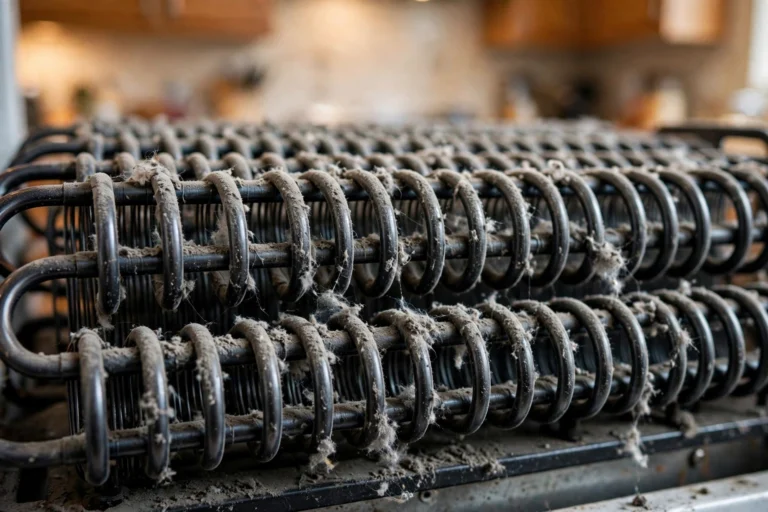
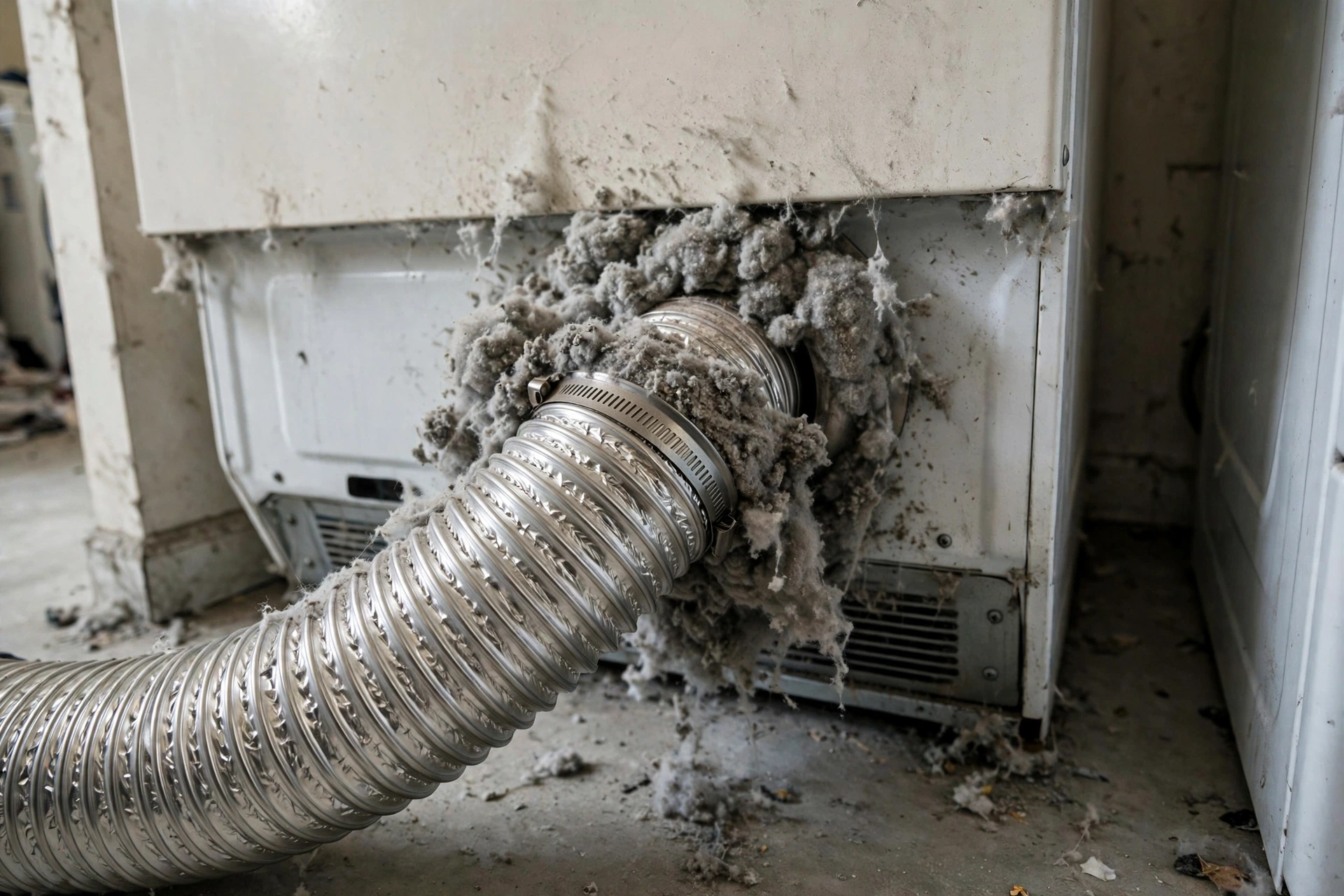
One dryer owner opened up the vent duct and found this: “That duct was STUFFED full of lint for most of its length with maybe an inch on top of air space. No damn wonder the dryer was taking 75 minutes or more to dry a load.”
The dryer wasn’t broken. It just couldn’t breathe.
A dryer blows hot air through wet clothes, and that hot, damp air has to escape — through the vent duct running from the back of the dryer to the outside of the house. When the duct packs full of lint, damp air can’t leave, clothes stay wet, and a 40-minute cycle drags on for 75 minutes or more.
If your dryer taking too long to dry is the problem, check the vent first — not the dryer.
Why is your dryer taking too long to dry?
Restricted airflow is the most common cause. Work through this list in order:
1. Clean the lint screen. A clogged screen chokes airflow before it starts. Clean it after every load.
2. Check the vent airflow. While the dryer runs, go outside to the vent flap or hood. Warm air should be blowing out and the flap should be open or fluttering. If the flap barely moves, the vent is clogged.
3. Check the hose behind the dryer. Pull the dryer out and look at the vent hose. Kinked, bent sharply, or crushed flat? A damaged or lint-packed vent hose is one of the most common things a repair technician finds.
4. Then suspect the dryer itself. If airflow is strong and clear but clothes still take forever, it’s the machine — a failing heating element, a bad thermostat, or a worn-out blower.
Skipping straight to “the dryer’s dying” costs people money. Nine times out of ten, it’s the vent.
Signs your dryer vent is clogged
You don’t have to take anything apart to spot the warnings:
- One load needs two cycles. A 40-minute load now takes 75+ minutes.
- Clothes are hot but damp at cycle end. The heat is there — moisture removal is failing.
- The laundry room feels hot and humid — damp air leaking back from the vent instead of escaping outside.
- The vent flap outside barely moves. Weak airflow at the exterior vent is the clearest sign of a deep clog.
- The top of the dryer feels unusually hot. Heat is building up because it can’t vent out.
- A burning smell. Lint is flammable, and heat buildup around packed lint is how dryer fires start. Stop using the dryer and see our guide on why your dryer smells like burning — then clear the vent.
The airflow test: 30 seconds, no tools
- Start the dryer on high heat with nothing inside.
- Walk outside to the vent exhaust — a flap, louvered hood, or round grille on an exterior wall.
- Hold your hand a few inches from the opening.
Good airflow: The flap swings open; you feel a strong, steady stream of warm air.
Bad airflow: The flap barely twitches, or you feel only a weak trickle. Lint is packed somewhere in the duct between the dryer and that opening.
Check the flap when the dryer is off, too — if it’s stuck open, lint has jammed it, which also lets dust, bugs, and birds into the duct.
Kinked vs. crushed vs. clogged: what’s behind your dryer
Pull the dryer out and check the short hose between the dryer and the wall:
- Kinked: The hose bends sharply, like a bent garden hose. The dryer was pushed back too hard. Straighten it and leave enough slack.
- Crushed: Flexible foil hose collapses flat against the wall and can’t be reliably re-expanded — replace it.
- Clogged: The hose looks fine outside but is packed with lint inside. Disconnect it (dryer unplugged first), shake it out, and run a vent brush through it.
One upgrade worth making: swap flexible foil hose for rigid metal ducting. Foil catches lint in every ridge and kink. Rigid metal has smooth walls that lint slides through, making clogs far less likely.
Why West Texas dust makes it worse
Vents clog with lint everywhere — but in West Texas, you get lint plus dust. Big Country dust storms drive fine, powdery dust into every opening in the house, including the dryer vent. That dust layers on top of the lint and packs it down, so vents clog faster here than in less dusty parts of the country.
After a dust event, check the exterior vent flap — a coat of fine dust around the hood means some of it made it inside.
That’s why the “clean every year or two” advice from national sites undersells it for Abilene. Once a year is the minimum here; dusty stretches or heavy use push it sooner.
How often should you clean a dryer vent?
At least once a year. Clean more often if you do several loads a week, have pets, have a long or rooftop vent run, or had a dusty season.
A good rhythm: clean the vent when you swap your HVAC filter or check smoke-detector batteries. Tie it to something you already do.
How to clean the vent yourself
For a standard vent that exhausts through a wall:
- Unplug the dryer. Always. Pull it away from the wall.
- Disconnect the vent hose from the dryer and the wall connection.
- Clear the hose. Shake it out, then run a dryer vent brush (a long flexible brush from a vent cleaning kit) through it.
- Clean from outside. At the exterior vent, run the brush inward and pull out what comes loose.
- Vacuum everything — the dryer’s vent outlet, the hose, and the wall connection — then reassemble.
- Reconnect and test. Reattach the hose with metal clamps, push the dryer back without crushing the hose, and run the airflow test again.
When to call a pro: If the vent run is long, goes up through the attic and out the roof, or airflow is still weak after cleaning, the clog is somewhere you can’t reach. Rooftop vents especially are hard to clean safely — that’s a job for someone with the right equipment.
Safety note: Don’t go past disconnecting the hose. Never open the dryer’s cabinet or touch anything inside the machine. The vent is yours to clean; the inside of the dryer is not.
The fire risk is real
Dryer fires aren’t a myth. According to U.S. Fire Administration figures, as reported by appliance-troubleshooting guides, roughly 2,900 happen in the U.S. each year — and “failure to clean” is the leading cause at about 34%.
The fire risk comes from the same lint that slows your drying. Clean the vent, and you fix both at once.
When it’s NOT the vent
Sometimes the vent is clear and the dryer still underperforms:
- Failing heating element. Clothes tumble but stay cool or lukewarm — little or no heat.
- Bad thermostat or thermal fuse. The dryer overheats and shuts off, or the heat cycles on and off erratically.
- Worn blower or drum seals. Air leaks around the drum instead of flowing through the clothes.
If you’ve cleared the vent, fixed the hose, and the dryer still takes forever or keeps shutting off, the next step is a proper diagnosis. Call (325) 339-1818 for appliance repair in Abilene, TX.
Why is my dryer taking so long to dry?
Restricted airflow — usually a vent duct packed with lint. Check the lint screen, then check airflow at the outside vent while the dryer runs. If airflow is weak, clean the vent and hose. If airflow is strong but clothes still don’t dry, the heating element or thermostat may be failing.
How often should you clean a dryer vent?
At least once a year. Clean more often in dusty West Texas conditions — dust storms pack fine dust into vents on top of lint, accelerating clogs — or if you do laundry frequently, have pets, or have a long vent run that goes up through the roof.
Why does my dryer shut off mid-cycle?
Usually overheating. When the vent is clogged, heat builds up until the thermal limiter trips and shuts the dryer down. Clearing the vent often fixes it. If it keeps happening, the thermostat or thermal fuse may need attention.
How do I check if my dryer vent is clogged?
Run the dryer on high heat with nothing inside, then go outside to the vent exhaust. You should feel a strong stream of warm air and see the flap swing open. Weak airflow or a flap that barely moves means the duct is clogged between the dryer and the outside.
Is rigid metal ducting better than flexible foil hose?
Yes. Flexible foil hose catches lint in every ridge and kink, and it crushes easily when the dryer is pushed back. Rigid metal ducting has smooth walls that lint slides through, making clogs far less likely.
Can a clogged dryer vent cause a fire?
Yes. According to U.S. Fire Administration figures, as reported by appliance-troubleshooting guides, roughly 2,900 dryer fires happen in the U.S. each year, and “failure to clean” is the leading cause at about 34%. Regular vent cleaning handles the fire risk and slow drying at the same time.