Whole-House Surge Protector in Texas: Worth It?
Whole house surge protector Texas: do you need one? For most Texas homeowners, the honest answer is yes. It is one of the cheapest ways to protect some of the most expensive things in your home.
Texas gets hit with more lightning, bigger storms, and more power-grid drama than almost anywhere else in the country. Every one of those events can send a voltage spike through your wiring. And modern appliances — your fridge, washer, dryer, dishwasher, oven — are basically computers with a door. One good spike can fry a control board that costs hundreds of dollars to replace.
A whole-house surge protector won’t make your home invincible. But it stacks the odds heavily in your favor. Here’s what it does, what it costs, and why Texas is a special case.
Why Texas Is Different
Most of the country worries about surges during storm season. In Texas, storm season is most of the year.
Texas regularly leads the nation in total lightning activity. It’s a big state with a long, violent storm season — spring tornadoes, summer supercells, Gulf hurricanes, and the occasional freak ice storm. Every lightning strike near a power line can send a spike into nearby homes.
Then there’s the grid. ERCOT, the Texas power grid, has seen its share of outages and rolling blackouts in recent years. That’s not just an inconvenience — it’s a surge problem. When power is restored after an outage, the sudden return of electricity can send a jolt through your home’s wiring. It only takes a fraction of a second to damage a sensitive circuit board.
And here’s the thing people miss: appliances don’t always die immediately. Sometimes a surge weakens a board and it fails weeks or months later. If your appliance stopped working after a power outage, even a recent one, that earlier surge is the prime suspect.
Whole House Surge Protector Texas: What It Does
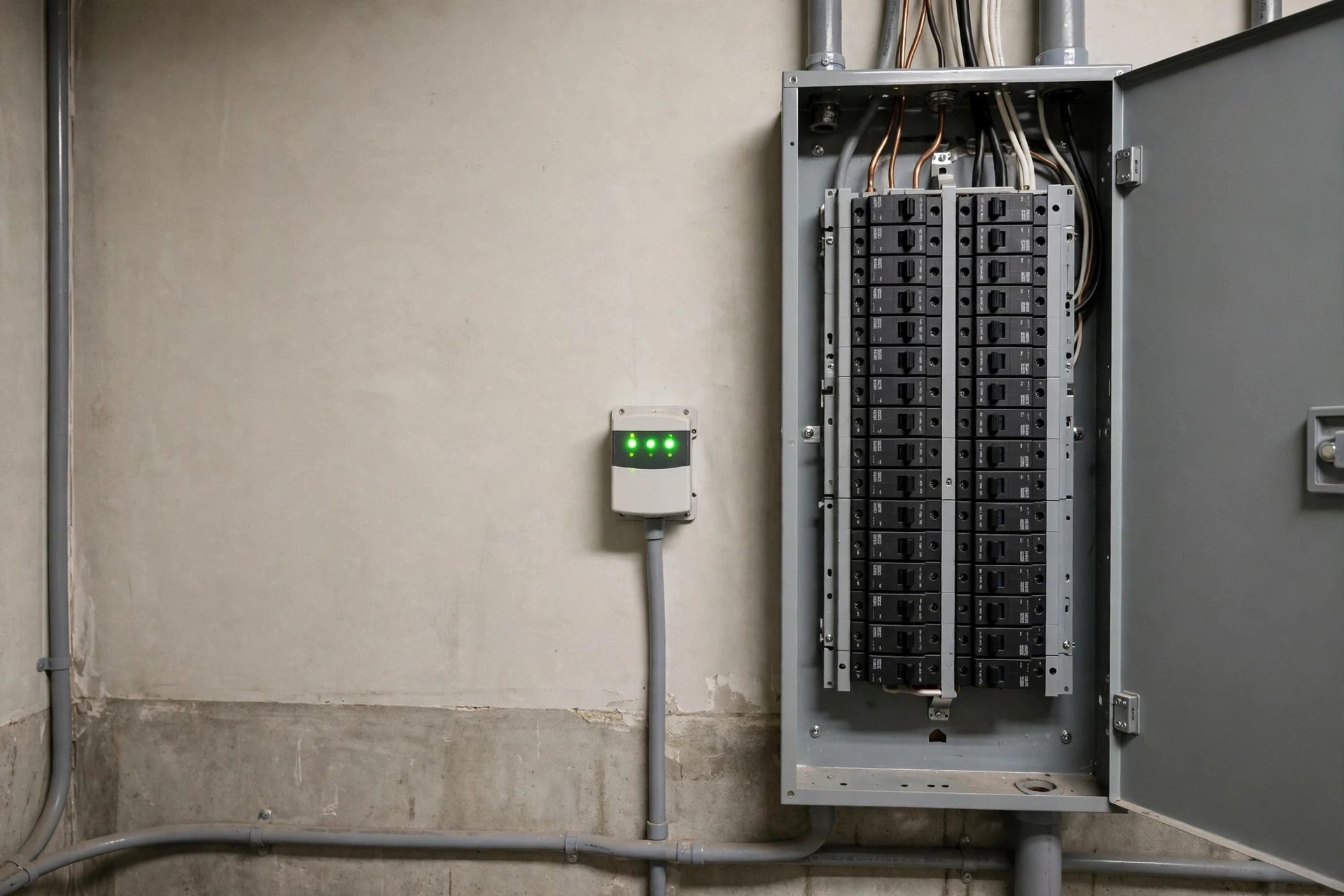
A whole-house surge protector is a small device installed at your electrical panel. Think of it as a guard standing at the front door of your home’s wiring. When voltage spikes above a safe level, the protector diverts the excess electricity into the ground before it can reach your circuits and appliances.
It doesn’t change how your home works day to day. You won’t notice it. It just sits there, waiting for a spike, and clamps it down when one arrives.
What makes it especially useful is that it protects the appliances you can’t plug into a power strip. Your refrigerator is hardwired into the kitchen circuit. Your washer and dryer run on dedicated circuits. Your HVAC system is hardwired too. A whole-house protector covers everything on the panel — the big, expensive, permanently-connected stuff that power strips can’t touch.
It must be installed by a licensed electrician. We are not electricians, and this is not a DIY project — working inside an electrical panel is dangerous.
Whole-House vs. Power Strips: It’s Not Either/Or
A common question: “Don’t my power strips already do this?” Not quite.
Power strips with surge protection (point-of-use protection) protect only what’s plugged into them. They can help with small spikes reaching your TV or phone charger, but they do nothing for your fridge, washer, dryer, or dishwasher — none of which you can reasonably run off a strip.
A whole-house protector does the opposite: it guards every circuit from one central location, but it’s designed to handle big spikes, not every tiny one.
They work best as a team — layered protection. The whole-house unit knocks down the big surges at the panel. The power strips handle whatever smaller spikes make it through to your electronics. If you’re going to pick only one, the whole-house protector protects the most expensive stuff. But using both is the smart setup.
What Texas Law Says: The 2023 Code Change
Here’s something many Texas homeowners don’t know. Texas adopted the 2023 National Electrical Code (NEC), effective September 1, 2023. Under that code, new residential installations and electrical panel upgrades are required to include surge protection.
That means if your home was built or had its panel upgraded recently, it may already have one installed — check your panel for a small device with indicator lights, or ask your electrician.
What about older homes? The code change generally does not force existing homes to retrofit surge protection. But it sends a clear signal: the industry considers whole-house surge protection important enough to make it standard for new builds. If your home is more than a few years old, you probably don’t have one.
Also note that local jurisdictions (your city’s Authority Having Jurisdiction, or AHJ) can interpret and enforce the code differently. If you’re not sure what applies to your home, check with a licensed electrician in Abilene — not an appliance repair company — before making electrical decisions.
How Much Does It Cost?
Based on estimates published by Texas electrical sources, professional installation of a whole-house surge protector typically runs $200 to $700 for most homes, depending on the device, your panel, and local labor rates.
This is a researched estimate from the electrical industry, not a quote from us — we’re an appliance repair company, not electricians. Actual prices in Abilene can vary, so get a quote from a licensed local electrician.
Now put that number next to what a surge can cost you. A single refrigerator control board replacement can run into the hundreds of dollars. Some modern fridges have two or three boards. A washer or dishwasher board isn’t much cheaper. And if a surge takes out multiple appliances at once — which happens during a big storm — you’re looking at thousands.
Viewed that way, $200–$700 for a device that guards everything at the panel is genuinely good value.
The Honest Counterpoints
We promised an honest answer, so here are the things the sales brochures don’t always mention.
Most surges come from inside your house. Lightning gets the headlines, but the small daily surges — your HVAC compressor cycling on, a large motor starting up, the well pump kicking in — happen constantly. These small surges don’t kill appliances outright. They wear electronics down over time, shortening their lifespan. A whole-house protector helps with these too, but it’s worth knowing that the danger isn’t only storms.
Surge protectors wear out. They absorb spikes by sacrificing part of themselves. A big lightning strike can use up a protector in one shot. Smaller daily surges wear it down gradually. Most units have an indicator light that shows whether they’re still protecting you. Plan on replacing the device every few years, or after any major strike. It’s a maintenance item, not a buy-once-forever device.
It reduces risk; it doesn’t eliminate it. A direct lightning strike to your home can overwhelm any residential protector. Think of it like a seatbelt — it dramatically improves your odds, but it doesn’t make you invincible. Pair it with the layered approach (power strips for electronics) and with unplugging sensitive gear during the worst storms if you want maximum protection.
After a Surge: What to Do About the Appliance
Even with protection, surges sometimes get through. If an appliance acted strangely — or stopped working entirely — after a storm, outage, or flickering lights, don’t just keep resetting it. Unplug it, and check your surge protector’s indicator lights to see if they show it absorbed a hit.
If the appliance still won’t run properly, the damage may be in the control board or another component. That’s an appliance repair job, not an electrical one. Boards can sometimes be diagnosed and replaced without buying a whole new appliance — and fridges are often the first victims since they run 24/7 and never get unplugged.
Call (325) 339-1818 for appliance repair in Abilene, TX.
The Bottom Line
So — do you need a whole-house surge protector in Texas? If you own your home, live in an area with frequent storms or unreliable power, and own modern appliances with electronic controls, it’s one of the most cost-effective upgrades you can make. The device costs a few hundred dollars; the appliances it guards cost thousands.
Just remember three things: have it installed by a licensed electrician (never DIY electrical work), check the indicator lights periodically, and replace it after a major strike. Do that, and your appliances stand a much better chance of surviving the next Texas storm.
Do I need a whole-house surge protector in Texas?
For most Texas homeowners, yes. Texas leads the nation in lightning activity, gets frequent severe storms, and its power grid has had high-profile outages — and every outage and restoration can send damaging spikes through your wiring. Modern appliances have sensitive control boards that a single spike can destroy, and a whole-house protector guarding your electrical panel is one of the cheapest ways to protect them. It must be installed by a licensed electrician.
How much does a whole-house surge protector cost in Texas?
Based on estimates from Texas electrical sources, professional installation typically runs $200 to $700 depending on the device, your electrical panel, and local labor rates. That is a researched industry estimate, not a quote. A single appliance control board replacement can cost hundreds of dollars, so the protector often pays for itself if it prevents even one board failure.
Does Texas require whole-house surge protectors by law?
Texas adopted the 2023 National Electrical Code effective September 1, 2023, which requires surge protection for new residential installations and electrical panel upgrades. Older homes are generally not required to retrofit, but local enforcement can vary, so check with a licensed electrician or your local authority to see what applies to your home.
Is a whole-house surge protector better than power strips?
They protect different things, and they work best together. A whole-house protector guards every circuit from the electrical panel, including hardwired and large appliances like your fridge, washer, dryer, and HVAC that can’t plug into a strip. Power strips only protect what’s plugged into them. Layered protection — whole-house at the panel plus strips for sensitive electronics — is the smart setup.
How long does a whole-house surge protector last?
It depends on how many surges it absorbs. A major lightning strike can wear one out in a single event, while smaller daily surges degrade it gradually. Most units have an indicator light showing whether they are still protecting you. Check the lights periodically and plan to replace the device every few years, or right after a major strike.
I’m a renter in Texas — can I still get surge protection?
A whole-house protector installs at the electrical panel, so it usually requires the homeowner’s or landlord’s permission and a licensed electrician. As a renter, your practical option is point-of-use protection: quality surge-protecting power strips for your electronics. If your landlord is open to it, you can suggest a whole-house unit as an upgrade that protects their property’s appliances too.