Washer Won’t Fill After a Freeze? Frozen Lines Explained
Washing machine frozen pipes are the culprit when a cold snap hits Abilene and your washer just… hums. The temperature drops into the teens for a night or two. Then you go to run a load of laundry, and no water flows in. The cycle won’t start.
One washer owner described it exactly like this: after a partial pipe freeze, both water lines at the wall were running fine — but the machine only hummed as it tried to fill. Water at the wall, but no water in the tub.
If that sounds familiar, you’re probably dealing with a frozen line somewhere between your plumbing and your washer’s drum. Here’s what’s happening and what to do about it.
How Washing Machine Frozen Pipes Happen
Your washer has three water pathways, and all of them can freeze:
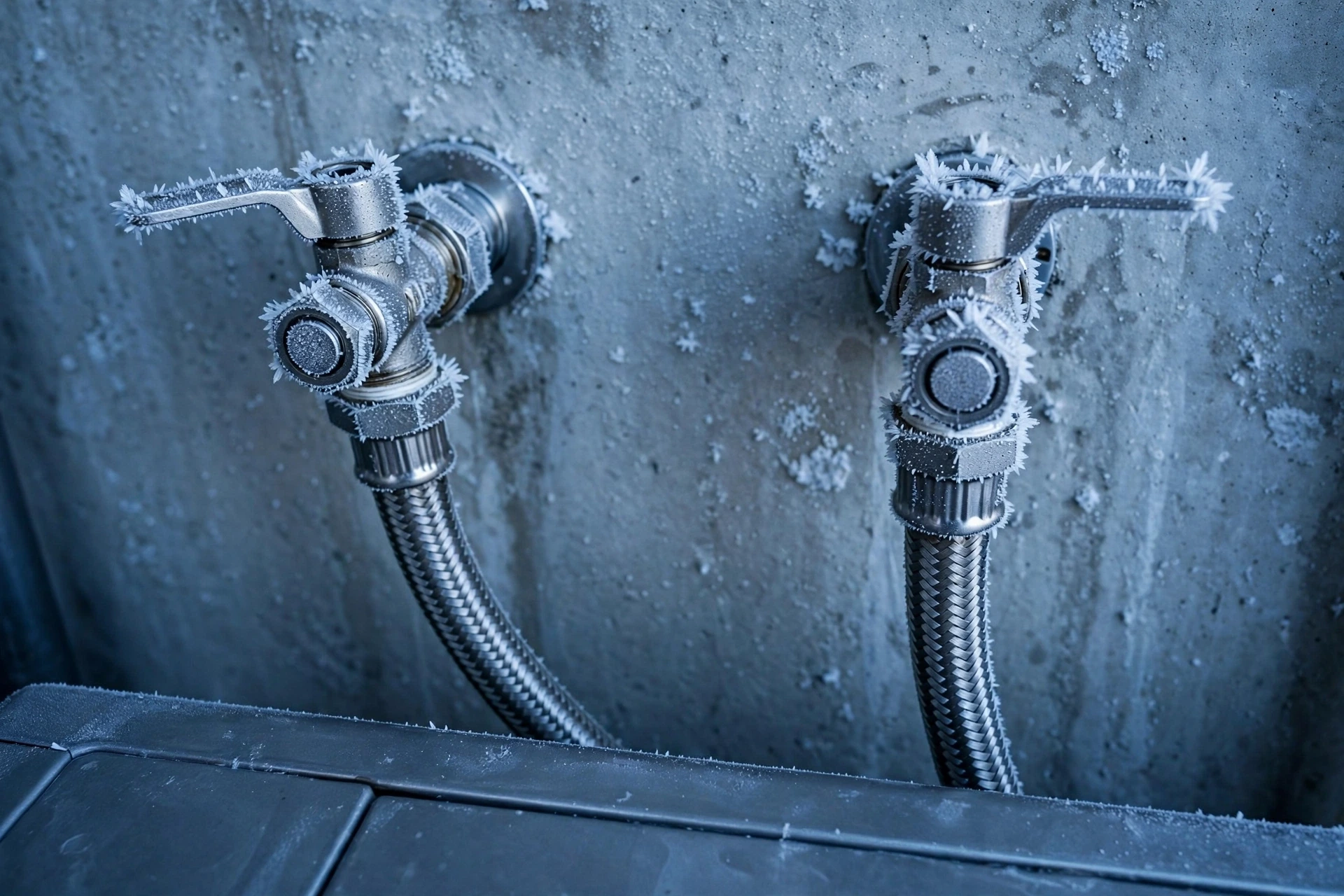
The inlet hoses. These are the rubber or braided steel hoses running from the hot and cold water valves on your wall to the back of the washer. They’re thin, they hold standing water, and they’re often exposed along an exterior wall. Ice forms in them fast.
The inlet valve. Where the hoses connect to the back of the machine, there’s an electric valve that opens to let water in. Just inside that valve are tiny mesh screens that catch sediment. Water can freeze right at the valve or in the screens.
The drain hose. This one gets overlooked. The drain hose carries used water out of the washer and into a standpipe or sink. If the end of it sits in a cold spot, or water pooled in a low spot, it can freeze solid. A frozen drain means the washer can’t empty.
Washers in garages, utility rooms, and mudrooms are the most vulnerable. These rooms are often unheated, poorly insulated, or share a wall with the outside. The plumbing itself might be fine because it’s inside the heated part of the house — but the last few feet of hose sitting in a 25°F laundry room will freeze every time.
That Humming Sound: What It Actually Means
When your washer hums but doesn’t fill, that hum is the inlet valve trying to do its job. The machine opens the valve electrically. You hear the solenoid click and buzz. But ice is blocking the water from passing through.
Think of it like trying to drink through a straw with a knot tied in it. You can hear yourself sucking, but nothing gets through.
And here’s the part that confuses people: water at the wall doesn’t mean water at the machine. The pipes in your walls may have thawed completely. Both faucet valves may run strong into a bucket. But the freeze can be sitting inside the hose itself, inside the inlet valve on the back of the machine, or in the screens at the hose connection. The wall side is clear; the washer side is still frozen.
Why It Spins but Won’t Fill
Another common report from a freeze: “Will not fill, but will spin.”
This actually makes perfect sense once you know how a washer works. Spinning is a mechanical action — the motor turns the drum, and the drain pump pushes out whatever water is there. It doesn’t need any new water to come in.
Filling, on the other hand, requires water to flow all the way through the inlet hoses, through the valve, through the screens, and into the tub. If ice is blocking any point in that path, the machine hums, waits, hums again — and eventually may throw an error code or shut off.
So: spin working while fill doesn’t is a classic sign that the problem is water supply, not the machine itself. That’s good news — a supply problem is usually cheaper and simpler than a broken washer.
How to Thaw Frozen Washer Lines Safely
Before you start: turn off the power to the washer at the breaker. You’ll be working with water around an electrical appliance. Unplugging the machine is good; killing the breaker is better.
Then:
1. Confirm where the freeze is. Disconnect the inlet hoses from the wall valves (with the water off) and point them into a bucket. Open the wall valves briefly. If water flows, the house pipes are fine and the freeze is in the hoses or the machine.
2. Thaw the hoses with warm — not hot — water. Soak towels in warm water, wring them out, and wrap them around the frozen hoses. Replace the towels as they cool. Repeat until water flows freely through the hose. A hair dryer on LOW heat, held back a safe distance and aimed at the hoses and connections, also works — keep it moving so you don’t overheat any one spot.
3. Warm the room. If the laundry room is cold, space heaters or even a portable fan heater pointed into the space can help. Open any cabinet doors or interior doors that let warm air reach the pipes. Sometimes just getting the room above freezing does the job — it just takes time.
4. Check the inlet screens. Unscrew the hoses from the back of the washer and look at the small mesh screens inside the inlet valve openings. Freezes break sediment and rust loose inside pipes, and that debris collects on these screens. Pop them out, rinse them clean, and put them back. This one step fixes a surprising number of “still not filling” complaints after a thaw.
5. Watch for leaks as things melt. This is important: a burst hose or cracked fitting only shows itself once the ice melts. The ice was plugging the hole. As it thaws, water can start spraying or dripping from a spot that looked fine an hour ago. Stay nearby while thawing. If you see water coming from a hose or connection, shut the water off at the wall valves.
What NOT to do:
- No open flames. Never use a torch, lighter, or any open flame near washer hoses or valves.
- No boiling water on the fittings. Pouring boiling water directly on connections can crack plastic parts and rubber hoses from thermal shock. Warm water on towels is the safe method.
- Don’t force it. If the hose is frozen solid at the valve and won’t budge, don’t wrench it. Wait, warm it, try again.
After It’s Thawed: The Fill Test
Once water flows through the hoses again, don’t just walk away. Run a complete check:
- Reconnect the hoses and make sure the connections are snug.
- Turn the water back on and check every connection for drips — at the wall valves and at the back of the washer.
- Restore power and start a short fill cycle. Listen: water should flow in steadily with no humming-then-stopping.
- Let it run a full cycle. Watch the drain hose area too — if the drain was frozen, a partially cleared drain can back up.
- Keep an eye (and nose) on the area for a day. Slow leaks from freeze damage can take hours to show up.
If the machine still won’t fill after everything has thawed and the screens are clean, the freeze may have damaged the inlet valve itself. Valves can crack internally when water freezes inside them, and at that point the valve usually needs to be replaced. If you get to that stage, washing machine repair in Abilene, TX can handle it — a valve replacement is a common repair.
Prevention: Keeping It From Happening Again
Freezes in Abilene are short but sharp. A few simple habits will save you a lot of trouble:
- Keep the laundry room heated. If your washer is in a garage or unheated utility room, a small space heater set on low during freezing weather makes all the difference. Even just keeping the door to the heated part of the house open helps.
- Insulate exposed pipes and hoses. Foam pipe insulation sleeves are cheap and slide right over exposed water lines. They won’t stop a hard, long freeze, but they buy time during overnight cold snaps.
- Let faucets drip. When temperatures are well below freezing overnight, let a nearby faucet drip slightly. Moving water is much harder to freeze.
- Disconnect and drain the hoses if the space will freeze. If you have a washer in an unheated space and a hard freeze is coming, shut off the wall valves, disconnect the hoses, and drain them into a bucket. No water in the hose means nothing to freeze.
- Consider heat tape on exposed runs. Electric heat tape wrapped around exposed pipe runs and plugged in during freezes is a reliable option for spots that are always vulnerable.
- Know your shutoff. Locate the hot and cold water valves behind your washer now — not in a panic at midnight with water spraying. Test that they actually turn.
The Texas Angle: We Get Caught Unprepared Because Freezes Are Rare
One question comes up a lot from people in places like Abilene: “Will washing machine hoses freeze very easy? It probably freezes here only 5 or 6 days each winter.”
The honest answer: yes, they freeze easily. Washer hoses are thin, they sit full of standing water, and they’re often in the coldest room in the house. It doesn’t take a blizzard. One night in the mid-20s with wind against an exterior wall is enough.
And the fact that freezes are rare is exactly why they do so much damage here. In colder states, laundry rooms are built with freeze protection in mind and everyone knows the drill. In Texas, the washer sits in an uninsulated garage, nobody thinks about the hoses, and the first warning is the humming valve on a Saturday morning.
We all learned this lesson the hard way in February 2021. Winter Storm Uri knocked out power for more than 4.5 million Texans and brought days of sub-freezing temperatures. In Abilene, water plants struggled, pipes burst all over town, and families went days without water for drinking or washing. It was a painful reminder that “it never gets that cold here” isn’t a plan.
You don’t need to prep for Uri-level disaster every winter. You just need a plan for the handful of freezing nights Abilene gets each year: know where your shutoffs are, keep the laundry space warm, and check on the washer the morning after a hard freeze. (Outages bring their own kitchen problems too — see how long food lasts in the fridge without power if the lights go out.)
A Quick Note on Dishwashers
The same problem hits dishwashers. A dishwasher in an unheated space — a garage laundry room, an outdoor kitchen, a poorly insulated kitchen on an exterior wall — has the same vulnerable parts: an inlet valve, a thin inlet line, and a drain hose that can freeze shut. The symptoms are similar (runs but doesn’t fill, or fills and won’t drain), and the thawing logic is the same: warm the space, thaw with warm towels or low hair-dryer heat, check for leaks as things melt, never use open flame or boiling water on fittings.
The Bottom Line
A washer that hums but won’t fill after cold weather is almost always a frozen line problem — in the hoses, the inlet valve, or the screens — not a broken machine. Thaw it gently, clean the inlet screens, watch for leaks as the ice melts, and prevent the next freeze with insulation, heat, and drained hoses.
The morning after a hard freeze, take five minutes and run a quick fill on the washer before you load it with clothes. Finding a frozen line with an empty tub is an inconvenience. Finding it after you’ve started a full load — with clothes sitting in a machine that can’t drain — is a much worse morning.
Call (325) 339-1818 for appliance repair in Abilene, TX.
Why is my washing machine humming but not filling after a freeze?
The hum is the inlet valve opening electrically — but ice is blocking water from passing through. Water at your wall valves can run fine while the freeze sits inside the hoses, the valve itself, or the inlet screens. Thaw the hoses with warm towels or a hair dryer on low, then clean the mesh screens inside the inlet valve openings, since freezes break sediment loose that clogs them.
Why will my washer spin but not fill in cold weather?
Spinning is mechanical — the motor turns the drum without needing new water. Filling requires water to flow through the inlet hoses, valve, and screens. If ice blocks any point in that path, the machine hums and won’t fill. Spin working while fill doesn’t is a classic sign the problem is frozen water supply, not a broken washer.
How do I thaw frozen washing machine hoses safely?
Turn off the power at the breaker first. Then wrap the frozen hoses in towels soaked in warm (not boiling) water, replacing them as they cool — or use a hair dryer on low heat, kept moving. Warm the room with a space heater. Never use an open flame, and never pour boiling water directly on fittings, which can crack plastic and rubber parts from thermal shock.
Can frozen washer hoses burst?
Yes. Water expands when it freezes, and it can split a rubber hose or crack a plastic fitting. The dangerous part: the ice plugs the hole, so you may not see any damage until it thaws. Always watch for spraying or dripping as things melt, and keep the wall valves handy so you can shut water off fast.
Will washing machine hoses freeze easily in Texas?
Yes — they’re thin, hold standing water, and often sit in unheated garages or utility rooms. It only takes one night in the 20s against an exterior wall. Texans get caught unprepared precisely because freezes are rare: the washer sits in an uninsulated garage and nobody thinks about the hoses until the first humming valve on a cold Saturday morning.
How do I prevent my washing machine lines from freezing?
Keep the laundry space heated during freezes, insulate exposed pipes with foam sleeves, let nearby faucets drip on very cold nights, and for hard freezes disconnect and drain the hoses if the space will freeze. Also know where your washer’s hot and cold shutoff valves are before you ever need them in a panic.