How Long Does Food Last in the Fridge Without Power?
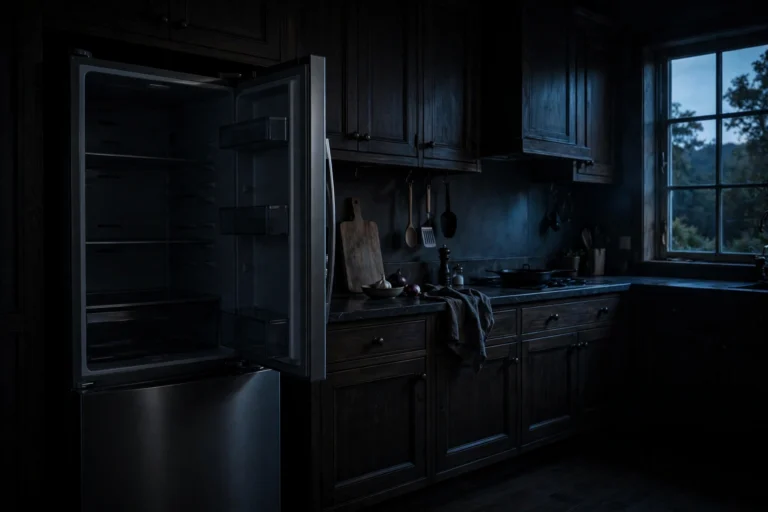
How long does food last in fridge without power? The power goes out, and the first thing most people do is open the fridge to see what’s inside. That’s also the worst thing you can do.
Cold air spills out every time the door opens. If the power might be out for hours, everything you keep the doors closed preserves is time on the clock for your food.
Here are the official rules — these come from the CDC and the FDA, not from us:
- Refrigerator: food stays safe for about 4 hours without power, as long as you keep the doors closed (CDC).
- Freezer: a full freezer holds its temperature for about 48 hours; a half-full freezer for about 24 hours — again, with doors closed (CDC).
- Perishables: the FDA says to discard meat, poultry, fish, eggs, and leftovers after 4 hours without power.
- The guiding rule: “When in doubt, throw it out.” (CDC)
Why Keeping the Doors Closed Matters So Much
A refrigerator is basically an insulated box. With the power off, it can’t make new cold air — it can only hold onto the cold it already has. Every time you open the door, a wave of room-temperature air replaces the cold air inside, and the clock starts over for anything near the door.
That 4-hour fridge window assumes you resist peeking. Open it three or four times to check on things and the real safe window gets shorter. The same goes for the freezer: those 48 and 24 hour numbers only hold if nobody opens it.
Practical tip: decide what you need from the fridge once, grab it all in one quick open, then leave it shut. For kids and snacks, pull things out early and keep them in a cooler so the fridge door stays closed for the real valuables.
During the Outage: What To Do
Keep the doors shut. This is the single most important thing. Tape a “DO NOT OPEN” note on the fridge if your house has door-openers in it.
Eat perishables first. If the outage is dragging on and you’re getting hungry, start with the items most likely to spoil — leftover takeout, deli meat, soft dairy. The shelf-stable stuff can wait.
Move valuables to coolers. If you have ice (or can buy it), move milk, meat, and anything you really don’t want to lose into a cooler packed with ice. A cooler packed full holds cold longer than a half-empty one — same logic as the full-freezer rule.
Dry ice works, with a caution. Dry ice can keep a freezer cold for days if you can get it, but never handle it with bare hands and never use it in a sealed, unventilated room or car — it gives off carbon dioxide as it evaporates. This is a short-term emergency option, not a project; use it only if you already know how to handle it safely.
Unplug the refrigerator. Power often returns with a voltage surge, and that surge can damage control boards and compressors. Unplugging major appliances during an outage is a simple precaution, and it gives you one less thing to worry about when the lights flicker back on. For more on this, see our guide on what to check if an appliance won’t restart after an outage.
When the Power Returns: The Thermometer Test
When the lights come back, don’t just start eating. Check temperatures first.
Use an appliance thermometer. These are cheap, and they take the guessing out of food safety. Ideally, you already have one sitting in the fridge and one in the freezer — many people keep them in there permanently.
The number that matters is 40°F. According to the USDA and FDA, perishable food held above 40°F for more than 2 hours is in the danger zone where bacteria grow fast. When the power returns:
- Fridge at 40°F or below: everything that was in there is fine.
- Fridge above 40°F: check how long it was that warm. If it’s been more than 2 hours in the danger zone, toss the perishables.
- Freezer still has ice crystals on the food: the food is safe to refreeze, even if it partially thawed. (FDA)
- Freezer at 40°F or below: food is safe.
An appliance thermometer also helps during the outage itself — if you have a thermometer with an external display or a wireless sensor, you can monitor temps without opening the door. That’s worth its weight in milk.
How Long Does Food Last in Fridge Without Power? The Keep-vs-Toss List
When in doubt, throw it out — but here are the practical rules from the FDA’s food-safety guidance:
Usually safe to keep (no refrigeration needed):
- Hard cheeses (cheddar, Swiss, Parmesan) — these survive fine
- Butter or margarine (opened)
- Unopened condiments (ketchup, mustard, mayo still sealed)
- Peanut butter, jam, jelly
- Bread, crackers, fresh whole fruit
- Unopened canned goods
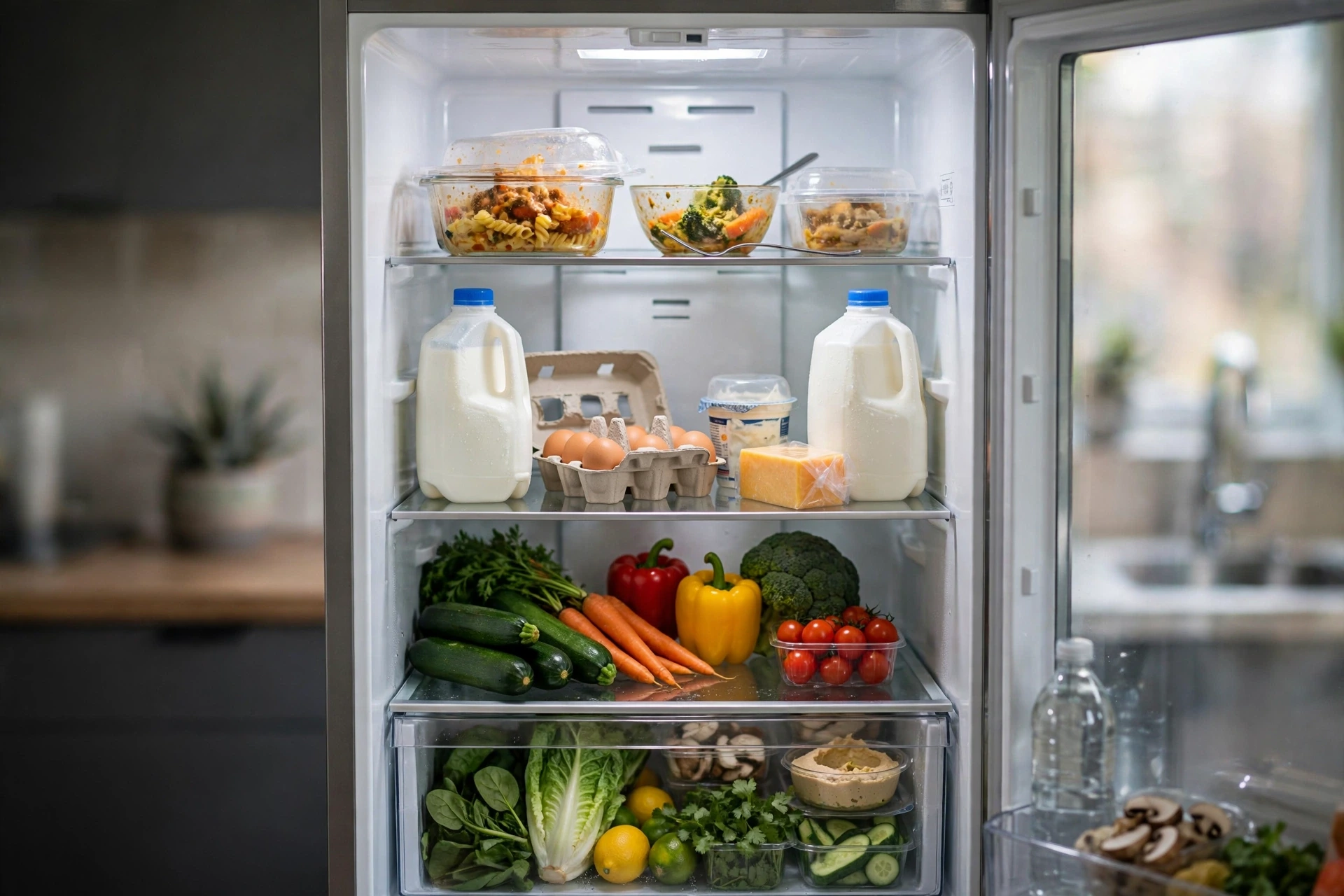
Toss these after 4 hours without power:
- Raw or cooked meat, poultry, fish
- Leftovers of any kind
- Eggs (raw or cooked)
- Milk, cream, yogurt, soft cheeses
- Opened baby formula
- Anything with a questionable smell, color, or texture — trust your nose, but when the answer is unclear, throw it out
A good rule of thumb: if it came from the refrigerated section of the store, it needs refrigeration. If it was on a regular shelf, it’s fine.
The Texas Problem: Summer Outages Are Worse
Those CDC numbers were written for normal conditions — a house sitting around 70°F. They don’t assume the inside of your home is baking.
In an Abilene summer, the power going out means the house starts climbing toward 90 or 100°F within a few hours. A refrigerator sitting in a 95°F room loses its cold much faster than one in a 70°F room. The 4-hour window is a best case. In a summer blackout, act like you have less time:
- Get perishables into coolers with ice fast — don’t wait out the clock.
- Keep the doors shut even more strictly — every peek costs you more when the room is hot.
- Freeze water bottles ahead of summer storm season — they double as freezer ballast (keeping the freezer fuller holds temperature longer) and turn into ice packs when you need them.
And winter has its own version of the problem. Texans remember Winter Storm Uri in February 2021, when millions lost power for days. One UT student told the Daily Texan about “$240 worth of food” rotting in their fridge — a story that played out in thousands of kitchens across the state. Whether it’s a summer outage or a winter one, the preparation is the same: thermometers in the appliances, frozen water bottles for ballast, and a cooler ready to go.
If the Fridge Doesn’t Come Back On
Sometimes the food survives the outage but the appliance doesn’t. The surge when power returns can damage control boards, relays, and compressors — one of the most common post-outage failures. If your refrigerator hums, clicks, flashes an error code, or just sits silent after the power returns, read our guide on what to check if an appliance won’t restart after an outage before assuming it’s dead. If you need professional refrigerator repair in Abilene, TX, that’s what we’re here for.
How long will food last in refrigerator without power?
About 4 hours, according to the CDC — as long as you keep the refrigerator doors closed. After 4 hours, the FDA recommends discarding perishable foods like meat, poultry, fish, eggs, and leftovers. The rule of thumb: “When in doubt, throw it out.”
How long does food last in a freezer without power?
The CDC says a full freezer holds its temperature for about 48 hours, and a half-full freezer for about 24 hours, with the doors kept closed. If food still has ice crystals on it when the power returns, it’s safe to refreeze.
What foods can I keep after a power outage?
Hard cheeses, butter, unopened condiments, peanut butter, jam, bread, and unopened canned goods are usually fine. Toss meat, poultry, fish, eggs, milk, yogurt, soft cheeses, leftovers, and opened baby formula if they’ve been without refrigeration for more than 4 hours.
Should I use an appliance thermometer in my fridge?
Yes — it’s the most reliable way to know if food is safe. The key number is 40°F: perishable food held above 40°F for more than 2 hours should be thrown out, per USDA/FDA guidance. Keep one thermometer in the fridge and one in the freezer so you never have to guess.
Does a summer power outage in Texas make food spoil faster?
Yes. CDC’s 4-hour fridge rule assumes normal room temperatures around 70°F. In an Abilene summer, the house can climb toward 90–100°F within hours of an outage, and a refrigerator in a hot room loses its cold much faster. In summer, assume you have less time than the standard window — get perishables into coolers with ice quickly.
Is food safe if the freezer thawed but is still cold?
If the food still has ice crystals on it, it’s safe to refreeze, according to the FDA. If the freezer is at 40°F or below, the food is still safe. But if perishable food has been above 40°F for more than 2 hours, throw it out — refreezing can’t undo bacterial growth.
If your refrigerator won’t come back on after the outage, call (325) 339-1818 for appliance repair in Abilene, TX.