Dryer Smells Like Burning? What to Do
If your dryer smells like burning, don’t ignore it. Most of the time it means lint or dust is heating up somewhere it shouldn’t be. Sometimes it means something more serious, like a worn belt or an electrical problem.
The good news: there are simple, safe steps you can take right now. The most important rule is to stop the dryer first. Don’t finish the load. Don’t run “just one more cycle” to see if the smell goes away.
Dryer Smells Like Burning? Do This First
- Stop the dryer immediately. Pause or cancel the cycle and open the door to let heat escape.
- Unplug the dryer (or turn off its breaker). Never inspect a dryer while it has power.
- Do not run it again until you find and fix the cause of the smell.
- Check the lint screen. Pull it out and clean it fully — look for a waxy film as well as lint, since dryer sheets can leave residue that traps fine dust.
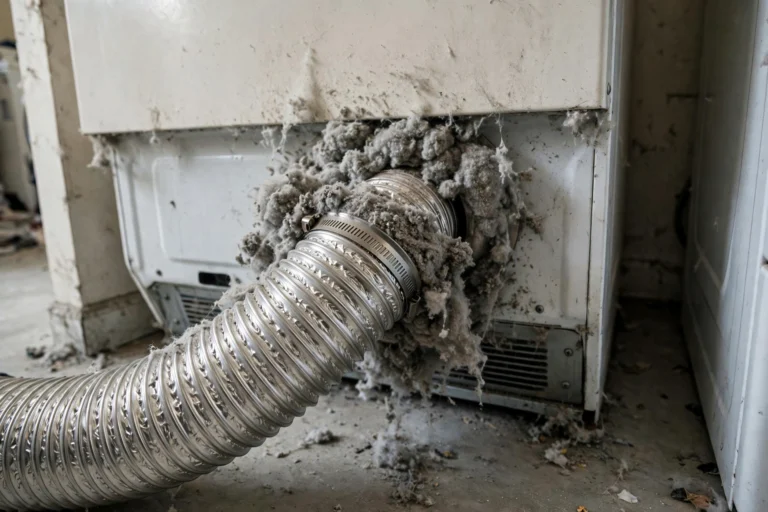
- Check the vent hose behind the dryer. Look for kinks, crushing, or clumps of lint where the hose connects to the machine and to the wall.
- Go outside and check the vent flap. While someone is available, the flap should move freely when the dryer runs. If it barely moves, air isn’t getting out.
If you see scorch marks, melted plastic, or blackened areas anywhere — or if the smell is sharp and chemical, like hot wiring — leave the dryer unplugged and call a repair professional. Do not try to take the dryer apart.
Why the Smell Gets on Your Clothes
A burning smell doesn’t just stay in the machine — it transfers to your laundry. That’s because the dryer’s fan pushes heated air through your clothes. If lint, dust, or a worn part is smoldering anywhere in that airflow path, the smell rides the hot air straight into the fabric.
This is actually useful information. If the clothes themselves smell burnt, the source is almost certainly in the hot-air path — near the heating element or in the venting — rather than something rubbing on the outside of the machine.
The Three Smell Types (and What They Mean)
Not every burning smell is the same. Figuring out which one you’re smelling tells you how serious it is.
1. Lint or dust burning — a dusty, toasty smell.
This is the most common cause. It smells like a toaster that hasn’t been used in a while, or dust burning off a heater in fall. It usually means lint or fine dust has built up near the heating element or in the vent. When the heater kicks on, that buildup scorches.
This matches a real case reported by an appliance tech on JustAnswer: a homeowner found “a moderate amount of lint had accumulated in that area just under the coil, and half of it was burnt to a crisp.” Lint that slips past the lint screen can settle right under the heating element. It sits there, and every cycle the coil heats it a little more — until it scorches or burns outright.
2. Rubber burning — a sharp, hot-rubber smell.
This usually points to the drum belt. The belt spins the drum, and if it’s worn, stretched, or has slipped off track, it can rub and overheat. A rubber smell is different from the dusty smell — it has an acrid, chemical edge, like a car burning its tires.
3. Electrical or plastic burning — the most serious.
This smells like hot plastic, fishy chemicals, or a burning wire. It can mean damaged wiring, a failing motor, or a melted component. There is no safe home fix for this one. Keep the dryer unplugged and have a professional look at it. Call (325) 339-1818 for appliance repair in Abilene, TX.
Beyond the Lint Screen: What to Check
Many people clean the lint screen and assume the job is done. But lint escapes past the screen in small amounts every cycle, and over time it adds up in places you can’t easily see:
- The vent hose and wall connection. Disconnect the power first, then pull the dryer forward and look at the hose. Feel for clumps and check for kinks. A crushed hose is one of the most common causes of overheating.
- The outside vent flap. Go outside while the dryer is running (before you unplug it for good). The flap should open wide. If it barely moves, lint is blocking the exit.
- The area around the drum opening. With the dryer unplugged, you can gently clean lint from the opening where the lint screen sits, using a vacuum hose attachment. Don’t push tools deep inside.
What you should not do: open the dryer’s cabinet, remove panels, or reach near the heating element or wiring. The inside of a dryer has sealed components and live electrical parts even after unplugging (capacitors can hold a charge). That’s pro-only work — a technician can open it safely, clean the heating-element area, and inspect the belt and wiring in one visit.
The Vent Connection: Restricted Airflow Causes Overheating
Almost every burning smell ties back to airflow. A dryer needs to push hot, moist air out through the vent. When lint, dust, or a kinked hose blocks that path, the heat has nowhere to go. The whole machine runs hotter than it should.
That extra heat does two things: it scorches any lint sitting near the heater, and it stresses parts like the belt and the motor. A dryer that’s taking too long to dry is often the early warning sign — the same clogged vent that slows drying today can cause a burning smell next month.
Why West Texas Makes This Worse
Abilene’s dry, windy climate works against dryers. Fine West Texas dust gets into everything, including the lint that collects in your vent. Dust storms push extra fine particles into homes, and that dust mixes with laundry lint to form a denser, harder-to-move buildup.
The practical takeaway: make vent cleaning an annual habit, just like changing AC filters. In a dust-prone area like West Texas, once a year is the minimum — homes near open fields or unpaved roads may need it more often. Check the outside vent flap every few months. It’s a two-minute look that can prevent a real problem.
The Fire Risk Is Real — But Preventable
Dryers cause roughly 2,900 home fires in the U.S. each year, and “failure to clean” is the leading cause at 34% — those are U.S. Fire Administration figures, as reported by appliance-troubleshooting guides. This isn’t meant to scare you. It’s meant to make the point: cleaning matters, and it works. The vast majority of dryer fires trace back to lint buildup — the exact thing the steps above address.
When to Call a Pro
Some situations are beyond a homeowner’s safe reach. Call a repair professional if:
- The smell is electrical, chemical, or like melting plastic
- You see scorch marks, blackened lint, or melted parts
- The dryer keeps shutting off mid-cycle (the thermal fuse may be tripping from overheating)
- The burning smell comes back right after you cleaned everything you could reach — the problem is likely inside the cabinet
- The dryer is making new noises along with the smell (a slipping or broken belt can take out other parts)
If you’re unsure, err on the safe side. A dryer repair visit is a lot cheaper than the alternative. Call (325) 339-1818 for appliance repair in Abilene, TX.
The Bottom Line
Stop the dryer. Unplug it. Clean the lint screen, check the vent hose, and look at the outside flap. A dusty, toasty smell usually means lint is scorching near the heat — fix the airflow and it goes away. A rubber or electrical smell means a part is failing — keep it off and get help. In West Texas, check that vent every year, because dust plus lint is a combination that only gets worse.
My dryer smells like burning and the smell gets on my clothes. What should I check?
Stop the dryer and unplug it first. Clean the lint screen, check the vent hose behind the dryer for kinks or clumps, and go outside to see if the vent flap opens freely while the dryer runs. The smell transfers to clothes because heated air carries it through the fabric — which means the source is in the hot-air path, usually lint near the heating element or a blocked vent.
Can lint really burn inside a dryer even if I clean the screen?
Yes. Small amounts of lint slip past the screen every cycle. Over time it collects under and around the heating element, where the coil scorches it. In one documented case, a tech found lint under the heating coil “burnt to a crisp.” Vacuuming the lint-screen opening with the dryer unplugged helps, but sealed areas inside the cabinet are pro-only.
How do I tell a lint smell from an electrical smell?
Lint or dust burning smells dusty and toasty, like an old toaster. Rubber (a slipping belt) smells acrid and chemical, like burning tires. Electrical burning smells like hot plastic or fishy chemicals — that one is the most serious. If it smells electrical, keep the dryer unplugged and call a professional.
Should I open up the dryer to clean inside?
No. You can clean the lint screen and the lint-screen opening with a vacuum attachment while the dryer is unplugged, but do not remove panels or reach near the heating element or wiring. Internal electrical parts can be dangerous even with the power off. A technician can open the cabinet safely.
Is a burning smell from the dryer a fire risk?
It can be. About 2,900 U.S. home fires per year involve dryers, and failure to clean is the leading cause at 34% (U.S. Fire Administration figures, as reported by appliance-troubleshooting guides). The risk is highly preventable — regular lint and vent cleaning removes the main fuel source.
How often should I clean my dryer vent in Abilene?
At least once a year, and more often if you live near open fields or dusty areas. West Texas dust and wind mix with lint to create dense buildup faster than in humid climates. Check the outside vent flap every few months — if it barely moves while the dryer runs, the vent is blocked.