Can You Put a Refrigerator in the Garage in Texas?
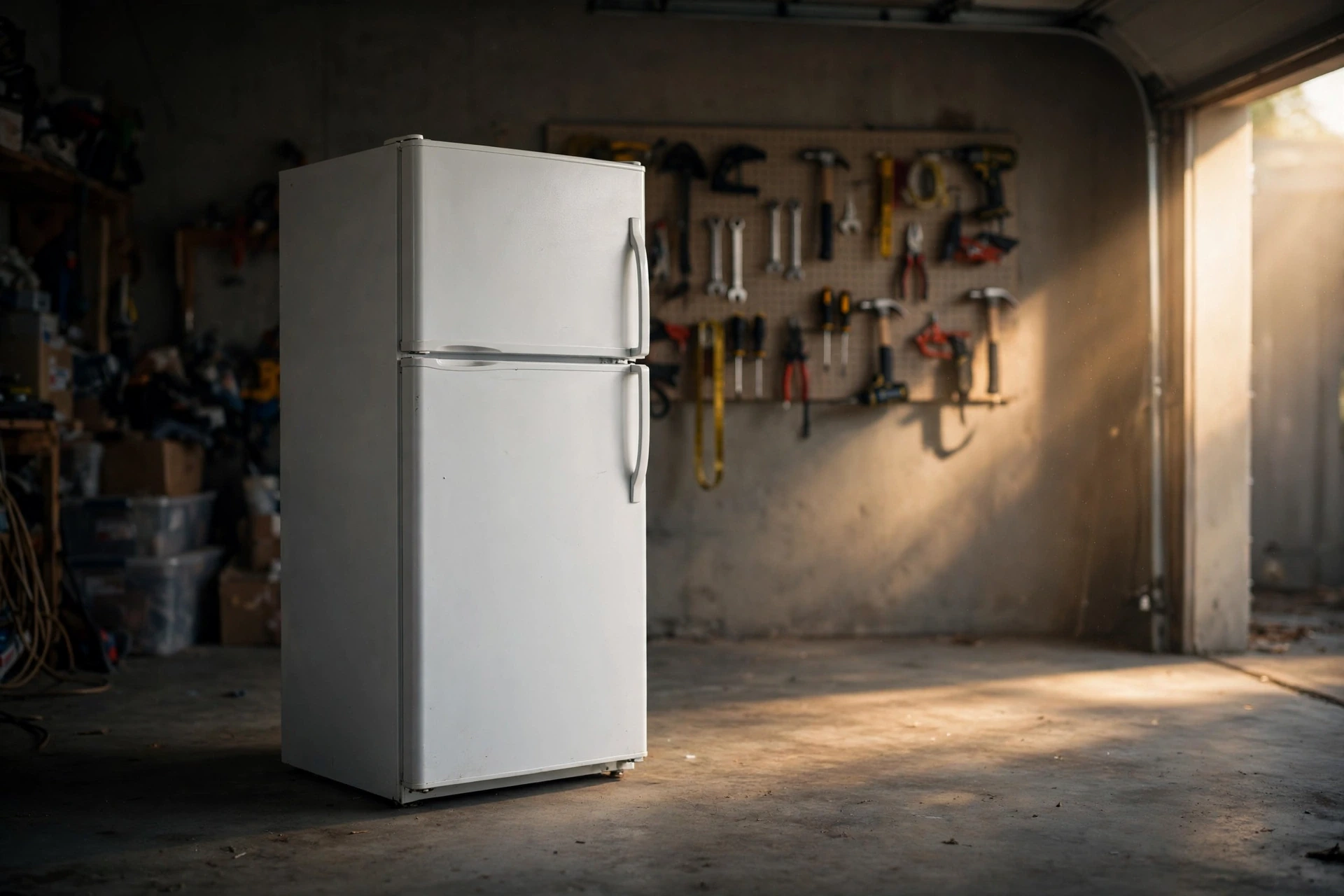
Can you put a refrigerator in the garage in Texas? Short answer: you can, but a regular fridge will suffer in a Texas garage — and it may not keep your food safe. Most garages here in Abilene aren’t insulated, and summer temperatures inside can push well past 110°F. Your fridge was built to work in a 70°F kitchen, not an oven-like garage in July.
That said, people do it all the time. Here’s what actually happens, why it happens, and what to do instead.
Why a Regular Fridge Struggles in a Hot Garage
A refrigerator doesn’t make cold. It moves heat — it pulls heat out of the food compartment and dumps it into the air around it. That’s how the cooling cycle works.
The problem: heat flows from hot to cold, and a fridge can only push heat into air that’s cooler than the inside of the box. When your garage is sitting in the 90s or hotter, the fridge has almost no “room” to dump that heat. The compressor runs longer and longer trying to keep up. In extreme heat, it runs constantly — and still loses.
This is exactly what one fridge owner described online: his 11-year-old Whirlpool worked fine in the garage through winter, but as soon as spring and summer arrived and the garage warmed into the 80s and 90s, the fridge section would only get down to about 60 degrees. That’s not a broken fridge. That’s physics. The machine is doing its best, and its best isn’t good enough at those temperatures.
Heat Kills Fridges Faster — and It’s a Food Safety Problem
A fridge stuck at 50–60°F isn’t just underperforming. It’s in the food danger zone. Bacteria grow fast between 40°F and 140°F. One Texas poster put it bluntly: if you keep a second fridge in the garage, “don’t keep meat out there.”
He’s right. If your garage fridge can’t hold 40°F or below, treat it like a big cooler for drinks and canned goods — not a place for milk, meat, or leftovers. A thermometer inside the fridge section will tell you the truth. Check it on a hot afternoon, not in the morning.
And the heat doesn’t just spoil food. It wears the machine out. Another owner reported that after using a regular fridge in the garage “for only 2 summers it has stopped working completely.” Compressors that run nonstop in 100°F air burn out years earlier than ones in a climate-controlled kitchen. Replacement compressors and extra energy costs add up fast.
What “Garage-Ready” Actually Means
You’ve probably seen “garage-ready” on fridge listings. Here’s what it means in practice.
Most regular refrigerators are designed to operate in rooms between roughly 60°F and 95°F (per sources like RepairClinic). Anything hotter or colder than that is outside the design range, and performance falls off fast.
Garage-ready models — like GE’s Garage Ready line, rated for rooms from 38°F to 110°F — are built with better insulation, more robust thermostats, and heaters near the temperature sensors so the controls behave correctly in temperature extremes. Kenmore manuals similarly specify a 55–110°F room range for many models.
One caveat worth knowing: some newer high-efficiency fridges are more sensitive to temperature extremes than the older ones. Efficient insulation and tightly tuned compressors assume a stable kitchen climate. An old fridge from the 90s may actually handle a garage better than a brand-new energy-efficient one — but neither was truly built for Texas garage summers unless it says so.
Where to check: look up your model’s manual (search the model number on the manufacturer’s site) and find the “ambient temperature” or “installation location” section. If it lists a maximum room temperature, believe it.
Don’t Forget Texas Winters
Heat gets the attention, but cold snaps cause a different failure. In an unheated garage during a freeze — and yes, Abilene gets them — the fridge section can get colder than it should. Food in the fridge section can actually freeze.
Worse, the thermostat gets fooled. The thermostat lives in the fridge section, and if the garage air is 35°F, the fridge section reads cold enough — so the compressor never runs. But the freezer section, which depends on that same compressor cycle, slowly warms up and thaws. You open the freezer after a cold week and find everything partially defrosted.
So the pattern one owner described — fridge in the garage, not cold enough in summer, freezing or thawing in winter — is textbook. That’s what happens when a regular fridge lives in an uncontrolled climate.
What To Do: Practical Steps for Abilene Garages
1. Check your manual first. Find the ambient temperature range for your model. If your garage goes beyond it in summer — and in the Big Country, it will — adjust your expectations.
2. Improve the garage itself. Shade the garage door from direct afternoon sun if you can. Even basic ventilation (a fan moving air through the garage) helps the fridge’s condenser dump heat. Park the fridge away from the hottest wall, not jammed against the side that bakes in the sun.
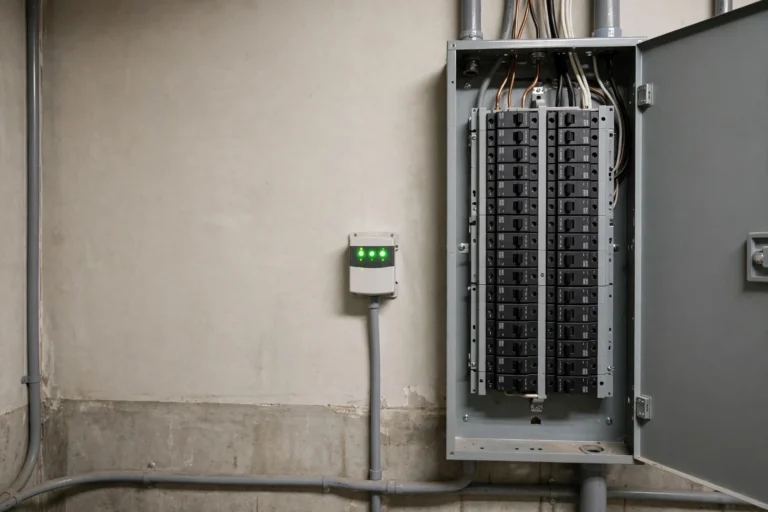
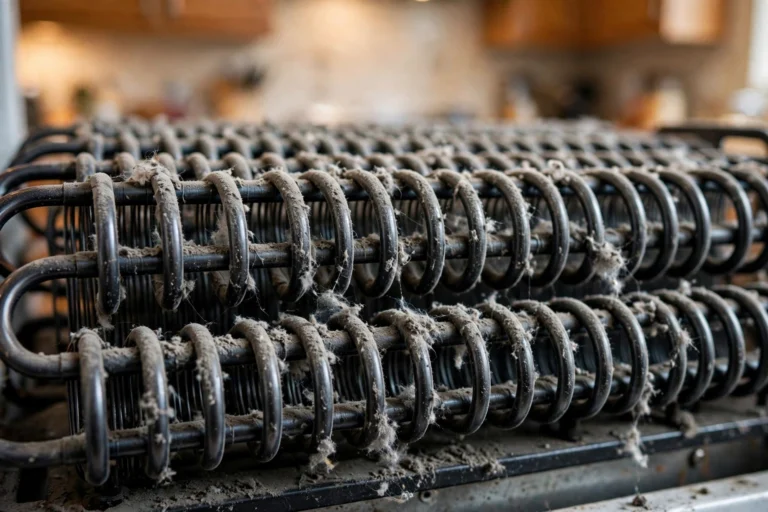
3. Keep the coils clean. Dust and dirt on the condenser coils make a hot-weather problem worse, and Texas dust storms add a real layer fast. Pull the fridge away from the wall and vacuum the coils gently. Unplug the refrigerator first, or switch off its breaker, before you touch anything. Never open sealed electrical components — that’s a job for a technician.
4. Only store non-perishables in a struggling unit. Drinks, sealed cans, condiments, overflow pantry items. If the thermometer says the fridge section can’t hold 40°F, keep meat and dairy in your kitchen fridge.
5. If you’re buying, buy garage-ready. If the garage fridge dies — and garage heat shortens its life — replace it with a model rated for garage temperatures (look for 38–110°F or similar in the specs). It’s cheaper than replacing another regular fridge in three years.
6. Call for a checkup if performance is falling. A weak compressor, low refrigerant, or a dirty condenser can all look like “garage heat” problems but be fixable. If your garage fridge suddenly can’t cool like it used to, refrigerator repair in Abilene, TX can tell you whether it’s the heat or something repairable.
The Honest Verdict: Can You Put a Refrigerator in the Garage in Texas?
For a lot of Abilene families, a garage fridge is about extra space — drinks for the kids, overflow groceries, a place for the deer season harvest. That’s fine, as long as you go in with eyes open:
- A regular fridge in a Texas garage will run harder, cool worse, and die sooner.
- On the hottest days, it may not keep perishables safe. Use a thermometer and be honest about what it says.
- If you want a fridge that actually holds temperature year-round in a garage, buy one rated for it.
And this isn’t just a garage problem. Summer heat hits kitchen fridges in Abilene too — see our guide on why refrigerators stop cooling in hot weather for what to check inside the house.
When in doubt, the safest move is the simplest one: don’t store anything in the garage fridge that you’d be upset to throw away. Call (325) 339-1818 for appliance repair in Abilene, TX.
Can you put a refrigerator in the garage in Texas?
You can, but a regular refrigerator will struggle. Texas garages routinely exceed 95°F in summer, which is outside the operating range of most standard fridges. The fridge will run constantly, cool poorly (often stuck at 50–60°F in the food compartment), and wear out faster. A garage-ready model rated for 38–110°F is a safer choice.
Why does my garage fridge work in winter but not in summer?
A refrigerator moves heat out of the food compartment into the surrounding air. When garage air is in the 80s or 90s, there’s nowhere for the heat to go — the compressor runs nonstop and still can’t get the inside below about 60°F. It’s physics, not a defect, though extreme heat will shorten the compressor’s life.
Is food safe in a garage fridge that can’t stay cold?
Not for perishables. The food danger zone is 40–140°F, where bacteria multiply quickly. If your garage fridge can’t hold 40°F or below, don’t store meat, dairy, or leftovers in it. Use it for drinks, sealed cans, and condiments — and verify with a thermometer on a hot afternoon.
What does “garage-ready” mean on a refrigerator?
Garage-ready fridges are built and tested to operate in a wider temperature range — typically 38°F to 110°F, like GE’s Garage Ready line. They have better insulation and thermostats designed to behave correctly in temperature extremes, unlike standard models designed for 60–95°F kitchen climates.
Can a Texas winter damage a garage fridge too?
Yes. In an unheated garage during a freeze, the fridge compartment can freeze food, and the thermostat can be fooled into thinking it’s cold enough — so the compressor never runs and the freezer section thaws. Both extremes are hard on a regular fridge.
Should I get a second refrigerator for my garage?
It can be worth it for drinks and overflow storage, but be realistic: a standard fridge in a Texas garage runs harder, cools worse, and dies sooner. If you do it, use a thermometer to verify safe temperatures, keep coils clean and dust-free, and consider a garage-rated model when it’s time to replace.