Why Your Refrigerator Can’t Keep Up in Summer Heat
When your refrigerator is not cooling in hot weather, it’s a classic Texas summer problem. Your refrigerator runs nonstop on a 104°F day. The milk doesn’t feel as cold as it should. Maybe the freezer looks a little soft around the edges. You’re not imagining it — summer heat is the hardest thing an average refrigerator has to deal with.
In Abilene, summer means long stretches of 100°F-plus days, blowing dust that gets into everything, and homes that were never built for this kind of heat. All of that lands squarely on your fridge.
Why your refrigerator isn’t cooling in hot weather
A refrigerator doesn’t create cold. It removes heat from inside the box and dumps it into the room. The hotter the room, the harder it has to work to dump that heat — and the longer the compressor has to run to get the job done.
According to major appliance repair guides, refrigerators work best when the room temperature is between about 60°F and 95°F. Once your kitchen climbs past 95°F, the fridge is outside its comfort zone. The compressor runs longer cycles, rest breaks get shorter, and internal temperatures can creep up even when everything is technically working.
That’s why a refrigerator can run almost constantly on the hottest days of summer and still be fine. Constant running in extreme heat is often just the fridge doing its job — the question is whether it’s actually keeping food cold while it runs.
Dusty condenser coils: the Abilene accelerant
If your fridge is running constantly but not cooling well in the summer, the number one suspect is dirty condenser coils — and in West Texas, they get dirty fast.
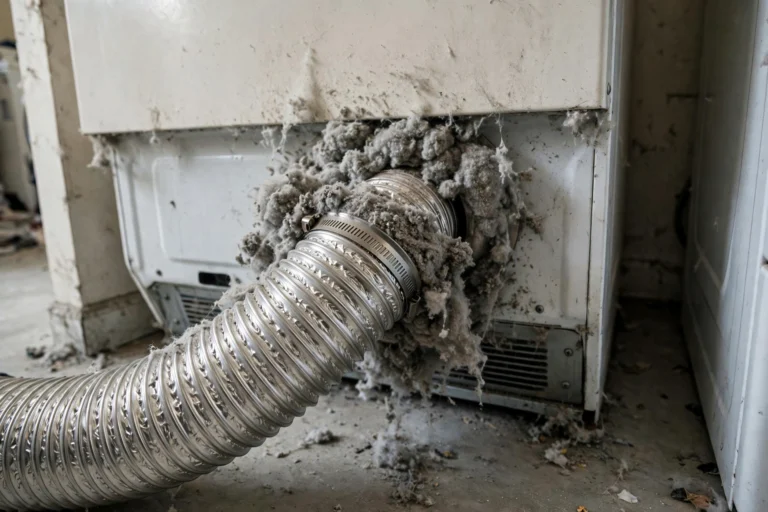
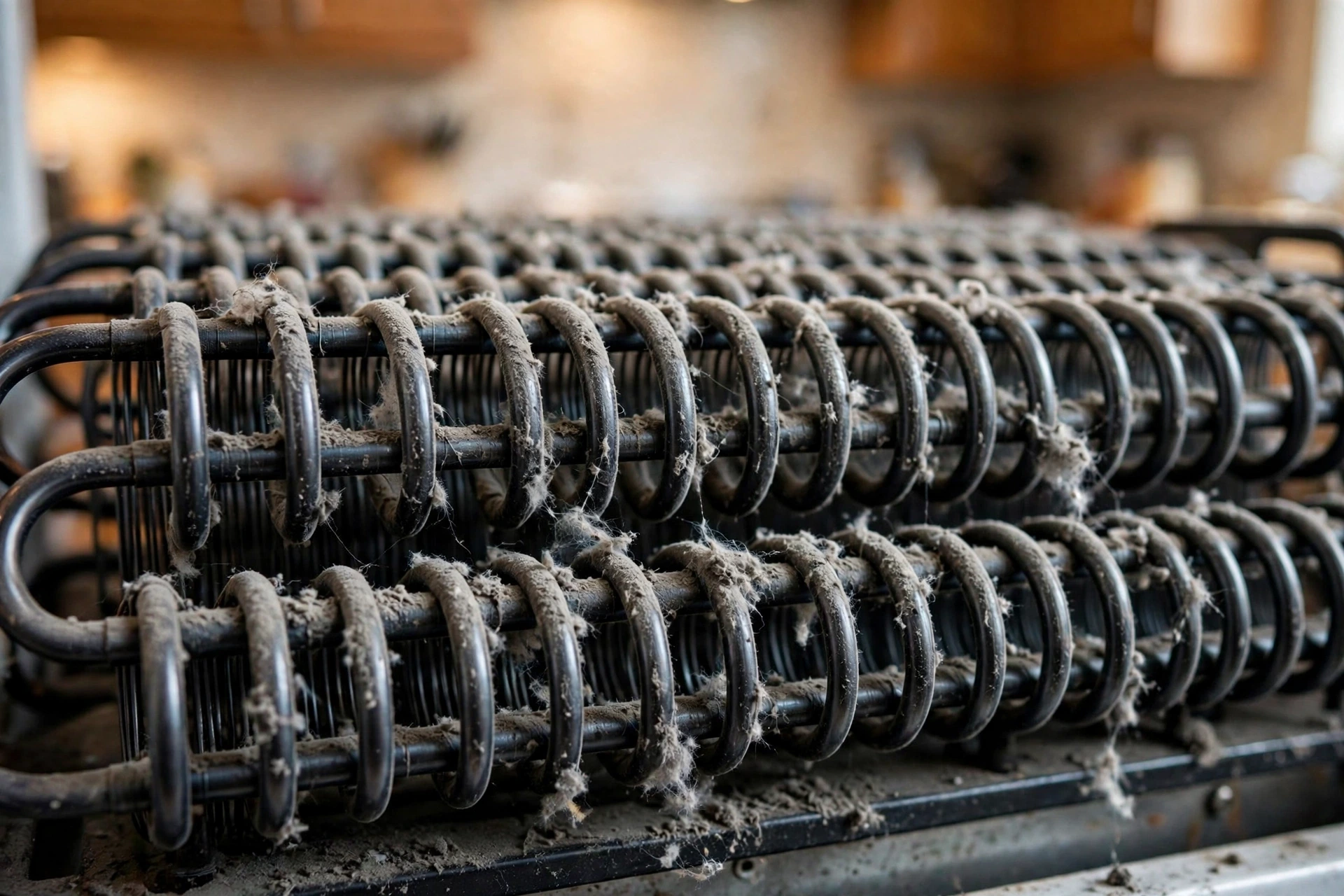
Condenser coils are the black coils that release heat from the fridge. When they’re coated in dust and pet hair, the heat can’t escape. Repair clinics describe it plainly: dust makes the fridge run longer and cool less well. The compressor keeps chugging, burning energy, and the box stays warmer than it should.
Abilene dust storms make this a local problem, not a generic one. Fine dust settles on everything during the spring and summer storm season, and it lands on coils whether they’re underneath or behind the fridge. A coil cleaning every few months during storm season is the single most useful heat-season maintenance step you can do yourself.
How to clean the coils safely
- Unplug the refrigerator first, or turn off its breaker. Don’t skip this — you’re working around electrical parts.
- Find the coils. They’re usually underneath the fridge behind the kick plate, or on the back of the unit.
- Vacuum loose dust with a brush attachment.
- Gently brush between the coils with a soft coil brush or an old bottle brush. Don’t bend the coils.
- Plug the fridge back in and give it several hours to catch up.
Never open sealed electrical boxes, and never touch the compressor itself — if the coils are clean and the fridge still struggles, that’s a job for a technician. Call (325) 339-1818 for appliance repair in Abilene, TX if you’d rather have someone else handle it.
Give the fridge room to breathe
A refrigerator needs air circulating around it to shed heat. In a hot kitchen, tight clearance turns the area behind the fridge into an oven.
Leave a few inches of space on the sides and several inches behind the unit so air can move. Don’t push the fridge tight against a wall — and pay attention to what kind of wall it is. In older or poorly insulated Abilene homes, an exterior wall facing the afternoon sun can radiate serious heat right into the back of the fridge. A unit parked against a hot west-facing wall has to fight that heat too.
Direct sun on the fridge is another one. If your kitchen layout puts afternoon sun on the refrigerator, closing blinds or a curtain during peak heat helps more than you’d think.
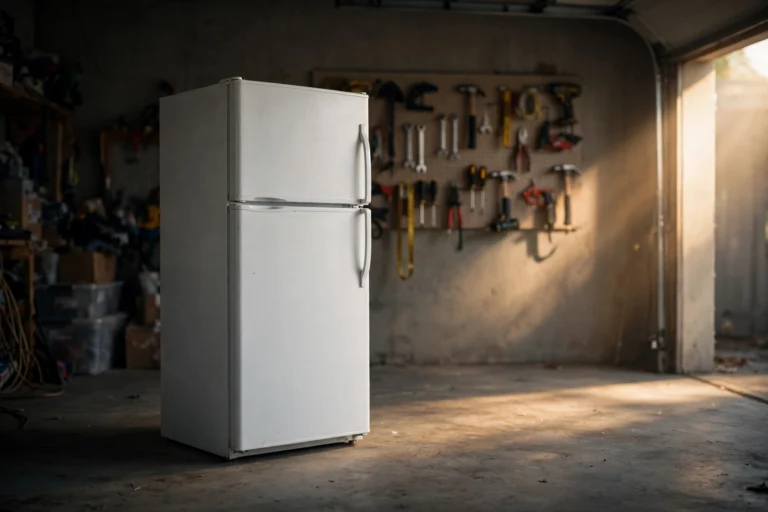
If your second fridge lives in the garage, it’s in the worst spot of all — read our guide to keeping a refrigerator in a Texas garage before the next heatwave.
Check the door seals
A leaking seal can make a healthy fridge act like a struggling one, and summer is when weak gaskets fail — there’s more warm air around and more of it finding its way in.
The dollar-bill test is the classic check: close the door on a dollar bill and try to pull it out. If it slides out easily with no drag, the seal isn’t gripping. Run the bill all the way around the door — seals often fail in one spot first. Wipe dirty gaskets with warm soapy water before you declare them dead; grime alone can break the seal.
If the gasket is torn, cracked, or flattened, it needs replacing. This is a common, affordable repair, and it makes a real difference in summer.
The freezer that “died,” then came back
This one comes up on repair forums every summer:
“One hot day the freezer stopped working. A guy said the compressor is shot. Two days later the fridge seems to be running fine. Is my compressor still shot?”
Maybe — and maybe not. Here’s what’s actually happening.
When a compressor runs nonstop in extreme heat, its internal thermal overload can trip. This is a built-in safety switch: the compressor gets too hot, shuts itself off, cools down over several hours or days, and starts again. From the outside, it looks exactly like the story above — dead one day, fine two days later.
That means an intermittent shutdown on the hottest day of the year is not proof of a dead compressor. It can be heat stress doing what the safety switch was designed for. But a compressor that keeps tripping its overload is telling you something — dirty coils, poor ventilation, a failing fan, or a compressor genuinely on its way out.
How to read the signs:
- One episode, clean coils, normal temps after — likely heat stress. Clean the coils, improve ventilation, and keep an eye on it.
- It keeps happening on hot days — something is making the compressor overheat. Get a diagnosis before the compressor burns out for real.
- Food is thawing and the compressor runs hot and loud — stop and call a technician. A failing compressor can fail hard.
If it happened once, the conditions that caused it are still there.
Why the freezer thaws while the fridge feels fine
A confusing but common heatwave symptom: the refrigerator section feels okay, but the freezer is thawing — ice cream soft, packages frosty on the outside.
The freezer is the canary. It needs the coldest temperatures, so it’s the first section to show trouble when the fridge can’t keep up. Warm air rising when the door opens, weak seals, and dirty coils all hit the freezer first. If your freezer is thawing during a heatwave while the fridge section still feels cold, the cooling system is falling behind overall — the fridge section just hasn’t crossed the line yet.
One more heat-specific culprit: the ice maker. On hot days, ice makers slow down because the freezer isn’t staying cold enough to freeze trays quickly. A slow ice maker in July is often not an ice maker problem at all — it’s a “the freezer is warmer than it should be” problem. Fix the heat issue and the ice usually follows. (Abilene’s hard water adds extra strain here too: mineral buildup makes ice makers work harder year-round, and summer heat is when that weakness shows.)
When constant running is a real problem
Running constantly in 100°F heat can be normal. Here’s how to tell when it isn’t:
- Food temperatures are rising. A fridge thermometer (a few dollars at any store) is the only way to know for sure. The fridge should hold around 37–40°F; the freezer should be at 0°F.
- The unit is old. A 15-year-old refrigerator in its tenth Abilene summer has a compressor that’s earned its retirement. Age plus constant hot running is the classic failure pattern.
- New noises. Clicking, buzzing that wasn’t there before, or a compressor that starts and stops rapidly can signal a failing start relay or compressor.
- One section stops cooling entirely while the other works. That’s rarely “just heat” — it points to a refrigerant, fan, or control problem.
- The pattern repeats. One bad hot day is weather. Every hot day is a problem.
If any of these fit, get a professional diagnosis. Intermittent heat-related failures are exactly the kind of thing a technician can sort out with the right tests — guessing at compressor failure costs people money every summer.
Your Abilene summer fridge checklist
When the next heatwave rolls in and your fridge starts acting up, run through these in order:
- Thermostat check. Make sure nobody (kids, guests, you at midnight) bumped the settings.
- Coils. Unplug the fridge and clean the condenser coils — dust is the local accelerant.
- Clearance. A few inches around and behind the unit, away from hot walls and direct sun.
- Door seals. Dollar-bill test all the way around both doors.
- Freezer temp. Put a thermometer in there. Numbers beat guesses.
- Age and history. If the unit is old, noisy, or this keeps happening, call a pro before the next heatwave — not during it.
Summer is hard on refrigerators in Abilene. A little maintenance before the heat arrives costs far less than a compressor, and far, far less than a fridge full of spoiled groceries.
Is it normal for a refrigerator to run constantly in hot weather?
Often, yes. Refrigerators work best in room temperatures between about 60°F and 95°F, and when your kitchen climbs past that in a Texas heatwave, the compressor has to run much longer to keep up. Constant running is normal in extreme heat as long as the fridge is still holding temperature — around 37–40°F in the fresh-food section and 0°F in the freezer. If it’s running constantly AND temperatures are rising, something is wrong.
Why is my refrigerator running but not cooling?
In summer, the most common heat-related causes are dirty condenser coils (West Texas dust coats them fast), blocked airflow around the unit, and worn door seals letting warm air in. All three make the fridge run longer while cooling less. Clean the coils, check the clearance around the fridge, and do the dollar-bill test on the door seals before assuming a major failure.
My freezer stopped working on a hot day, then started working again two days later. Is my compressor shot?
Not necessarily. When a compressor overheats during extreme heat, its built-in thermal overload can trip, shut it off, and reset itself hours or days later — which looks exactly like a dead-then-alive fridge. This can be heat stress rather than a failed compressor. But if it keeps happening on hot days, get a professional diagnosis — a compressor that repeatedly overheats can fail permanently.
Why is my freezer thawing during a heatwave when the fridge section feels okay?
The freezer needs the coldest temperatures, so it’s the first section to show trouble when the fridge can’t keep up with the heat. Warm air from frequent door openings, weak seals, and dirty coils all hit the freezer first. If the freezer is thawing, the whole cooling system is falling behind — the fridge section just hasn’t crossed the line yet.
Why is my ice maker so slow on hot days?
A slow ice maker in summer is usually not an ice maker problem — it’s a “the freezer is warmer than it should be” problem. Ice trays freeze slowly when the freezer can’t stay cold enough. Fix the underlying heat issue (clean coils, check seals and ventilation) and ice production usually returns to normal.
How much space should I leave around my refrigerator?
Leave a few inches of clearance on the sides and several inches behind the unit so air can circulate and carry heat away. Don’t push the fridge tight against a wall, especially an exterior wall that gets afternoon sun — in poorly insulated homes, that wall radiates heat right into the back of the fridge.