Refrigerator Not Cooling But Freezer Works: Causes & Fixes
Freezer's rock solid, but the fresh-food section feels barely cool and your milk is going bad — even though the fridge sounds like it's running. Why?
A quick note before we start: if your refrigerator mostly struggles during summer heat waves — running nonstop on 100-degree days but doing okay the rest of the year — that's a different problem with different fixes. See our guide to why refrigerators stop cooling in hot weather. This article covers the year-round version of the problem: the freezer works fine, but the fridge section stays warm no matter the weather.
How your fridge actually gets cold
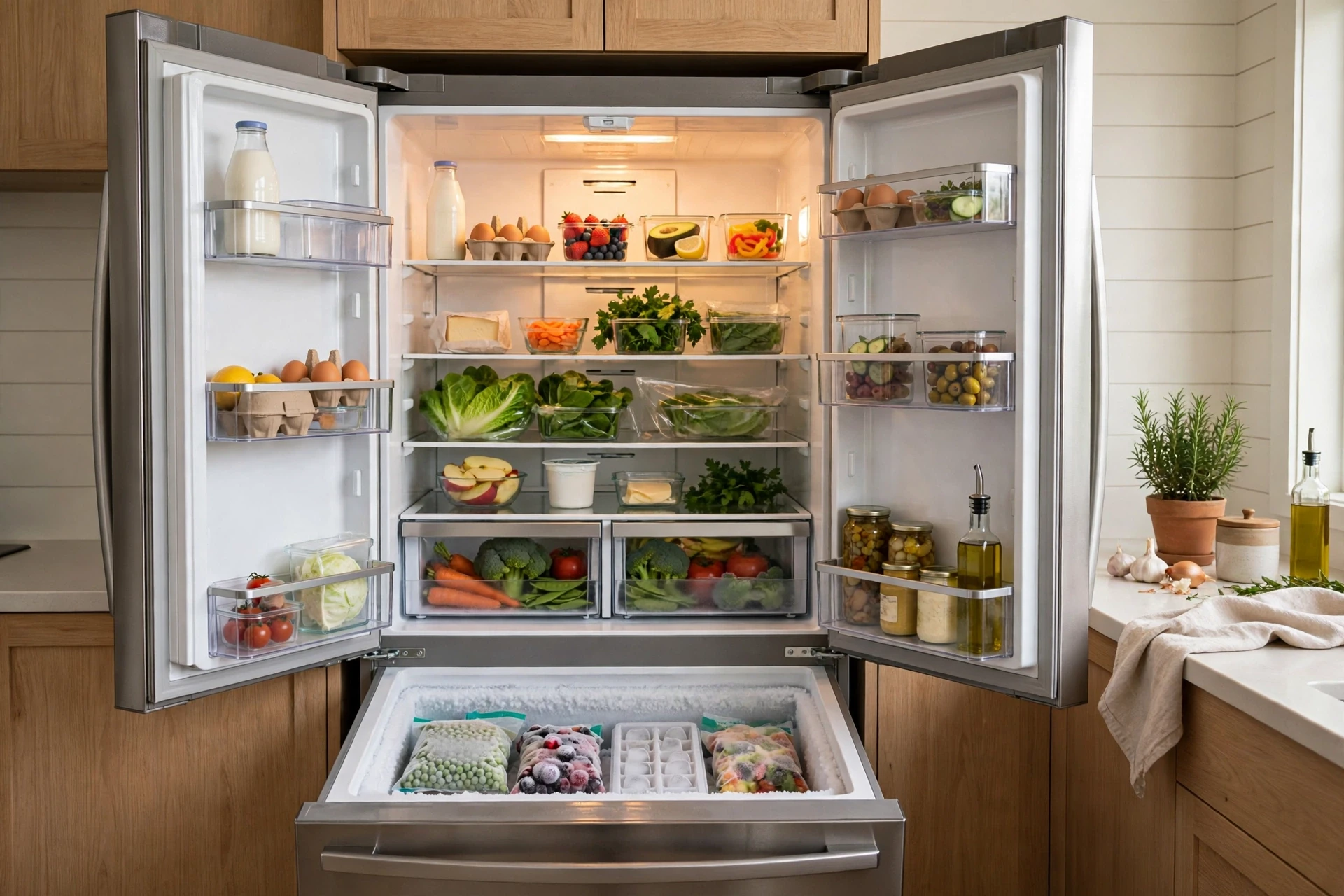
Here's the key fact: in most refrigerators, all the cold air is made in the freezer. The fresh-food section has no cooling system of its own — a fan blows freezer air through vents or a damper into the fridge compartment.
So when the freezer is cold but the fridge is warm, the cooling system is probably fine — the problem is in the air path to the fridge, or the parts controlling it.
Cause 1: Failed evaporator fan motor
The evaporator fan is the part that circulates cold air. If it dies, cold air stays trapped in the freezer while the fridge section slowly warms up.
Signs pointing to the fan:
- Little or no air blowing from the fridge-section vents while the freezer stays cold
- An unusual grinding or squealing noise from the freezer area (a fan struggling or hitting ice)
- The problem came on gradually over days
A technician can test the fan in minutes; replacing a dead one is routine.
Cause 2: Defrost system failure (frost blocking the airflow)
This fools a lot of people. Your freezer has an automatic defrost system — a heater, a thermostat, and a timer or control board that melt frost off the evaporator coils several times a day.
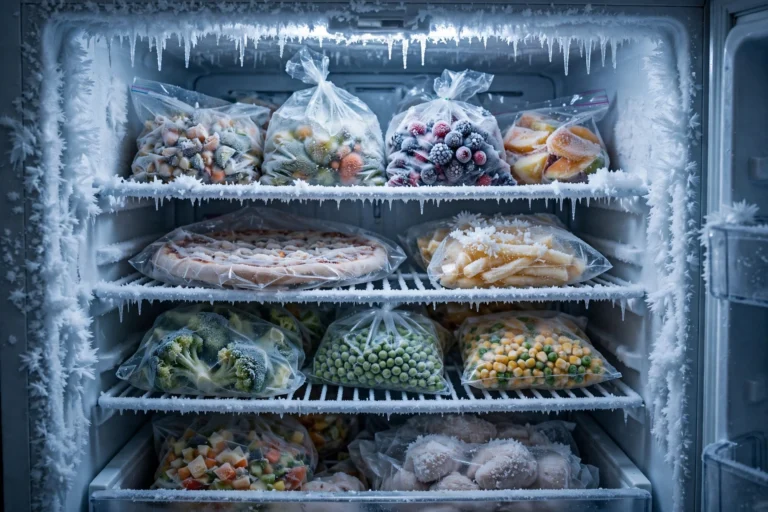
When any part of that system fails, frost builds up thick on the coils until the ice blocks the air passages completely. Cold air can't reach the fridge section, even though the freezer still feels cold.
Telltale sign: a thick, even layer of frost coating the freezer's rear panel means the defrost system has likely failed. We explain this in detail in our guide to freezer frost buildup: causes and how to fix it.
Cause 3: Damper control stuck closed
Between the freezer and the fridge sits a small motorized door called the damper. It opens and closes to let just the right amount of cold air into the fresh-food section.
If the damper motor fails or the door freezes shut, no cold air reaches the fridge at all — common on French-door and side-by-side models. Replacing the damper assembly is a straightforward technician job.
Cause 4: Bad thermistor (temperature sensor)
Your refrigerator decides when to run based on temperature sensors called thermistors. If the fridge-section thermistor fails and reports the wrong temperature, the control board thinks the fridge is already cold enough and never sends enough cold air its way.
It often shows up as strange behavior: a warm fridge with normal-looking controls, or wildly swinging temperatures. Sensors are cheap, but finding the bad one takes proper testing.
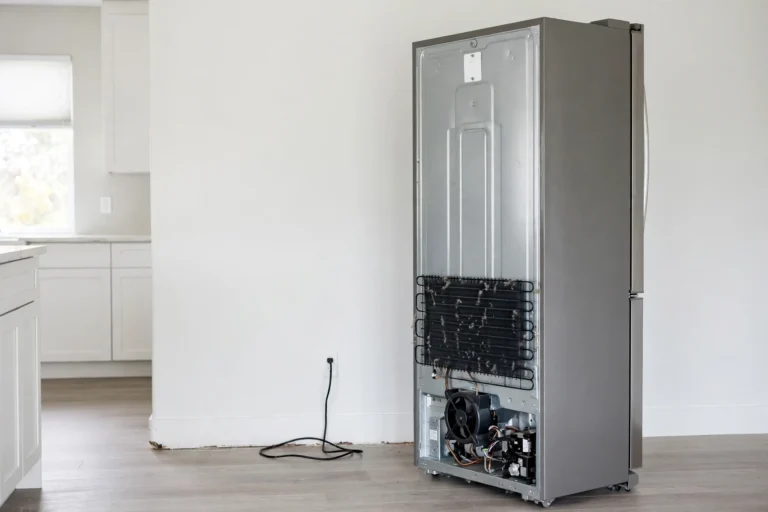
Cause 5: Dirty condenser coils
The condenser coils release the fridge's heat. Caked in dust and pet hair, the whole system runs hotter and less efficiently — and the fresh-food section is the first to lose temperature.
If the coils — underneath behind the kick plate or on the back — are buried in dust, unplug the refrigerator first, then vacuum them with a brush attachment. It's safe, simple maintenance. If the fridge still won't cool afterward, the problem is elsewhere on this list.
Cause 6: Control board problems
The main control board reads the sensors, runs the defrost cycle, and opens the damper. When it fails, everything can seem to run while cold air never reaches the fridge. Because the symptoms overlap with fan and sensor failures, boards need proper electrical testing — this is a call-a-technician situation, since guessing wrong gets expensive.
Cause 7: Low refrigerant (sealed system leak)
If refrigerant has slowly leaked out, the system can't move enough heat. Early on, the freezer — which gets first crack at the cooling — may still reach temperature while the fridge section falls behind.
Important: sealed-system work is not DIY — handling refrigerant legally requires EPA certification. If a technician diagnoses low refrigerant, let a pro handle it.
What you can safely check yourself
Before calling anyone, run through these quick checks:
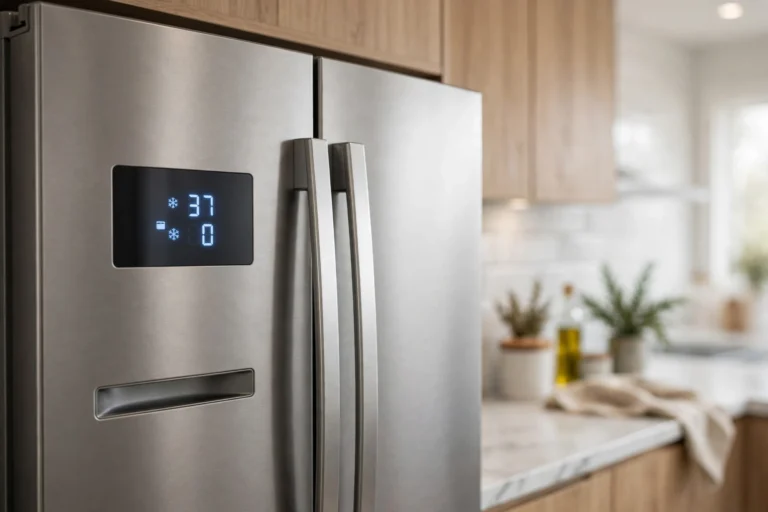
- Thermostat settings. Make sure nobody bumped the fridge temperature up. It should be set around 37–40°F.
- Blocked vents. Look inside the fridge for the air vents (usually at the back). Bags of groceries pushed against them block cold air from circulating.
- Door seals. Close the door on a dollar bill and try to pull it out. If it slides out easily, warm air is leaking in.
- Give it time after a big grocery trip. A full load of warm food takes a few hours to cool down — that's normal.
When to call a technician
Call if the fridge stays above 40°F for more than a few hours (the food-safety line), if you see heavy frost on the freezer's back wall, or if you hear grinding or loud clicking. Proper diagnosis — testing the fan, defrost parts, damper, and sensors — is quick with the right tools and beats replacing parts by guesswork.
For professional refrigerator repair in Abilene, TX, call (325) 339-1818.
Why is my refrigerator not cooling but the freezer works?
Cold air isn't reaching the fridge section. The usual culprits: a failed evaporator fan, a defrost failure letting frost block airflow, a stuck damper, or a bad temperature sensor. The sealed system itself is often fine.
How do I know if it's the evaporator fan?
Feel for airflow at the fridge-section vents. Little or none while the freezer stays cold? The fan is the prime suspect — especially with a grinding or squealing noise from the freezer.
What does a bad refrigerator compressor sound like?
A loud humming, clicking, or clunking noise with a compressor that runs constantly but never reaches temperature. But if your freezer still freezes well, the compressor is probably fine — the problem is more likely airflow-related. LG owners take note: LG's linear compressors have a well-documented early-failure pattern — see our guide to LG refrigerator compressor failure.
My refrigerator stopped cooling suddenly. How urgent is this?
Fairly urgent. Food becomes unsafe after about 4 hours above 40°F. Move perishables to a cooler with ice, and don't wait days to get it diagnosed.
Is there a reset that fixes this?
Unplugging for 5–10 minutes can reset a confused control board — worth trying once. But if the problem returns, something has actually failed; resets don't fix bad fans, sensors, or defrost parts.
Can dirty condenser coils cause the fridge to warm up while the freezer stays cold?
They can contribute. When coils can't shed heat, the whole system struggles and the harder-to-cool fresh-food section suffers first. Cleaning them is worth doing before anything else.