Refrigerator Leaking Water Inside: Causes and What to Do
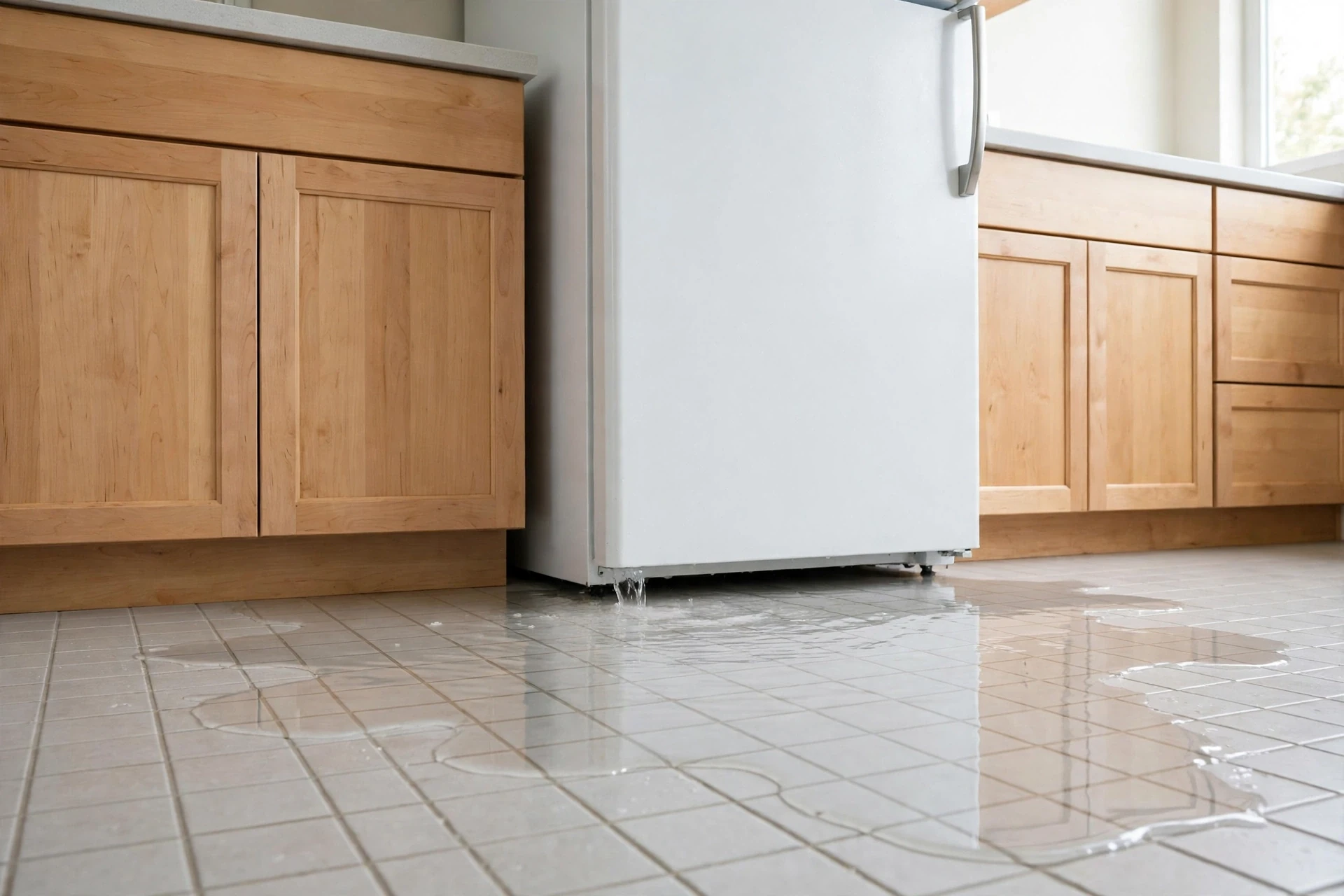
You open the fridge and there's water pooled under the crisper drawers — or worse, a puddle spreading across the kitchen floor. A leaking refrigerator feels alarming, but most leaks come from a short list of causes, and some you can fix yourself in twenty minutes.
Safety first: water and electricity are a bad combination. If there's standing water near the back of the fridge or around the power cord, unplug the refrigerator before you touch anything. Don't poke around electrical components with wet hands.
Where exactly is the water?
The location of the water tells you a lot about the cause:
- Inside the fridge, under the crisper drawers → almost always a clogged defrost drain
- On the floor in front of the fridge → defrost drain overflowing, or a door left ajar causing excess condensation
- Behind or under the fridge → water supply line or inlet valve (only if your fridge has a water dispenser or ice maker)
Start by figuring out which one matches, then read the matching section below.
Cause 1: Clogged defrost drain (most common)
Every frost-free refrigerator has a defrost drain: a small hole, usually at the back of the fridge section near the bottom, that carries meltwater from defrost cycles down to a pan underneath. Food particles, mold, and slime clog it over time.
When it clogs, the water has nowhere to go — so it pools inside the fridge, typically right under the vegetable drawers.
The fix: This is a safe DIY job.
- Unplug the refrigerator.
- Find the drain hole at the back of the fridge section (you may need to pull out the crispers to see it).
- Clear the visible gunk with a cotton swab or pipe cleaner.
- Flush it with warm (not boiling) water using a turkey baster or large syringe. Repeat until water flows freely down the drain.
- Plug the fridge back in.
If water still pools after this, the clog may be deeper in the drain tube, or the tube itself could be frozen — in that case a technician can clear it properly.
Cause 2: Cracked or loose water supply line
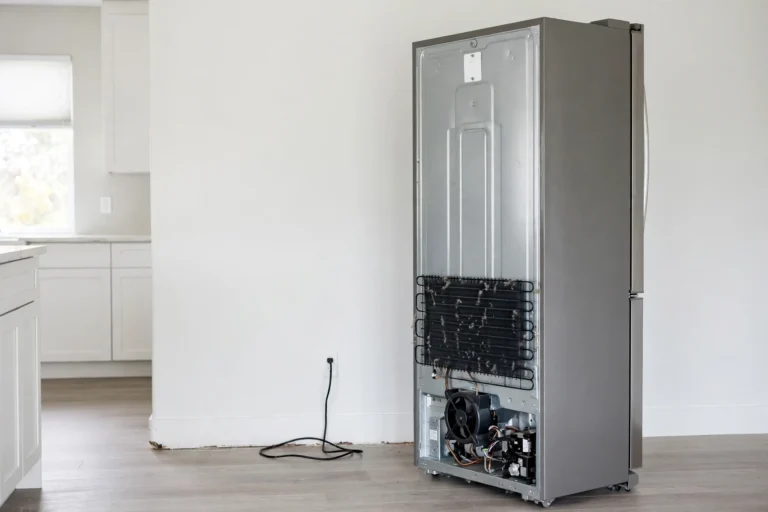
If your refrigerator has a water dispenser or ice maker, a thin water line runs to the back of the fridge. These plastic or copper lines can crack, and the compression fittings can work loose over years of the fridge being moved for cleaning.
Signs: water on the floor behind the fridge, or a slow drip you can hear when the kitchen is quiet. Pull the fridge out (carefully — don't yank the line) and look at the connection points with a flashlight. A cracked line needs replacing; a loose fitting may just need tightening.
If you're not comfortable working with water connections, this is a quick job for a technician — and it shares parts with dispenser problems, so see our guide to a refrigerator water dispenser not working if your dispenser is acting up too.
Cause 3: Failed water inlet valve
The inlet valve is the electric valve at the back-bottom of the fridge that lets household water in for the dispenser and ice maker. When its seals wear out, it can drip or spray water underneath the unit — even when nobody is using the dispenser.
A valve that leaks usually needs replacing. It's an inexpensive part, but it involves both water and electrical connections, so many homeowners prefer to have a technician handle it.
Cause 4: Door not sealing (condensation overload)
Sometimes what looks like a leak is really condensation. If the door gasket is torn or the door gets left slightly open, warm humid air pours in constantly. The fridge can't keep up, moisture condenses on every cold surface, and water drips down and pools.
Check the gaskets: close the door on a dollar bill at several spots around the frame. If the bill pulls out with no resistance anywhere, that seal is leaking air. Cleaning dirty gaskets with warm soapy water sometimes fixes it; torn gaskets need replacing.
Cause 5: Fridge isn't level
A refrigerator that's tilted forward lets the defrost drain pan overflow and doors swing open on their own. It sounds minor, but an unlevel fridge causes a surprising number of "mystery leaks." Put a level on top of the fridge — it should be level side to side, and tilted very slightly back so the doors close on their own. Adjust the front leveling feet until it is.
When to call a technician
Call if you can't find the source of the leak, if water is coming from inside a sealed area you can't reach, if the inlet valve needs replacing and you're not comfortable with it, or if the leak keeps coming back after you cleared the drain. Persistent leaks can damage flooring and subflooring fast — a small service call now beats a flooring repair later.
For professional refrigerator repair in Abilene, TX, call (325) 339-1818.
Why is my refrigerator leaking water inside?
The most common reason is a clogged defrost drain — meltwater from normal defrost cycles can't drain away, so it pools under the crisper drawers. Less often it's a cracked water line, a failing inlet valve, or condensation from a bad door seal.
Why is my refrigerator leaking from the bottom?
Water on the floor under or in front of the fridge usually comes from an overflowing defrost drain, a cracked water supply line behind the unit, or a leaking inlet valve. Pull the fridge out and check whether the water is coming from behind (supply line/valve) or from inside (drain).
There's water under the deli drawer — is that the same problem?
Yes, that's the classic clogged-defrost-drain symptom. Water collects at the lowest point inside the fridge, which is under the drawers. Clearing and flushing the drain hole at the back of the fridge section usually fixes it.
Is a leaking refrigerator dangerous?
It can be. Standing water near electrical components is a shock risk — unplug the fridge if water is near the back or the cord. And an ongoing leak can rot flooring and grow mold underneath the unit, so don't ignore it for weeks.
Can I still use my fridge while it's leaking?
If the leak is a slow drip from a clogged drain and the fridge is cooling normally, it's generally fine to keep using it while you arrange the fix — just keep towels down and empty the pooled water. If water is near anything electrical, unplug it and don't use it until it's checked.
How do I stop it from happening again?
Keep the defrost drain clear by wiping up spills before they reach the back of the fridge, replace the water filter on schedule (a clogged filter strains the whole water system), and check the door gaskets once or twice a year.