Freezer Frost Buildup: Causes and How to Fix It
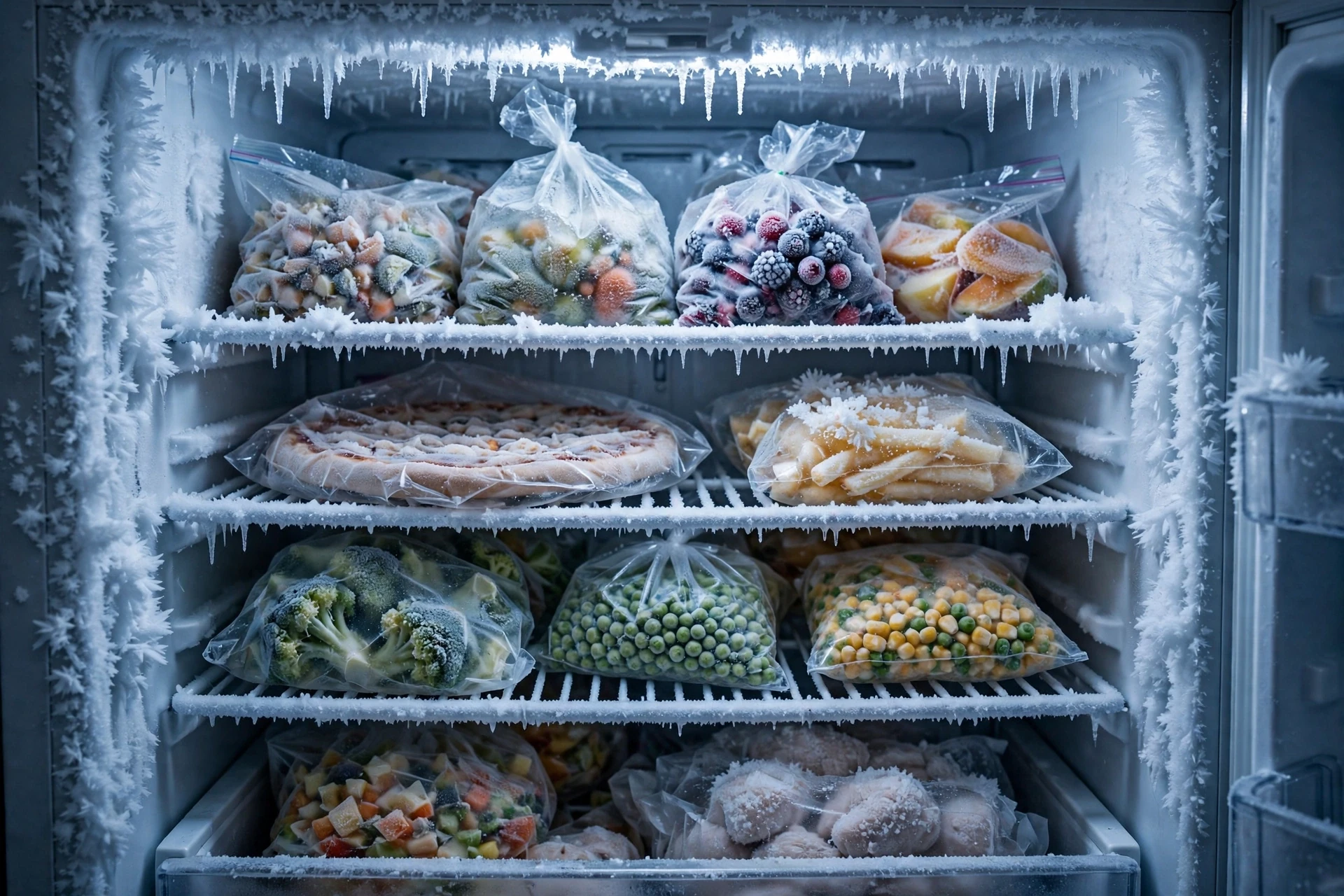
A little frost in the freezer is normal. A thick white blanket coating the back wall, the shelves, and your food — especially when it comes back a week after you defrosted — is not. Recurring frost buildup means something has failed, and it's worth understanding what before it starts costing you food or a compressor.
Why frost forms in the first place
Every time you open the freezer, warm humid air rushes in. That moisture freezes onto the coldest surfaces — normally the evaporator coils, where the automatic defrost system melts it away several times a day. Frost becomes a *problem* when moisture gets in faster than the defrost system can remove it, or when the defrost system stops working entirely.
Cause 1: Failed defrost system (most common for recurring frost)
If you manually defrost and the frost comes right back within days or weeks, the automatic defrost system has almost certainly failed. It has three main parts:
- Defrost heater — the element that melts frost off the coils. When it burns out, frost accumulates unchecked.
- Defrost thermostat — tells the heater when the coils are cold enough to need defrosting. A bad thermostat means the heater never turns on.
- Defrost timer or control board — schedules the defrost cycles. If it never triggers a cycle, frost builds forever.
The telltale pattern: frost builds up thick and even across the back wall of the freezer, starting from the area around the evaporator coils. Testing which of the three parts failed takes a multimeter and some know-how — this is standard technician work.
Cause 2: Door gasket leaking air
A gasket that doesn't seal lets a constant trickle of warm, humid room air into the freezer. The defrost system can handle normal door openings, but it can't keep up with a 24/7 leak.
Check it with the dollar-bill test: close the freezer door on a dollar bill at several points around the frame. If the bill slides out easily with no drag, that spot isn't sealing. Dirty gaskets can sometimes be revived with warm soapy water; cracked or flattened gaskets need replacing.
Cause 3: Door left open or opened constantly
It sounds obvious, but it's the cause people overlook: a freezer door that doesn't close fully (blocked by an ice cube bin, a package sticking out, or a fridge that's tilted forward) lets humid air pour in nonstop. Check that nothing is blocking the door and that it seals with a solid tug all the way around.
Cause 4: Blocked vents and overpacking
Cold air needs to circulate. When the freezer is packed so tight that air can't move — especially around the vents on the back wall — moisture settles and freezes where the air stagnates. Leave breathing room around the vents. As a bonus, your food freezes more evenly too.
Cause 5: Hot food put directly in the freezer
Putting a steaming-hot dish straight into the freezer dumps a huge load of moisture into the air inside. Let food cool on the counter first (within food-safety time limits — don't leave perishables out for hours), and the freezer will thank you.
How frost buildup causes bigger problems
This matters beyond the frost itself: thick frost on the evaporator coils insulates them, so the freezer has to run longer to stay cold. Worse, the ice can grow until it blocks the air passages to the fresh-food section entirely.
That's actually one of the most common reasons for a confusing symptom — freezer works but the fridge is warm. If that's what you're seeing, read our guide to refrigerator not cooling but freezer works — frost blocking the airflow is cause number two on that list, and the two problems often turn out to be the same repair.
How to fix it: manual defrost first
Whether the cause is a one-time event or a failed part, start by clearing the existing frost:
- Unplug the freezer (or the whole refrigerator for a combo unit).
- Move food to coolers with ice packs.
- Leave the doors open and let the frost melt naturally — usually 12–24 hours for heavy buildup.
- Place towels inside and on the floor to catch meltwater.
- Never chip at ice with a knife, screwdriver, or any sharp tool. Puncturing a refrigerant line turns a minor problem into a major one.
Once it's fully defrosted and dry, plug it back in and monitor.
What the result tells you
- Frost stays away for months → it was likely a one-time cause (door left open, hard water, temporary gasket issue). You're done.
- Frost comes back within days or weeks → the defrost system has failed. The heater, thermostat, or timer needs testing and replacement. Call a technician — this won't fix itself, and running with heavy frost strains the compressor.
For professional diagnosis of defrost-system failures, see our freezer repair service in Abilene, TX — or for general cooling issues, refrigerator repair in Abilene, TX. Call (325) 339-1818.
Why does my freezer keep frosting up after I defrost it?
Recurring frost means the automatic defrost system isn’t working — usually a failed defrost heater, defrost thermostat, or defrost timer/control board. Manual defrosting removes the symptom; only repairing the failed part stops it from returning.
How do I fix a refrigerator that’s frosting up?
Start with a full manual defrost (unplug, 12–24 hours, towels down). Then check the door gasket with the dollar-bill test and make sure vents aren’t blocked by overpacking. If frost returns quickly, the defrost system needs professional repair.
Why is my freezer icing up on the back wall specifically?
The back wall is where the evaporator coils live, so it’s the coldest surface and the first place frost appears when the defrost system fails. Thick, even frost concentrated on the rear panel is the classic defrost-failure pattern.
Can I force my freezer into defrost mode?
Some models have a diagnostic mode that triggers a manual defrost cycle — the procedure varies by brand and model, so check your owner’s manual. But forcing defrost cycles is a workaround, not a fix: if the heater or thermostat has failed, the problem will return.
Is it safe to eat food from a frosty freezer?
Frost itself doesn’t make food unsafe — it’s just frozen moisture. But heavy frost often means temperatures have been fluctuating, so check for signs of thawing (soft textures, ice crystals inside packaging). When in doubt, throw it out.
My freezer has frost AND my fridge is warm — are they related?
Very likely yes. Heavy frost on the evaporator coils can block the air passages that carry cold air to the fresh-food section. Fix the frost problem (usually the defrost system), and the fridge section often starts cooling properly again.