Dishwasher Not Cleaning Dishes? Why Food and Grit Are Left Behind
Why Are My Dishes Still Dirty After the Dishwasher?
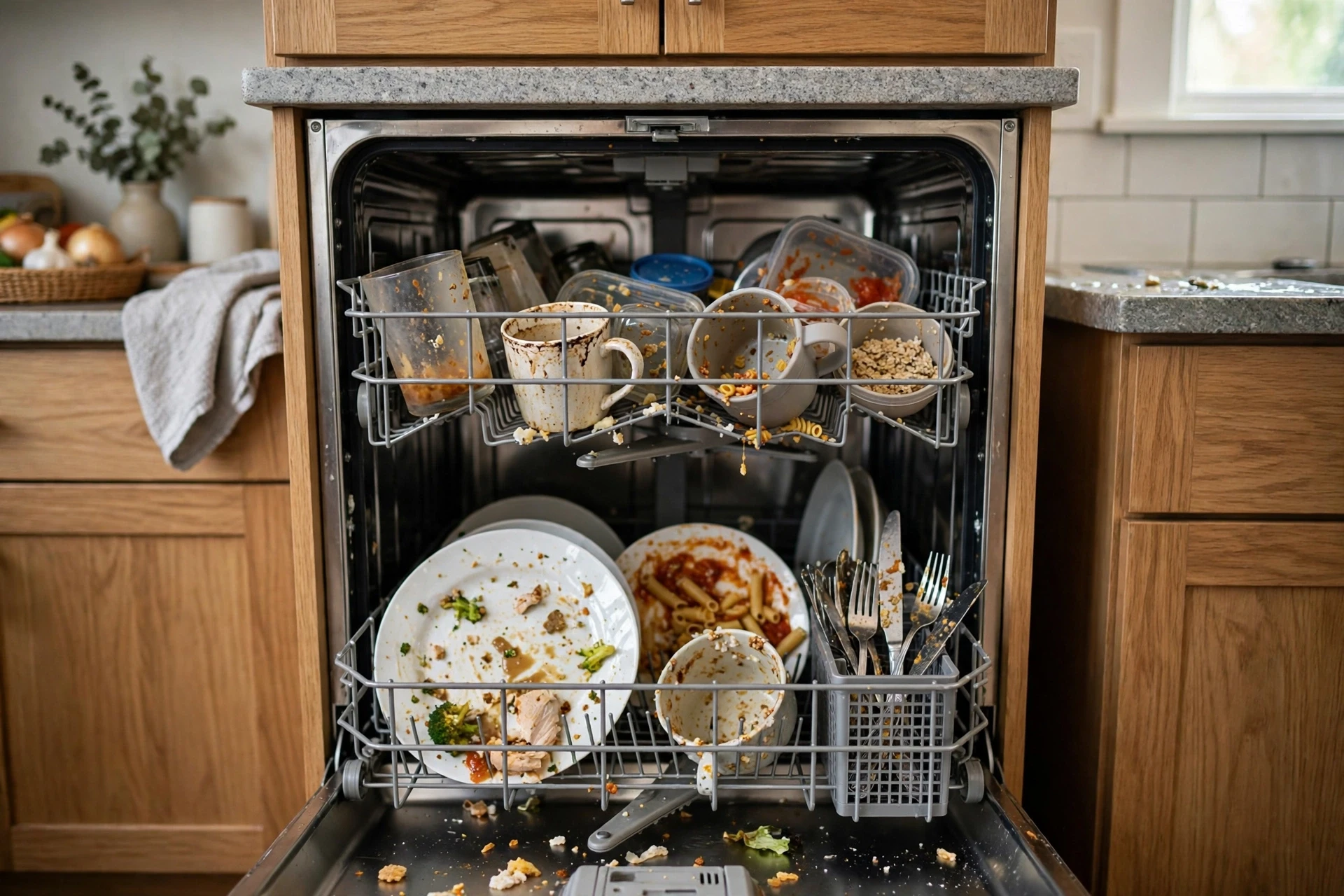
You load dirty dishes, run a full cycle, and open the door to find food, grit, or a dull film still on them. It is frustrating, and it does not always mean the machine is broken. In many cases, a simple habit or a clogged part is getting in the way of the wash.
Work through the most common causes below, one at a time.
You May Be Pre-Rinsing Too Thoroughly
It sounds backward, but rinsing dishes until they are almost clean can make results worse. Most modern detergents use enzymes that need food soil to work on. With nothing to break down, the detergent has less to do, and the wash can be less effective.
Scrape off large bits of food, bones, and grease. Then load the dish without a full rinse. Leave the light soil on plates, bowls, and glasses so the detergent can do its job.
If you have been pre-rinsing everything, try one load with scraping only.
A Dirty Filter Is Recirculating Dirty Water
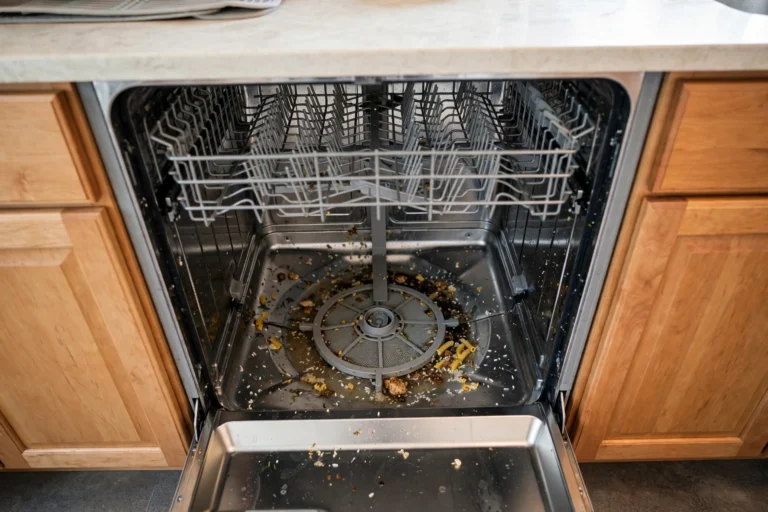
Many dishwashers have a filter at the bottom of the tub. Its job is to catch food before the water is pumped back over your dishes. When that filter is full, dirty water keeps circulating, and grit ends up back on clean-looking dishes.
Find the filter in your manual, lift it out, and rinse it under running water. Remove trapped food and rinse the sump area around it if you can reach it safely. Put it back firmly before the next load. It is one of the most overlooked causes of gritty residue.
If the filter smells bad, see our guide to dishwasher smells and mold.
Clogged Spray-Arm Holes
Spray arms spin and push water through small holes onto every rack. Food bits can block those holes, and mineral buildup can narrow them too. When holes are blocked, water does not reach some dishes at all.
With the machine off, remove the spray arms if your model allows it. Look through the holes against a light, and clear any food with a soft brush or a toothpick. Rinse the arms and spin them by hand to check they move freely.
Mineral scale is a separate problem from food soil, and it needs a different approach. If your spray arms keep clogging with hard, white buildup, read our guide to white film and spots on dishes for what that buildup is and how it affects the whole machine.
Overloading and Blocked Spray Arms
A full dishwasher is fine. A packed one is not. When tall plates, large bowls, or utensils block a spray arm, that arm cannot spin. Dishes in its path get little or no water.
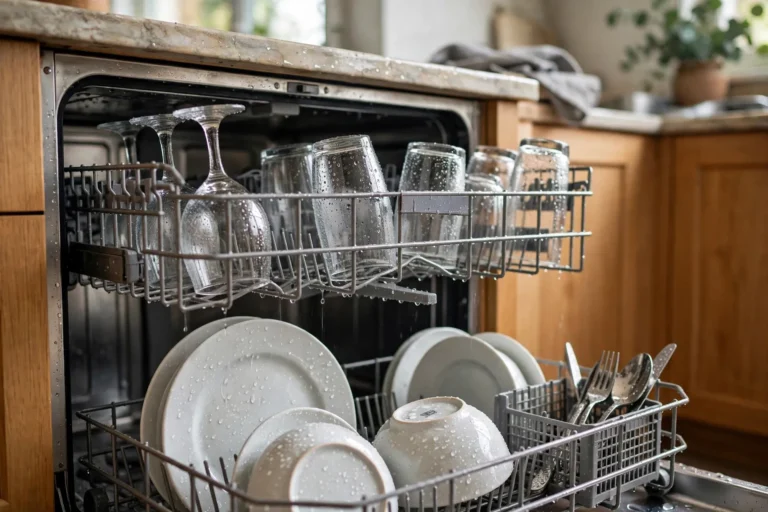
Load so spray arms can turn freely. Face soiled sides toward the center spray, leave space between items, and keep tall items away from the arms. If a smaller, well-spaced load comes out clean, loading was likely the main problem.
Water Not Hot Enough
Dishwasher detergent works best in hot water. If the water is too cool, grease does not dissolve well, and detergent may not activate fully.
Run the hot tap at the sink until it feels hot before you start the dishwasher, so the machine begins with hot water. Use a normal or heavy cycle for soiled loads, not a short or light one.
Do not change plumbing, wiring, or heating parts yourself. If the water stays cool through the cycle, that is a job for a technician.
Wrong Detergent Amount
Too little detergent leaves food behind. Too much can leave its own residue and, over time, can contribute to other problems. Follow the amount shown on the detergent package for your load size and soil level.
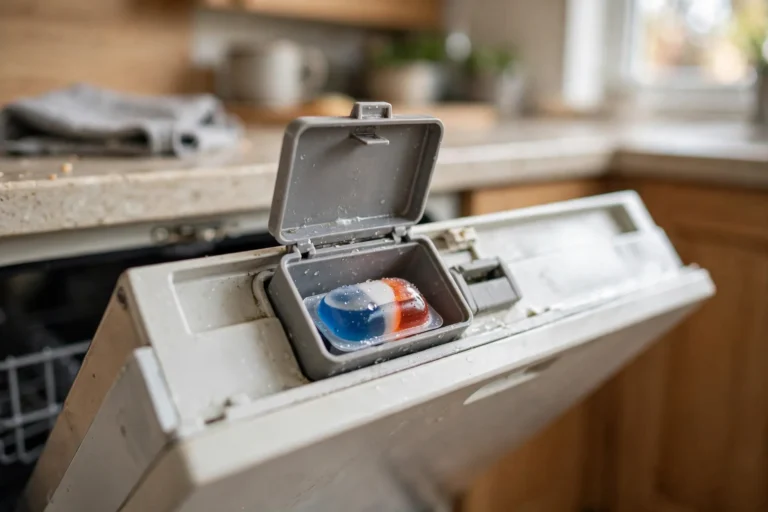
Use fresh detergent stored in a dry place. Old or damp detergent can clump and work poorly. If a pod is not dissolving fully, the cause may be in the dispenser or the spray pattern. See our guide to a dishwasher pod not dissolving for that specific problem.
Why the Top Rack Is Not Cleaning
Grit or food on the top rack only is a useful clue. The upper spray arm may not be turning, or it may not be getting enough water pressure.
Check that the upper arm spins freely and that no tall item below it is blocking it. Clear its holes, as described above, and make sure the rack is pushed fully into place so its water connection lines up.
If the bottom rack cleans well but the top rack stays dirty, the problem is usually that upper arm or water flow, not detergent.
Dishwasher Stopped Spraying Water
If you open the door mid-cycle and find dishes barely wet, or you hear the machine running without the usual spraying sound, the circulation pump may have failed. This pump pushes water through the spray arms. When it fails, water may fill the tub but never reach the dishes.
First, rule out a blocked filter or spray arm. If those are clear and it still does not spray, stop. Pump work involves water and electrical parts and should be left to a professional.
When to Call a Technician
Call a technician if dishes stay dirty after cleaning the filter, clearing the spray arms, fixing the loading, and trying scraping instead of pre-rinsing. Also call if it does not spray, makes a loud grinding or humming noise, leaks, or will not heat water.
For dishwasher repair in Abilene, a technician can test the circulation pump, heating system, and water flow and find the fault without guesswork.
Frequently Asked Questions
Why are my dishes still dirty after the dishwasher?
The most common causes are a dirty filter, clogged spray arms, overloading, water that is not hot enough, pre-rinsing too thoroughly, or the wrong amount of detergent. Work through those checks first, starting with the filter.
Why is there gritty residue on my dishes?
Gritty residue often means the filter or sump is dirty, so food is being recirculated onto clean dishes. Clean the filter, rinse the sump area if you can reach it safely, and run a test load.
Why won’t my dishwasher clean the top rack?
The upper spray arm may be blocked, clogged, or not seated correctly. Check that it spins freely, clear its holes, and make sure tall items are not blocking it.
Should I pre-rinse dishes before loading the dishwasher?
No, a full rinse is usually not needed. Scrape off large food, then load. Enzyme detergents need some food soil to work effectively.
Why did my dishwasher stop spraying water?
It may have a blocked filter or spray arm, or the circulation pump may have failed. Clear the simple blockages first. If it still does not spray, call a technician.
Can a dirty filter really make dishes dirtier?
Yes. A clogged filter traps food and sends dirty water back over the dishes during the cycle. Regular filter cleaning is one of the simplest fixes for dirty dishes.
Need Help in Abilene?
If you have tried the checks above and your dishes are still coming out dirty, get in touch for dishwasher service in Abilene. Call (325) 339-1818 to arrange a visit.
Why are my dishes still dirty after the dishwasher?
The most common causes are a dirty filter, clogged spray arms, overloading, water that is not hot enough, pre-rinsing too thoroughly, or the wrong amount of detergent. Work through those checks first, starting with the filter.
Why is there gritty residue on my dishes?
Gritty residue often means the filter or sump is dirty, so food is being recirculated onto clean dishes. Clean the filter, rinse the sump area if you can reach it safely, and run a test load.
Why won’t my dishwasher clean the top rack?
The upper spray arm may be blocked, clogged, or not seated correctly. Check that it spins freely, clear its holes, and make sure tall items are not blocking it.
Should I pre-rinse dishes before loading the dishwasher?
No, a full rinse is usually not needed. Scrape off large food, then load. Enzyme detergents need some food soil to work effectively.
Why did my dishwasher stop spraying water?
It may have a blocked filter or spray arm, or the circulation pump may have failed. Clear the simple blockages first. If it still does not spray, call a technician.
Can a dirty filter really make dishes dirtier?
Yes. A clogged filter traps food and sends dirty water back over the dishes during the cycle. Regular filter cleaning is one of the simplest fixes for dirty dishes.