Dishwasher Pod Not Dissolving? Why It Stays Whole and How to Fix It
A pod left whole means something never reached it
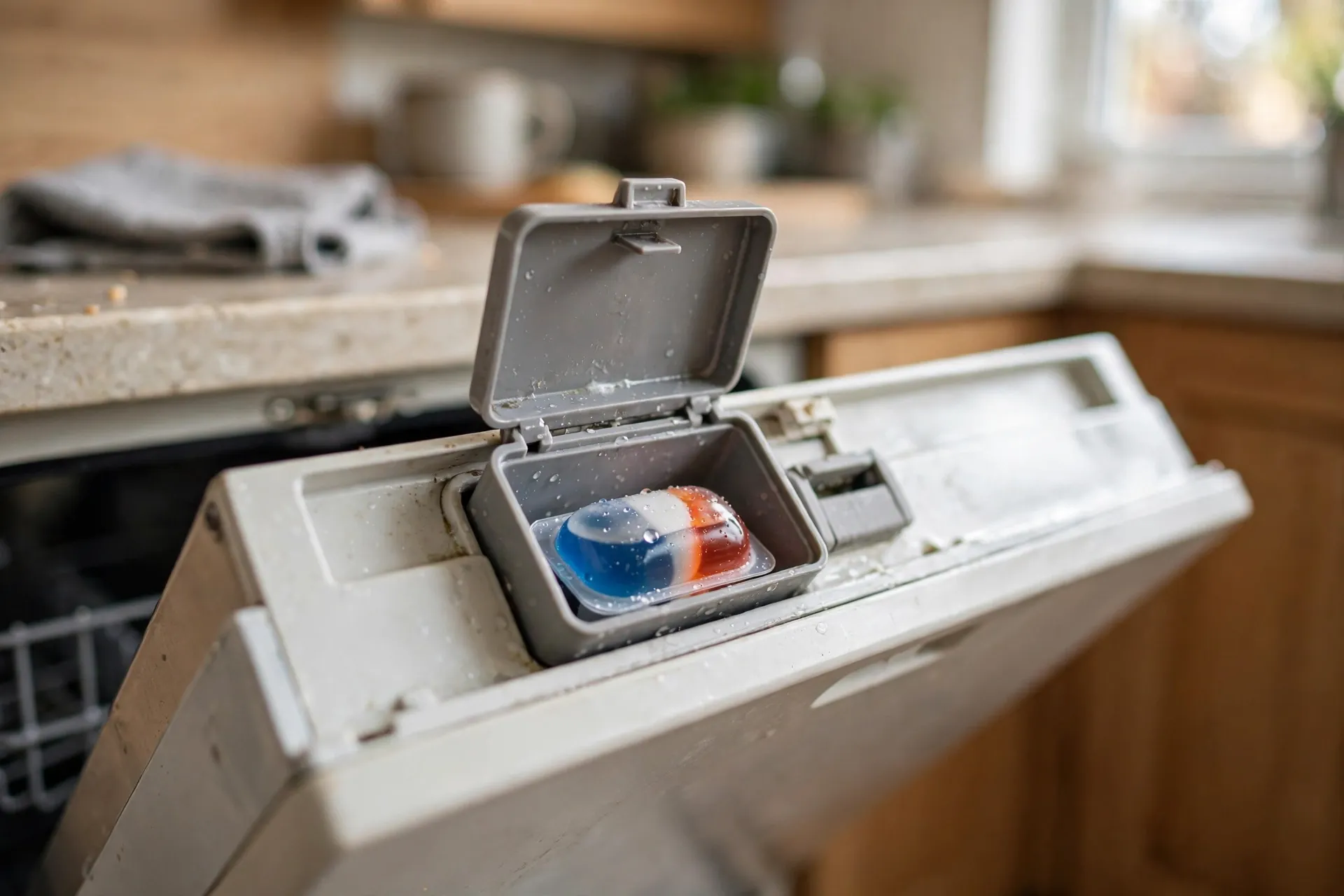
“Why is my dishwasher pod not dissolving?” It is a frustrating find: you open the door to find the pod sitting whole in the dispenser cup, or a sticky lump of soap at the bottom of the tub. A pod needs three things: timely release, hot water reaching it, and water moving over it long enough. If any one fails, the pod stays whole.
A damp or sticky dispenser cup glues the pod in place
Start with the dispenser cup — the most common cause. If the cup is damp or sticky when you load the pod, the pod’s film can soften and glue itself to the cup, so the pod stays stuck inside when the door opens. The cup should be dry, clean, and free of old residue — wipe it dry and clear any sticky buildup. Load the pod into a dry cup with dry hands, just before you start the cycle.
The dispenser door is blocked or the latch is stuck
Even a dry pod cannot dissolve if it never leaves the dispenser. A tall item loaded in front of the door can block it from swinging open. A stuck latch does the same from inside: detergent buildup or a weakened spring can stop the door releasing. After loading, check that nothing sits against the dispenser door, and test it by hand — it should snap shut and release cleanly. If it still will not open freely, the latch likely needs a technician.
The water is not hot enough
Pods are made to dissolve in hot water, and water below about 120°F often is not hot enough to break the film and dissolve the detergent fully. Check the temperature at the nearest tap with a kitchen thermometer. Run the kitchen hot tap until the water runs hot before you start the dishwasher, so the first fill arrives hot instead of lukewarm. Raising the heater setting is a household decision, since hotter water also raises scald risk at taps.
A short or eco cycle is too cool or too short
Short and eco cycles use less water and lower temperatures, and some run too cool or too short for a pod to dissolve fully. Test the same load on a normal or heavy cycle, with hot water at the tap. If the pod dissolves fully on the longer cycle, the cycle was the cause, not a broken part. Use the normal cycle for pods.
Clogged spray arms mean water never reaches the cup
The dispenser sits where the spray arms throw water at it. If the spray-arm holes are clogged with food or mineral buildup, the spray pattern weakens and less water reaches the dispenser cup. With the power off, spin the arms by hand and look at the holes. Clear visible food bits with a toothpick or soft brush. White mineral buildup in the holes is hard-water scale — our guide to a dishwasher not cleaning dishes covers spray problems in more depth. If clean arms do not fix it, weak pump pressure may be the cause.
Old or clumped detergent stored damp
Pods go bad in damp storage. A box kept under the sink or in a humid spot absorbs moisture. The pods inside clump, stick together, or partly dissolve in the box, and reach the dispenser as a sticky lump that cannot break apart properly. If pods are stuck together, damp, or tacky, throw the box out and buy fresh pods. Store the new box in a cool, dry place, sealed between uses.
The dishwasher is not filling properly
A pod cannot dissolve in water that never arrives. If the dishwasher under-fills — because the supply valve is partly closed, the inlet valve is partly blocked, or the float switch is stuck — the tub ends up with too little water to dissolve the pod. Check the supply valve is fully open and the float switch at the bottom of the tub moves freely. Do not adjust or replace the inlet valve yourself. If the tub still seems to hold too little water, that is technician work.
A failed circulation pump
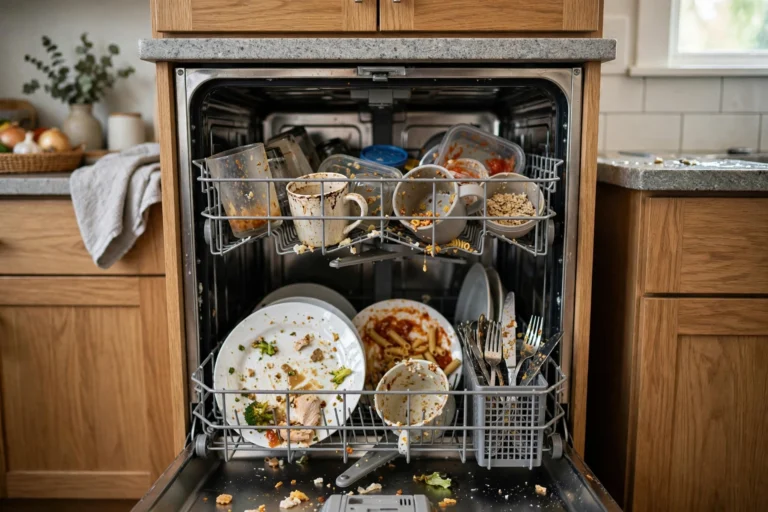
The last cause is one homeowners cannot fix: a failed circulation pump. When it weakens or fails, water barely moves, spray pressure drops, and the pod sits in still, cool water that never dissolves it. A failed pump usually brings other symptoms — dishes dirty all over, and a wash stage much quieter than usual, or humming without spraying. There is no safe homeowner repair inside the pump. If the pod still stays whole after the checks above, especially with dirty dishes to match, the circulation pump is the likely cause.
Soap residue at the bottom of the tub
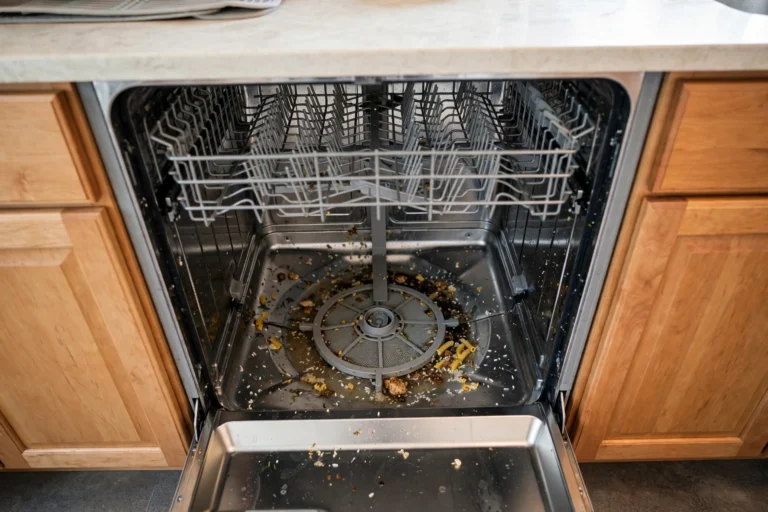
Sometimes the pod leaves the dispenser but does not dissolve fully, leaving soap residue at the bottom of the tub. The causes overlap the list above: cool water, a short cycle, weak spray, or too little water. Treat residue the same way: switch to a normal or heavy cycle with hot water at the tap, clean the spray arms and filter, and use fresh pods from dry storage. If residue keeps appearing with dirty dishes, the fill or pump causes above are likely, and a technician should check them.
If the dishwasher doesn’t start at all, see our guide to dishwasher won’t start.
When to call a technician
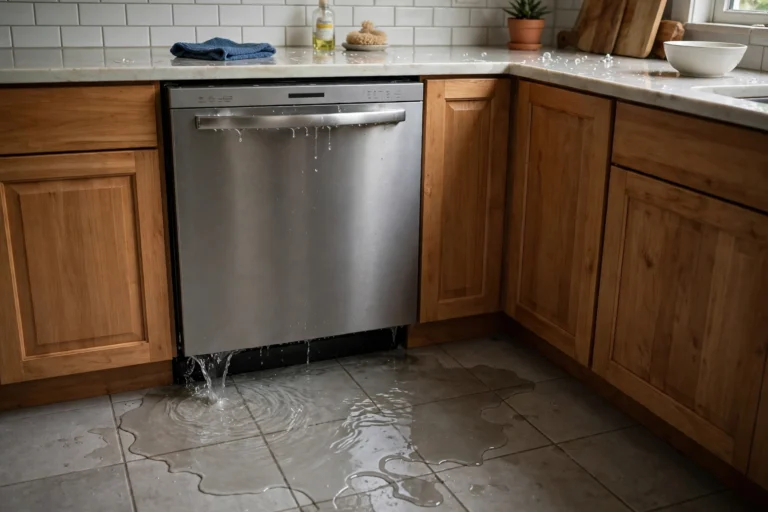
Call a professional if the dispenser door will not open freely; if the dishwasher under-fills with the supply open and float moving; if you suspect the inlet valve or circulation pump; or if the pod problem comes with dirty dishes or standing water. Stop using the dishwasher if you see water leaking from underneath it or smell burning during a cycle.
Frequently asked questions
Why is my dishwasher pod not dissolving?
A pod stays whole when stuck in a damp cup, blocked behind a closed door, washed below 120°F, run on too short a cycle, or left in water by a clogged arm, fill, or pump problem.
Should I put the pod in the bottom of the tub instead?
No. The dispenser releases the pod after the pre-wash; a pod dropped in the tub dissolves too early, before the main wash.
Does water temperature really matter for pods?
Yes. Water below about 120°F often cannot break the pod film. Run the hot tap until hot first.
Why is there soap residue at the bottom of my dishwasher?
Soap residue means the pod partly dissolved but never fully broke down — from cool water, a short cycle, clogged arms, or old detergent. Switch to a normal cycle with hot water and fresh pods.
Can an eco cycle cause a pod not to dissolve?
Yes. Some short and eco cycles run too cool or too short for a pod. Test the same load on a normal cycle.
When should I call a technician for a pod problem?
If the dispenser door will not open freely, the dishwasher under-fills, or the problem comes with dirty dishes and a quiet wash stage.
A pod left whole is a clue — check the cup, the door, the water temperature, and the spray first. For dishwasher repair in Abilene, TX, call (325) 339-1818 to schedule a visit.
Why is my dishwasher pod not dissolving?
A pod stays whole when stuck in a damp cup, blocked behind a closed door, washed below 120°F, run on too short a cycle, or left in water by a clogged arm, fill, or pump problem.
Should I put the pod in the bottom of the tub instead?
No. The dispenser releases the pod after the pre-wash; a pod dropped in the tub dissolves too early, before the main wash.
Does water temperature really matter for pods?
Yes. Water below about 120°F often cannot break the pod film. Run the hot tap until hot first.
Why is there soap residue at the bottom of my dishwasher?
Soap residue means the pod partly dissolved but never fully broke down — from cool water, a short cycle, clogged arms, or old detergent. Switch to a normal cycle with hot water and fresh pods.
Can an eco cycle cause a pod not to dissolve?
Yes. Some short and eco cycles run too cool or too short for a pod. Test the same load on a normal cycle.
When should I call a technician for a pod problem?
If the dispenser door will not open freely, the dishwasher under-fills, or the problem comes with dirty dishes and a quiet wash stage.