Why Is My Dishwasher Leaking From the Bottom of the Door?
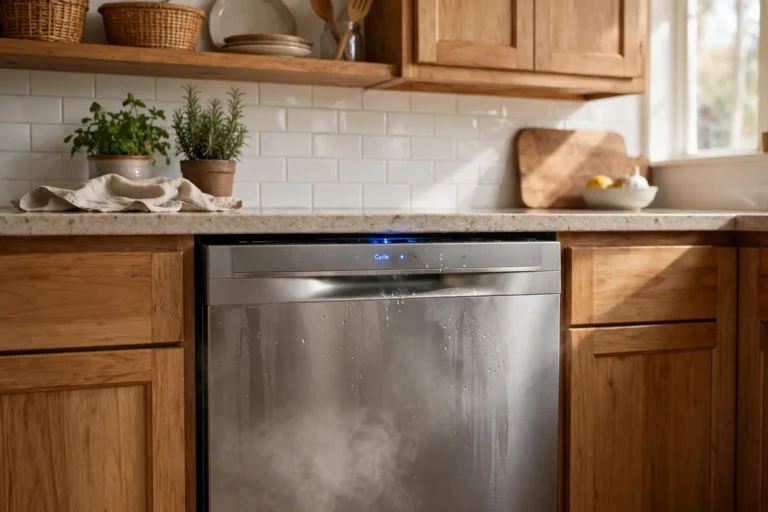
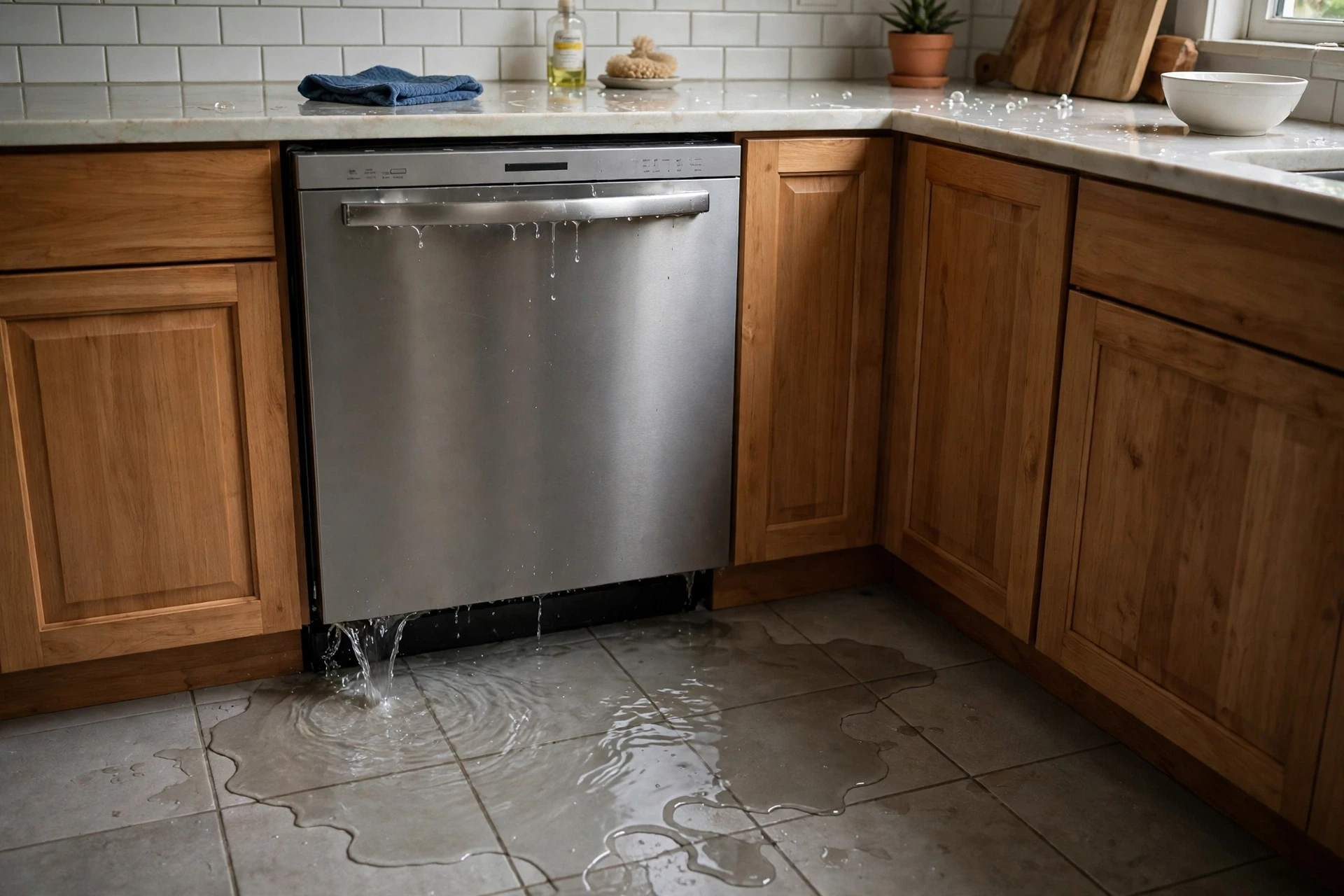
A dishwasher leaking from the bottom of the door is worrying, because water on the floor can damage cabinets and flooring fast. The good news is that the leak’s location tells you a lot. Water at the door, water underneath, and water that appears when the machine is off each point to different causes.
First, soak up the water, turn the dishwasher off, and shut off its water supply if you can reach the valve safely. Do not run another cycle to “see if it happens again” until you have a suspect.
1. A Worn or Torn Door Gasket
The rubber gasket around the door is the most common door-leak cause. Over time it can flatten, harden, crack, or tear, letting water escape at the bottom of the door.
Check the full loop, especially the bottom edge, for cracks, tears, or debris in the folds. If the rubber is torn, warped, or hardened, a technician will need to replace it.
2. A Cracked or Blocked Spray Arm
Spray arms should spray water down and around the tub. If an arm is cracked or its holes are blocked, the jet can shoot sideways at the door and force past the gasket.
Check both arms for cracks and clogged holes. Clear debris gently with a soft brush, without widening the holes, and make sure each arm spins freely.
3. A Loose or Broken Door Latch
If the door does not latch firmly, it can sit slightly open during the cycle, and water will find that gap.
Close the door: it should click firmly and stay shut on its own. If it feels loose or will not catch, the latch or strike plate may be worn. Do not wedge it shut.
4. A Clogged Filter Backing Water Up
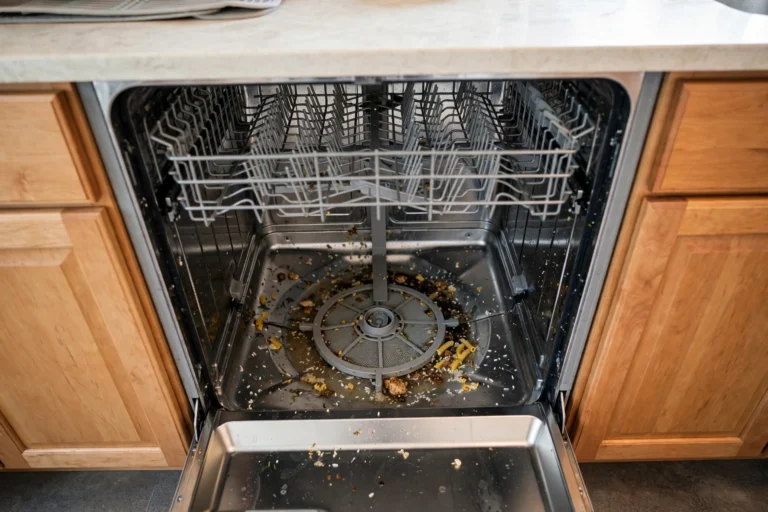
When the filter and sump clog, water cannot drain and can back up inside the tub until it spills over the bottom edge of the door.
Pull the filter out, rinse it under warm water until the mesh is clear, and wipe out the trap underneath. If the leak stops, you have found your cause.
5. Cracked or Loose Hoses and Clamps
Water underneath the dishwasher, rather than at the door, often means a hose problem. A cracked hose, loose clamp, or worn connection can drip steadily during a cycle.
If you can safely look underneath, check for drips, stains, or a hose that slipped off its fitting. Do not work on hoses you cannot reach easily or that look corroded.
If the leak seems connected to the drain hose or work around the sink, see our guide on dishwasher draining problems after a garbage disposal install.
6. A Failed Water Inlet Valve
The inlet valve controls water flowing into the dishwasher. If it sticks open or its seal fails, water keeps entering the tub and leaks out at the door.
A failed valve is also the usual suspect when a dishwasher leaks while it is off (see below). Valve problems are not a homeowner fix — shut off the water supply and call a technician.
7. Over-Sudsing From the Wrong Detergent
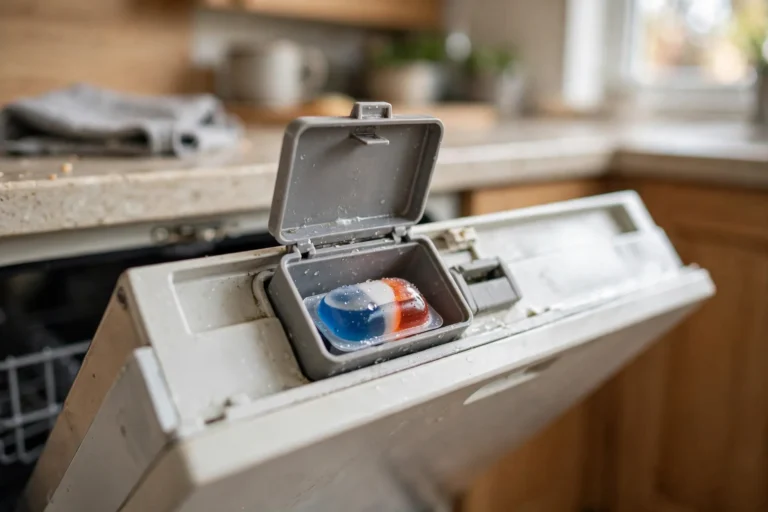
Too many suds can push water right past the door gasket. This happens with regular dish soap used by mistake, too much detergent, or detergent wrong for your water hardness.
If you spot suds, stop the cycle, let the foam settle, and wipe it up. Run a rinse-only cycle with no detergent, then switch back to the type and amount your manual recommends.
8. A Float Stuck in the Down Position
The float, usually in a front corner of the tub, rises with the water and tells the machine when to stop filling. If it sticks down from buildup, the dishwasher overfills and water spills out at the door.
Check that the float moves freely up and down, wipe away buildup, and make sure nothing rests on top of it. If it is broken or jammed, or the tub still overfills, that is technician work.
9. Failed Pump Seals
The wash pump and drain pump both have seals that keep water inside the machine. When a seal wears out, water leaks from underneath, often near the center, and worsens over time.
Pump seals cannot be checked from outside the machine. If the leak is underneath and the hoses look fine, or it comes with an unusual pump noise, get a technician to inspect the pumps.
For help telling pump sounds apart, see our guide on why your dishwasher is making a loud noise.
Why Is My Dishwasher Leaking When It’s Off?
A dishwasher that leaks while it is off is a different problem from a leak during a cycle. The usual cause is a faulty inlet valve that no longer closes fully, letting water trickle into the tub until it overflows.
If your dishwasher leaks when it is off, shut off its water supply right away and do not run a cycle until it has been inspected.
When to Call a Technician
Call a technician if the leak comes from underneath, continues when the dishwasher is off, or involves a torn gasket, a latch that will not catch, a broken float, or suspect pump seals. Also get help if you cannot reach the hoses safely or the leak returns after basic checks. Electrical parts, valves, pumps, and pressurized hose connections are professional work.
Frequently Asked Questions
Why is my dishwasher leaking from the bottom of the door?
The most common causes are a worn or torn door gasket, a cracked or blocked spray arm jetting water at the door, a loose door latch, a clogged filter backing water up, over-sudsing, or a stuck float.
Why is my dishwasher leaking when it’s off?
A dishwasher leaking when it is off usually has a faulty water inlet valve that no longer closes fully, letting water trickle in until the tub overflows. Shut off the water supply and call a technician.
Can a clogged filter cause a dishwasher to leak?
Yes. A clogged filter and sump can back water up inside the tub until it spills over the bottom edge of the door. Clean the filter under warm running water and wipe out the trap underneath.
Can the wrong detergent make a dishwasher leak?
Yes. Regular dish soap, too much dishwasher detergent, or the wrong detergent for your water can over-suds the tub and push water past the door gasket. Run a rinse-only cycle with no detergent, then use the type and amount your manual recommends.
What should I do first when my dishwasher leaks?
Soak up the water, turn the dishwasher off, and shut off its water supply if you can reach the valve safely. Do not run another cycle until you have checked the gasket, latch, filter, and spray arms.
How do I know if a dishwasher leak needs a technician?
Get a technician if the leak comes from underneath, continues when off, returns after basic checks, or involves a torn gasket, broken latch or float, pump seals, valves, or unreachable hoses.
If you are in Abilene and your dishwasher is leaking, call (325) 339-1818 to arrange dishwasher repair in Abilene, TX.
Why is my dishwasher leaking from the bottom of the door?
The most common causes are a worn or torn door gasket, a cracked or blocked spray arm jetting water at the door, a loose door latch, a clogged filter backing water up, over-sudsing, or a stuck float.
Why is my dishwasher leaking when it’s off?
A dishwasher leaking when it is off usually has a faulty water inlet valve that no longer closes fully, letting water trickle in until the tub overflows. Shut off the water supply and call a technician.
Can a clogged filter cause a dishwasher to leak?
Yes. A clogged filter and sump can back water up inside the tub until it spills over the bottom edge of the door. Clean the filter under warm running water and wipe out the trap underneath.
Can the wrong detergent make a dishwasher leak?
Yes. Regular dish soap, too much dishwasher detergent, or the wrong detergent for your water can over-suds the tub and push water past the door gasket. Run a rinse-only cycle with no detergent, then use the type and amount your manual recommends.
What should I do first when my dishwasher leaks?
Soak up the water, turn the dishwasher off, and shut off its water supply if you can reach the valve safely. Do not run another cycle until you have checked the gasket, latch, filter, and spray arms.
How do I know if a dishwasher leak needs a technician?
Get a technician if the leak comes from underneath, continues when off, returns after basic checks, or involves a torn gasket, broken latch or float, pump seals, valves, or unreachable hoses.