White Film and Spots on Dishes: Hard Water, Rinse Aid, or Detergent?
Why Do My Glasses Come Out Cloudy or White?
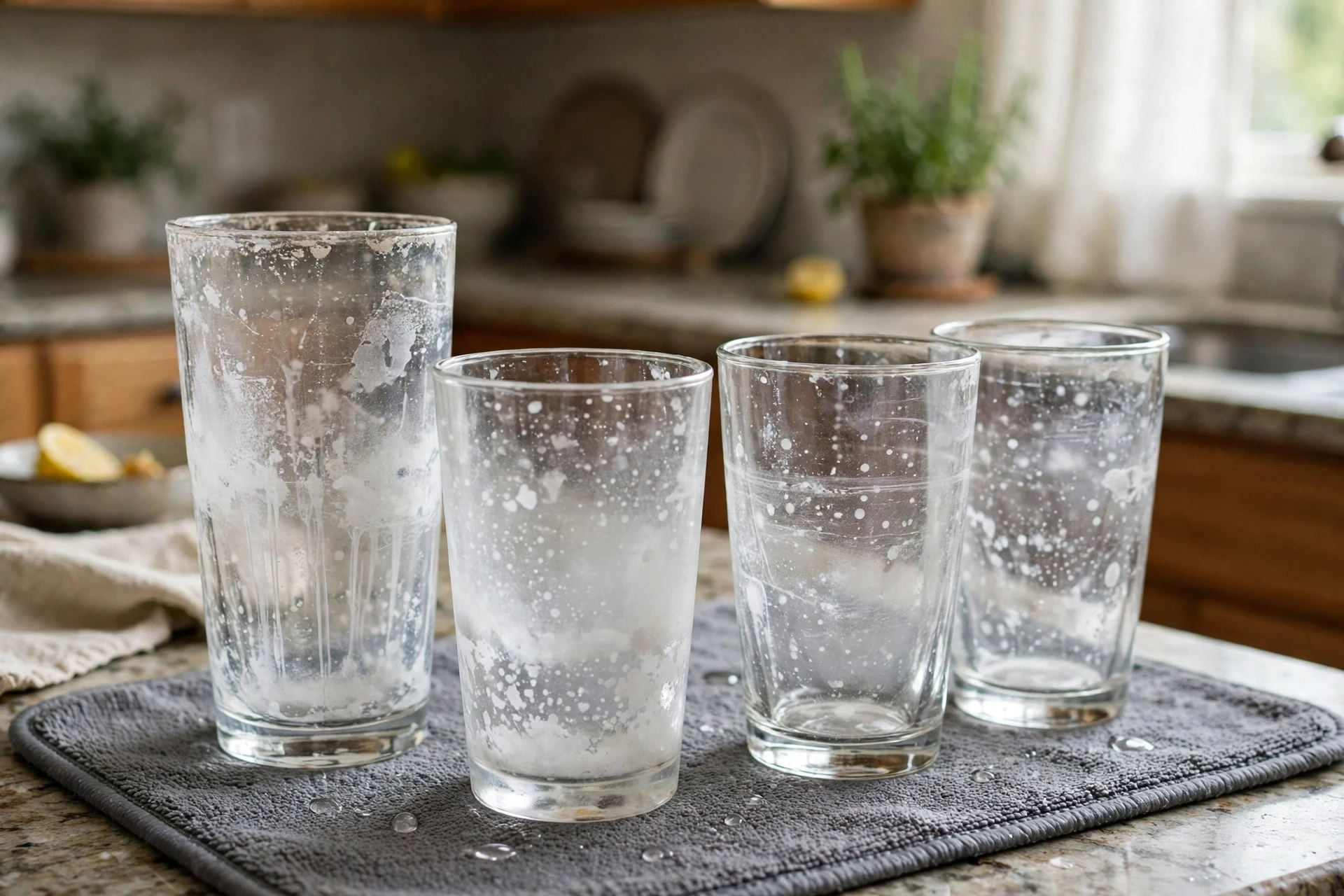
Clean glasses should come out clear. When they come out cloudy, spotted, or coated in a white film, the cause is usually hard water, rinse aid, detergent, or a combination of all three. The fix depends on which one you are dealing with, so the first step is to tell them apart.
Start with the wipe test, then check the causes below.
The Wipe Test: Scale or Etching?
Rub a cloudy glass with a damp cloth or your finger. If the white film wipes off, it is mineral scale from hard water. That film sits on the surface and can usually be removed and prevented.
If the cloudiness will not wipe clean, no matter how hard you rub, it is likely etching. Etching is permanent damage to the glass surface, often caused by too much detergent combined with soft water or loads that were pre-rinsed too clean. Etched glass cannot be washed clear again, but you can stop it from getting worse by using less detergent and not over-rinsing.
Do not keep adding more detergent to fix cloudy glasses. If etching is the problem, extra detergent makes it worse.
Hard Water in Taylor County, Abilene
Taylor County has hard water, and that matters for dishwashers. Hard water contains calcium and magnesium. When the water dries on dishes, those minerals are left behind as white film and spots.
The same minerals build up inside the machine. On the site’s dishwasher service page, this is described as minerals coating spray arms and inlet valves, nearly blocking half the spray holes in one local case. That is why hard water is not only a cosmetic problem. Over time, scale can narrow spray-arm holes, coat the heating element, and clog the inlet valve filter, so less water and heat reach your dishes.
In Abilene, hard water should be at the top of your list when film keeps coming back.
Scale Inside the Machine: Spray Arms, Heating Element, and Inlet Filter
White film on dishes often goes with scale inside the dishwasher. Check the spray arms for white, crusty buildup around the holes. Scale there reduces water flow, so dishes do not rinse clean.
Scale on the heating element makes heating less efficient, which can leave water too cool to dissolve detergent and rinse minerals away. A clogged inlet valve filter can also reduce the water coming into the machine.
Cleaning scale inside a machine is different from cleaning food soil off dishes. For food-related cleaning problems, such as grit and residue left by a dirty filter, see our guide to a dishwasher not cleaning dishes. Do not take apart valves, heating parts, or electrical components yourself. If water flow or heating seems weak, a technician should check it.
Empty Rinse-Aid Dispenser
Rinse aid helps water sheet off dishes instead of drying in droplets that leave spots. When the dispenser is empty, glasses and plastic items often come out spotted, even if the wash itself was fine.
Check the level, refill it if low, and make sure the cap is closed properly, using the setting in your manual. Do this before changing anything else.
If your dishes are still wet after the cycle, see our guide to dishwasher not drying dishes.
Wrong Detergent Amount for Your Water Hardness
Detergent amount should match your water hardness and your load. Too little detergent in hard water leaves minerals behind. Too much detergent, especially in soft water or on pre-rinsed loads, can cause etching and its own residue.
Start with the amount on the package, then adjust in small steps. If you have hard water, you may need the full recommended amount. If your glasses show etching that will not wipe off, try less detergent and stop pre-rinsing dishes fully.
Keep detergent fresh and dry. Damp or clumped detergent does not dissolve evenly and can make both film and residue worse.
Water Not Hot Enough
Hot water helps dissolve detergent and rinse minerals away. Cool water leaves more film behind, especially in hard-water homes.
Run the hot tap at the sink until the water is hot before starting the dishwasher. Use a normal or heated cycle for everyday loads, not a short or cool cycle, when film is a recurring problem.
If the water never gets hot during the cycle, the heating system may need a professional check. Do not open heating or electrical parts yourself.
Clogged Filter and Spray Arms
A dirty filter and clogged spray arms make white film worse. Dirty water recirculates over dishes, and blocked holes leave some dishes poorly rinsed, so minerals dry on them.
Clean the filter regularly, rinse it under running water, and clear spray-arm holes of food and visible buildup. These are basic homeowner checks. Deeper descaling of internal parts, valves, and heating components should be left to a technician.
When to Call a Technician
Call a technician if white film keeps returning after you have refilled rinse aid, corrected the detergent amount, cleaned the filter and spray arms, and checked the water temperature. Also call if water flow seems weak, the machine does not heat, or you suspect scale in the inlet valve or heating system.
For dishwasher repair in Abilene, a technician can check water flow, heating, and internal scale and advise on the right fix for your water conditions.
Frequently Asked Questions
Why do my glasses come out cloudy or white?
Hard-water mineral scale is the most common cause, but an empty rinse-aid dispenser, the wrong detergent amount, cool water, or clogged spray arms can also cause it. Start with the wipe test to tell scale from etching.
How do I tell hard-water scale from etching?
Wipe the glass. Film that wipes off is mineral scale. Cloudiness that will not wipe clean is likely etching, which is permanent. Etching is often caused by too much detergent with soft water or pre-rinsed loads.
Is white film on dishes caused by hard water in Abilene?
It often is. Taylor County hard water leaves calcium and magnesium on dishes, and it can also coat spray arms and inlet valves inside the machine. Rinse aid and correct detergent help, but recurring film points to hard water.
Does rinse aid really help with spots?
Yes. Rinse aid helps water sheet off dishes instead of drying as droplets, which reduces spots on glasses and other items. Keep the dispenser filled and the cap closed properly.
Can I remove white film with vinegar?
A vinegar rinse can help remove surface mineral film from dishes, but it does not fix the underlying cause. If film keeps returning, check rinse aid, detergent amount, water temperature, and internal scale.
Why do my dishes have spots even with rinse aid?
The spray arms or filter may be clogged, the water may not be hot enough, or the detergent amount may not match your water hardness. Work through those checks, and call a technician if flow or heating seems weak.
Need Help in Abilene?
If white film and spots keep coming back despite rinse aid and regular filter cleaning, get in touch for dishwasher service in Abilene. Call (325) 339-1818 to arrange a visit.
Why do my glasses come out cloudy or white?
Hard-water mineral scale is the most common cause, but an empty rinse-aid dispenser, the wrong detergent amount, cool water, or clogged spray arms can also cause it. Start with the wipe test to tell scale from etching.
How do I tell hard-water scale from etching?
Wipe the glass. Film that wipes off is mineral scale. Cloudiness that will not wipe clean is likely etching, which is permanent. Etching is often caused by too much detergent with soft water or pre-rinsed loads.
Is white film on dishes caused by hard water in Abilene?
It often is. Taylor County hard water leaves calcium and magnesium on dishes, and it can also coat spray arms and inlet valves inside the machine. Rinse aid and correct detergent help, but recurring film points to hard water.
Does rinse aid really help with spots?
Yes. Rinse aid helps water sheet off dishes instead of drying as droplets, which reduces spots on glasses and other items. Keep the dispenser filled and the cap closed properly.
Can I remove white film with vinegar?
A vinegar rinse can help remove surface mineral film from dishes, but it does not fix the underlying cause. If film keeps returning, check rinse aid, detergent amount, water temperature, and internal scale.
Why do my dishes have spots even with rinse aid?
The spray arms or filter may be clogged, the water may not be hot enough, or the detergent amount may not match your water hardness. Work through those checks, and call a technician if flow or heating seems weak.