Why Does My Dishwasher Smell Like Mold?
If you open your dishwasher and get hit with a smell like mold or a damp basement, you are not imagining it. A dishwasher is warm, wet, and shut tight most of the day — exactly the kind of place mold and bacteria love. The smell does not always mean the machine is broken. Most of the time it comes from a short list of causes, and several are easy to check at home.
1. Rotten Food in the Filter and Trap
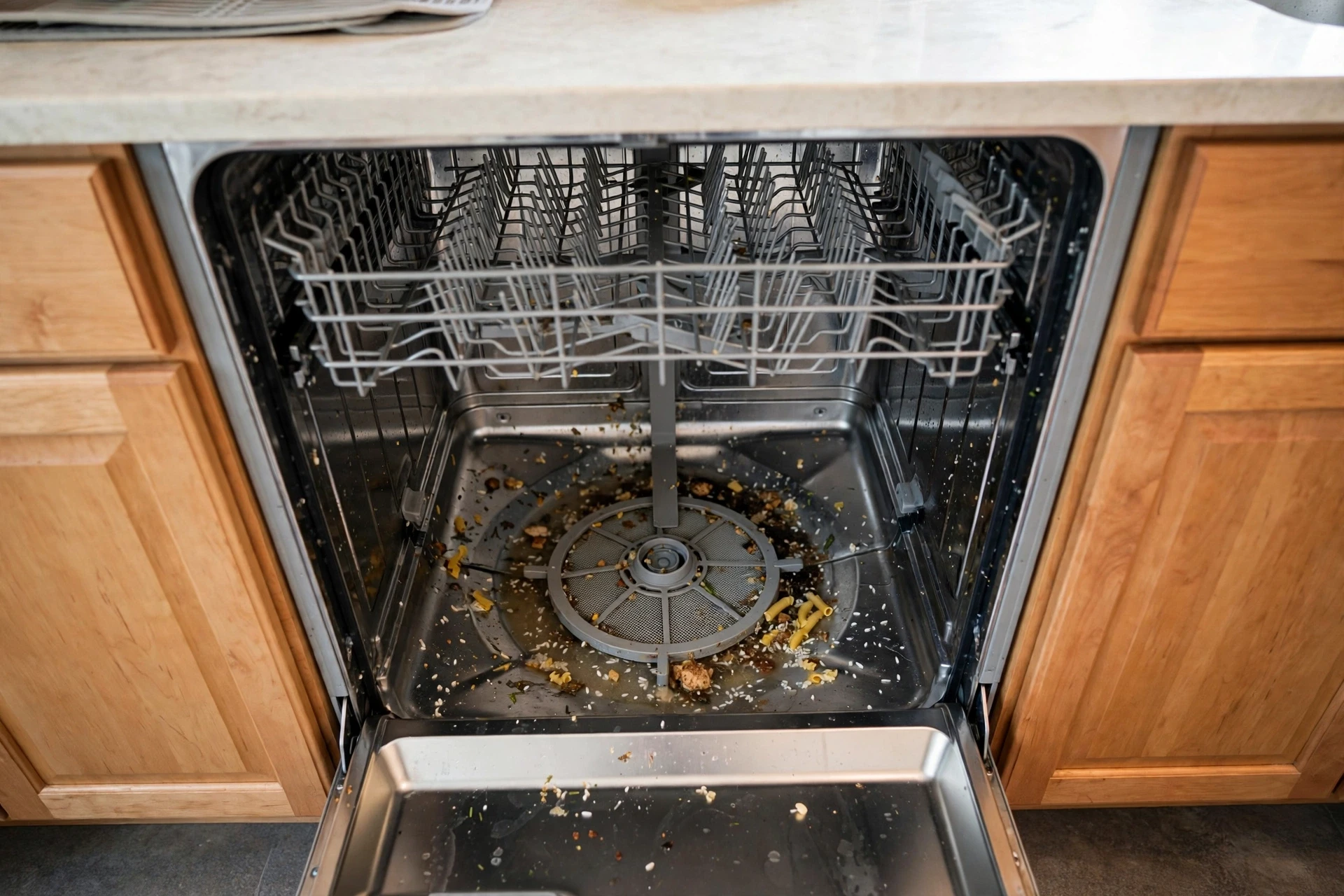
The number-one smell cause is the filter. Food scraps collect in the filter and trap at the bottom of the tub. Left there, they rot, and every cycle washes dirty, smelly water back over your dishes.
Pull the filter out — your manual shows where it sits, usually at the bottom of the tub. Rinse it under warm water, scrub it with a soft brush until the mesh is clear, and wipe out the trap underneath. Many owners never knew their dishwasher had a filter — yet cleaning it monthly is the best smell habit.
For the full filter steps and what a dirty filter does to cleaning results, see our guide on why your dishwasher is not cleaning dishes.
2. Mold on the Door Gasket
The rubber gasket that seals the door is the next place to check. Water collects in its folds, especially along the bottom edge, and if it never dries, mold grows there. Open the door and pull the folds gently apart — mold here is often hidden from a quick glance.
Wipe the gasket with a damp cloth and a mild cleaner, following the product label, then dry it with a clean towel. Do not scrape the rubber with sharp tools, because a cut can cause leaks later. If the gasket is torn or deeply stained and will not wipe clean, a technician may need to replace it.
3. Mold and Buildup on the Spray Arms
The spray arms spin and spray water during every cycle, but their small holes can clog with food, grease, and mineral scale. When water cannot get through properly, dirty water lingers in the arms and the tub, and the smell builds up.
Take the arms off if your manual shows how, and check the holes. Clear debris with a soft brush or a toothpick, taking care not to widen the holes, then rinse the arms before putting them back. A cracked arm, or one that will not spin freely, may need a technician’s attention.
4. Standing Water From Poor Draining
If water sits in the bottom of the tub after a cycle, it will start to smell fast. Standing water usually points back to a clogged filter, but it can also mean the drain path is partly blocked or the drain pump is struggling.
Run a cycle and check the end: the tub should drain nearly dry. If a pool stays behind, clean the filter first, then check the drain hose under the sink for a kink. Anything beyond that is a technician’s job.
5. Grease and Mineral Buildup
Even a dishwasher that looks clean inside can smell from buildup you cannot see. Grease from food coats the tub walls, the filter housing, and the spray arms over time, and hard-water minerals add a chalky layer on top. Together they trap odor and give bacteria a place to grow.
Run an empty cleaning cycle with a dishwasher cleaner or a cup of white vinegar on the top rack, following your manual’s guidance, and wipe the tub walls and the inside of the door. Doing this monthly keeps grease and scale from building back up.
6. A Door Kept Closed So the Tub Never Dries
This is the simplest cause, and the easiest to fix. When the door stays shut tight between cycles, moisture has nowhere to go. The tub, gasket, and filter stay damp around the clock, and mold grows in exactly those spots.
After each load, leave the door slightly open so air can circulate and the tub can dry. This one habit prevents many repeat smells. If an open door is unsafe around small children or pets, open it for an hour after each cycle instead.
What About a Fish or Sewer Smell?
A fishy or sewer-like smell usually has the same roots as a moldy smell, with a few extra suspects. Rotten food trapped in the filter or drain trap is the most common cause, followed by mold on the door seals. A dry P-trap under the sink can also let sewer gas back up, especially if the machine has not run for a while.
Start with the filter and the gasket. If the smell is clearly coming from the drain rather than the tub, run a cycle and see if it clears. If the drain smell stays, get a technician or plumber to check the drain setup.
When to Call a Technician
Call a technician if the smell stays after you have cleaned the filter, gasket, spray arms, and tub, or if you find standing water that will not drain, a torn gasket, or a cracked spray arm. Also get help if the drain smell persists or the dishwasher leaks.
Frequently Asked Questions
Why does my dishwasher smell like mold or a damp basement?
The most common reasons are rotten food in the filter and trap, mold on the door gasket and spray arms, standing water from poor draining, grease and mineral buildup, and a door kept closed so the tub never dries.
How do I clean mold out of my dishwasher?
Clean the filter under warm running water, wipe the gasket folds with a damp cloth and mild cleaner, clear the spray-arm holes, and run an empty cleaning cycle. Then leave the door slightly open so the tub dries.
Why does my dishwasher smell like fish or sewer?
A fish or sewer smell is usually rotten food in the trap, mold on the door seals, or a dry P-trap letting drain odors back up. Clean the filter and gasket first, run a cycle, and get help if the drain smell stays.
Why does my dishwasher still smell after I cleaned it?
A remaining smell usually means another source was missed, most often the trap underneath the filter, the gasket folds, or standing water from poor draining. Check those, then run a cleaning cycle and leave the door open to dry.
How often should I clean my dishwasher filter?
About once a month is a good rule. If you run the dishwasher daily or rarely scrape plates, check it more often — a dirty filter is the top cause of dishwasher smells.
Can leaving the dishwasher door closed cause mold?
Yes. A door kept shut tight between cycles traps moisture in the tub, gasket, and filter, which is exactly where mold grows. Leave the door slightly open after each load so everything can dry.
If you are in Abilene and the smell will not go away, or you need help with a damaged gasket, standing water, or a drain problem, you can call (325) 339-1818 to arrange dishwasher repair in Abilene, TX.
Why does my dishwasher smell like mold or a damp basement?
The most common reasons are rotten food in the filter and trap, mold on the door gasket and spray arms, standing water from poor draining, grease and mineral buildup, and a door kept closed so the tub never dries.
How do I clean mold out of my dishwasher?
Clean the filter under warm running water, wipe the gasket folds with a damp cloth and mild cleaner, clear the spray-arm holes, and run an empty cleaning cycle. Then leave the door slightly open so the tub dries.
Why does my dishwasher smell like fish or sewer?
A fish or sewer smell is usually rotten food in the trap, mold on the door seals, or a dry P-trap letting drain odors back up. Clean the filter and gasket first, run a cycle, and get help if the drain smell stays.
Why does my dishwasher still smell after I cleaned it?
A remaining smell usually means another source was missed, most often the trap underneath the filter, the gasket folds, or standing water from poor draining. Check those, then run a cleaning cycle and leave the door open to dry.
How often should I clean my dishwasher filter?
About once a month is a good rule. If you run the dishwasher daily or rarely scrape plates, check it more often — a dirty filter is the top cause of dishwasher smells.
Can leaving the dishwasher door closed cause mold?
Yes. A door kept shut tight between cycles traps moisture in the tub, gasket, and filter, which is exactly where mold grows. Leave the door slightly open after each load so everything can dry.