Dishwasher Not Drying Dishes? Why They Come Out Wet
You open the dishwasher after a full cycle, expecting clean, dry dishes. Instead, everything is still wet. Plates have puddles, glasses are spotted, and plastic containers are dripping. It is a common complaint, and it does not always mean the machine is broken.
Often, the cause is a setting, an empty dispenser, or the way the dishes were loaded. Sometimes, a heating or vent part has failed.
1. Heated Dry Was Not Selected
On many models, heated dry must be chosen manually. It is not always part of the normal cycle. An eco, quick, or energy-saving cycle may skip heated dry on purpose to save power.
Check the cycle you ran. Look for a heated dry, extra dry, or sanitize option, and select it on your next load. If the dishes come out dry after that change, you have found the answer. The dishes still come out clean either way — only the drying step is different.
2. The Rinse-Aid Dispenser Is Empty
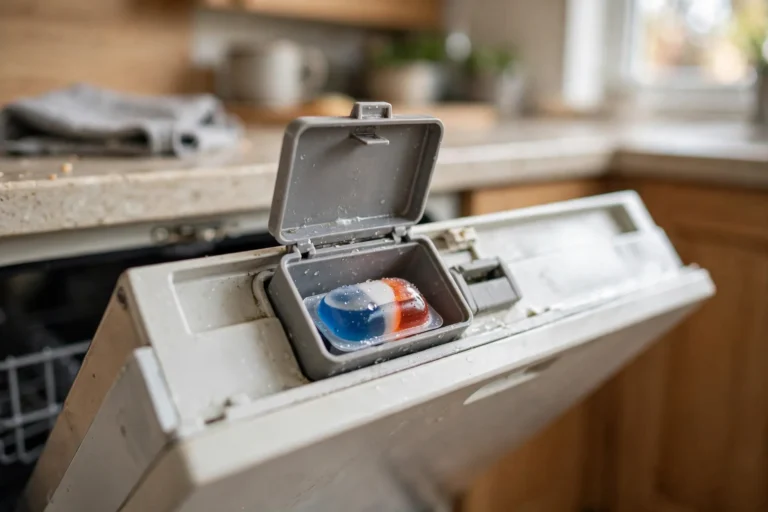
Rinse aid is not just for spots. It helps water sheet off dishes instead of sitting on them in drops. With no rinse aid, water clings to plates and glasses, and drying has much more work to do.
Find the dispenser, usually a small cap on the inside of the door next to the detergent cup. If it is empty, fill it and run another load. If your glasses also come out cloudy or spotted, see our article on white film and spots on dishes. In Abilene, hard water makes an empty dispenser show up faster, since mineral-rich water leaves more residue behind.
3. A Burned-Out Heating Element
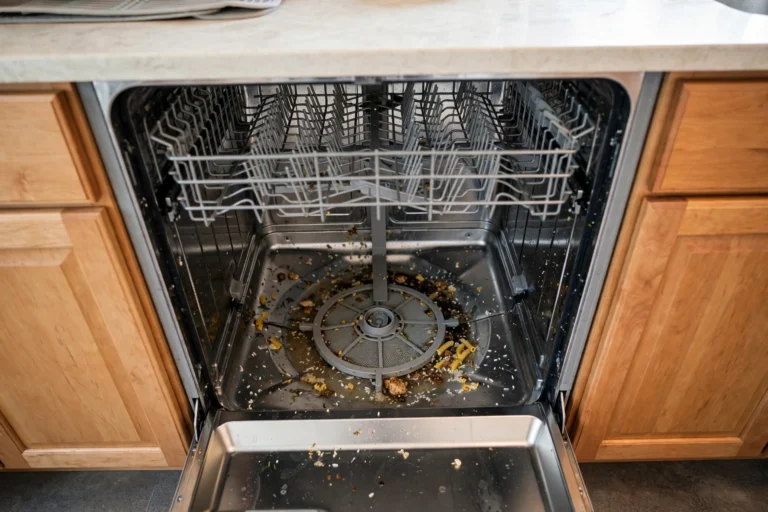
The heating element heats the water during the wash and helps dry the dishes at the end. When it burns out, dishes may come out clean but cold and wet, with little or no steam when you open the door.
On some models, the element is a visible loop at the bottom of the tub, and a burned-out one may look broken or blistered. Testing or replacing it means working with electrical parts, so that is a technician’s job.
4. A Tripped High-Limit Thermostat
The high-limit thermostat is a safety device. It shuts off the heating element if the dishwasher gets too hot. If it trips and does not reset, the element never heats again, and drying stops even though the wash cycle still runs.
From the outside, this looks like a failed heating element: clean dishes, no heat, no steam. Telling the two apart requires testing parts with a meter, which means opening panels and working around wiring. Do not attempt that yourself.
5. A Failed Vent Fan
Some dishwashers, especially newer models, use a fan to pull moist air out of the tub during drying. If that fan fails, steam stays trapped inside. Dishes may feel warm but damp, and the inside of the door may be covered in condensation.
If you used to hear a quiet fan during drying and now hear nothing, that is a useful clue. Replacing a vent fan means removing panels and handling electrical parts, so leave that repair to a technician.
6. Loading That Traps Water
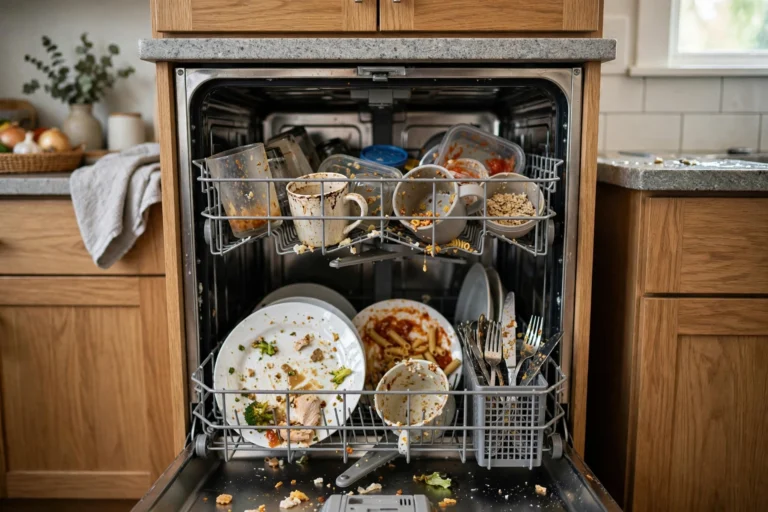
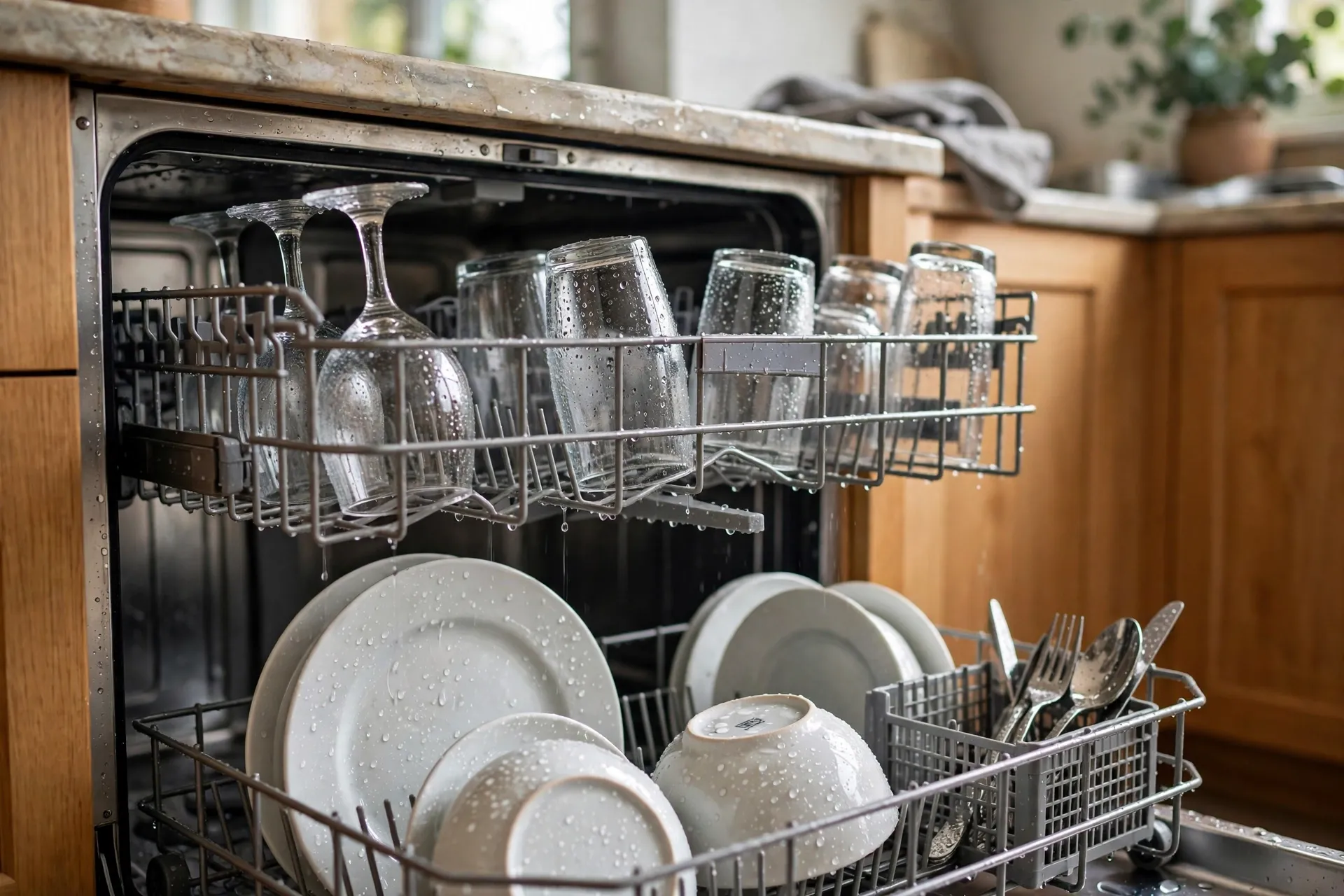
Sometimes the machine is fine, and the loading is the problem. Bowls, cups, and concave items trap water in their hollows. Loaded facing up, or tilted the wrong way, that water has nowhere to go, no matter how well the drying cycle works.
Load bowls and cups at an angle, facing down, so water can drain off. Leave space between items so warm air can reach them, and avoid nesting bowls inside each other. Change only the loading on your next load and see how much improves — it is a free test, and it often explains why only some items come out wet.
7. The Plastic Problem
Many owners ask: why do plastic containers never dry, even when everything else does? The answer is physics, not a fault.
Drying works largely by condensation. Hot dishes stay warm after the cycle, so water evaporates off them and condenses on the cooler tub walls. Plastic cools down too fast to do this. By the time drying runs, the plastic is already cool, so water just sits on it.
That is why a load can have dry ceramic plates and dripping plastic lids at the same time. It does not mean your dishwasher is failing. If only plastic items are wet, towel-dry them after the cycle.
When to Call a Technician
Call a technician if any of these apply:
- Dishes are cold and wet on every cycle, even with heated dry selected and rinse aid filled.
- There is little or no steam when you open the door after a full cycle.
- You suspect the heating element, thermostat, or vent fan, and you are not comfortable testing electrical parts.
- The problem started suddenly after the machine was drying fine before.
- You have tried the setting, rinse-aid, and loading checks, and nothing has changed.
A technician can test the heating element, thermostat, and vent fan safely and tell you which part has failed. Repair cost varies by part and model, so ask for an estimate before work begins.
Frequently Asked Questions
Why are my dishes still wet after the dishwasher?
The most common causes are heated dry not selected, an empty rinse-aid dispenser, loading that traps water, or a failed heating part such as the element, thermostat, or vent fan. Check the setting and rinse aid first, then the loading, before suspecting a part failure.
Why do plastic containers never dry?
Plastic cools too fast for condensation drying to work. Ceramic and glass stay warm after the cycle, so water evaporates off them. Plastic cools quickly, so water stays on its surface. This is normal physics, not a sign your dishwasher is broken.
Does rinse aid really help with drying?
Yes. Rinse aid helps water sheet off dishes instead of forming drops that cling to the surface. With less water left on each item, drying has less to do. Filling an empty dispenser often improves drying on the very next load.
Should I open the door right after the cycle ends?
Opening the door a little at the end can help steam escape. It is a reasonable habit, but it will not fix a failed heating element or an empty rinse-aid dispenser.
Why are only the bowls and cups wet?
Bowls and cups are the most likely items to trap water. Loaded facing up, or nested inside each other, water pools in them and cannot drain. Load them at an angle, facing down, with space around them, and see if the problem clears up.
How do I know if the heating element has failed?
The main signs are dishes that come out clean but cold, with little or no steam when you open the door, across several cycles. The element may also look damaged if it is visible at the bottom of the tub. Testing or replacing it involves electrical work, so have a technician confirm it.
Need Help in Abilene?
If you have worked through these checks and your dishes still come out wet, a local technician can test the heating and vent parts for you. For dishwasher repair in Abilene, TX, see our dishwasher repair page or call (325) 339-1818.
Why are my dishes still wet after the dishwasher?
The most common causes are heated dry not selected, an empty rinse-aid dispenser, loading that traps water, or a failed heating part such as the element, thermostat, or vent fan. Check the setting and rinse aid first, then the loading, before suspecting a part failure.
Why do plastic containers never dry?
Plastic cools too fast for condensation drying to work. Ceramic and glass stay warm after the cycle, so water evaporates off them. Plastic cools quickly, so water stays on its surface. This is normal physics, not a sign your dishwasher is broken.
Does rinse aid really help with drying?
Yes. Rinse aid helps water sheet off dishes instead of forming drops that cling to the surface. With less water left on each item, drying has less to do. Filling an empty dispenser often improves drying on the very next load.
Should I open the door right after the cycle ends?
Opening the door a little at the end can help steam escape. It is a reasonable habit, but it will not fix a failed heating element or an empty rinse-aid dispenser.
Why are only the bowls and cups wet?
Bowls and cups are the most likely items to trap water. Loaded facing up, or nested inside each other, water pools in them and cannot drain. Load them at an angle, facing down, with space around them, and see if the problem clears up.
How do I know if the heating element has failed?
The main signs are dishes that come out clean but cold, with little or no steam when you open the door, across several cycles. The element may also look damaged if it is visible at the bottom of the tub. Testing or replacing it involves electrical work, so have a technician confirm it.